
The claim file usually names the other party on page one.
Part IV of the Safety, Rehabilitation and Compensation Act 1988 builds an entire third party recovery machine. It has notification duties with penalties attached, a repayment rule, a power for Comcare to run someone else's common law claim, and a power to direct a third party to pay Comcare instead of the claimant. The machine works. It just has no starter motor on the authority's side.
Both duties that would tell you a recovery exists belong to the claimant. Neither is triggered by anything a case manager does.
Who is the recovery machine actually pointed at?
Start with the boundary, because getting it wrong wastes a screen.
Section 44 bars an action for damages against the Commonwealth, a Commonwealth authority, a licensed corporation or an employee, subject to section 45. Where an employee wants to sue that side of the ledger for non-economic loss, section 45 gives an irrevocable written election with its own consequences and a cap of $110,000 on damages under section 45(4), as at the current compilation.
Sections 46, 50 and 51 are pointed somewhere else entirely. Each of them carves the Commonwealth, a Commonwealth authority, a licensed corporation and an employee out of the person it is talking about. What is left is the driver of the other vehicle, the occupier of the premises, the manufacturer of the equipment, the contractor on site.
Section 47 sits in the middle of that run and is easy to trip over, because it is the mirror image. It imposes the same seven day notice duty, with the same five penalty units and the same strict liability, where the claim is against the Commonwealth, a Commonwealth authority, a licensed corporation or another employee. It is a real duty and it is also the claimant's, but a claim on that side of the line cannot produce a section 50 or section 51 recovery, so it is not what this screen is looking for.
That distinction is what a screen has to encode. A flag that fires on an internal cause is a false positive, and a screen full of them gets switched off inside a month.
The two clocks, and whose they are
Section 46 applies where compensation is payable, the event occurred in circumstances that "appear to create a legal liability" in a third party to pay damages, and the employee or dependant makes a claim against that person. Then the obligation lands: they must notify Comcare in writing "as soon as practicable but in any event not later than 7 days after the day on which he or she first became aware of the claim". The penalty is five penalty units, and section 46(2) makes it an offence of strict liability.
Section 48(2) adds the second clock. Where damages are recovered, the employee or dependant must notify Comcare in writing of the recovery and the amount "not later than 28 days after the day on which the damages were recovered". Ten penalty units, also strict liability under section 48(2A).
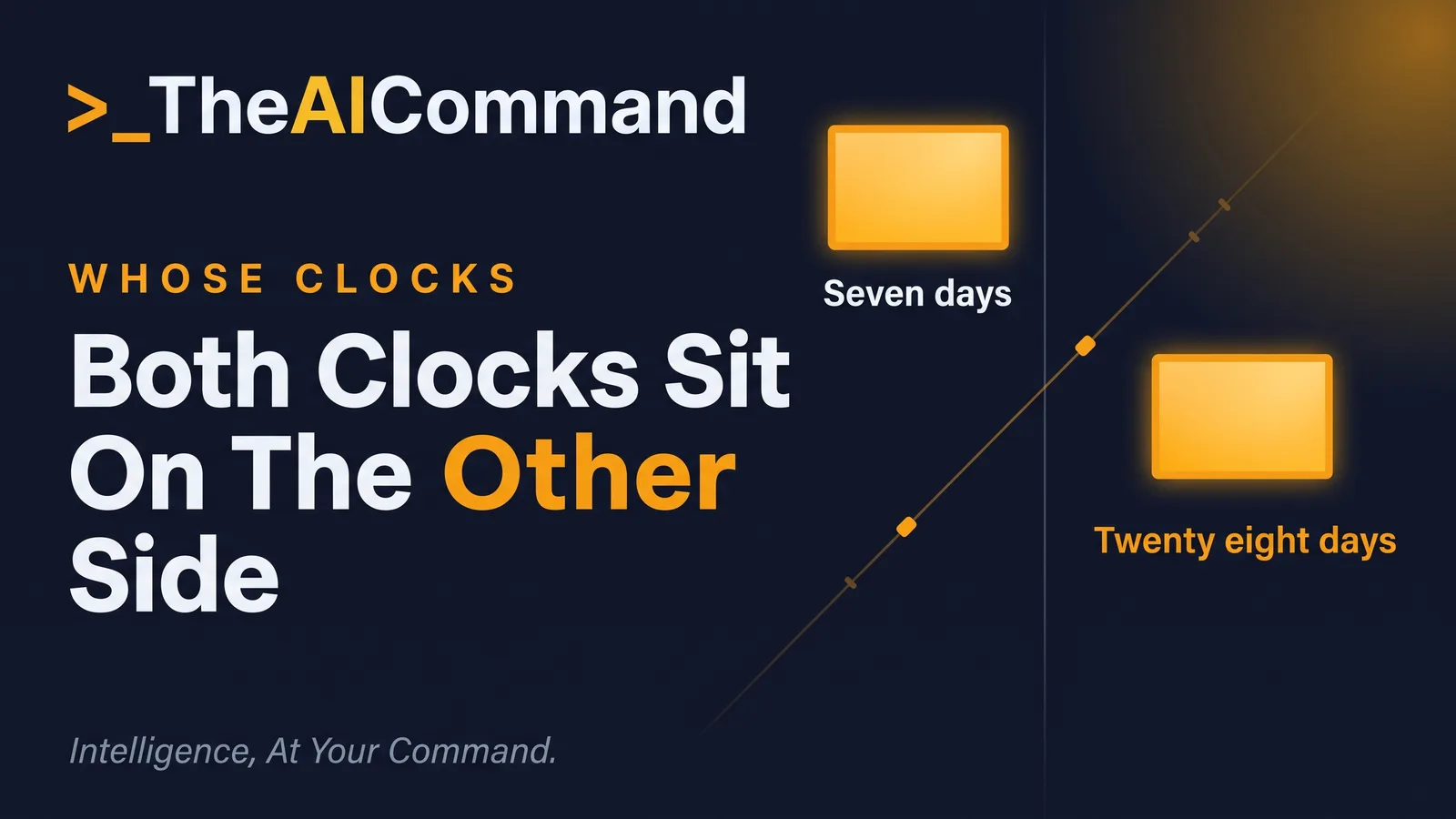
Read those provisions as an operations problem rather than a compliance one. Chasing a claimant over a notice is neither good practice nor the reason to care. The design assumes the claimant tells you, and when they do not, usually because nobody has told them the duty exists, the recovery sits in the file while compensation keeps flowing.
That matters because of what section 48 then does with the money. Under section 48(3), where compensation was paid before the recovery, the claimant is liable to pay Comcare an amount equal to the compensation or the damages, "whichever is less". Under section 48(4), compensation is not payable after the date the damages were recovered. Both carry carve-outs worth knowing: section 48(4A) takes damages recovered in an action for non-economic loss outside the repayment rule, and section 48(5) takes several situations outside the payment cut-off, including where the claim was made or taken over by Comcare under section 50.
What section 50 can do, and what it costs
Where compensation has been paid, the circumstances appear to create a legal liability in a third party, and either no claim has been made or one was made and has not been prosecuted, Comcare "may make a claim or a fresh claim against the person in the name of the employee or dependant ... or may take over the conduct of the existing claim".
The consequences run in both directions. Under section 50(2), taking over a claim makes Comcare liable for the costs that would otherwise fall on the original claimant, other than costs unreasonably incurred by them. Under section 50(7), damages are paid to Comcare, which deducts the compensation paid plus its costs and pays the balance across, and section 50(8) then holds further compensation until it equals that payment.
There is a cooperation mechanism, and one carve-out inside it worth marking now rather than in the middle of a difficult conversation. Section 50(5)(b) suspends the right to compensation where the claimant fails to comply with a reasonable requirement for the purposes of the claim, and section 50(6) makes compensation unpayable for the suspension period. But section 50(5A) states that the suspension does not operate on the employee's right to compensation for the cost of medical treatment payable under section 16. Treatment continues.
Section 51 is the quieter one. Comcare may give written notice to a third party who appears to be liable, has agreed to pay, or has been ordered to pay damages, requiring that person to pay Comcare so much of the damages as does not exceed what would be payable under section 48 or 49. Under section 51(5) that payment discharges the third party to that extent, and the claimant's own liability with it.
The licensee question, stated carefully
Here is a wrinkle a self-insured licensee has to resolve rather than assume.
Sections 46 and 48(2) name Comcare on their face. Section 108C(3)(a) provides that "any notice or claim given or made under Part V after the licence comes into force is to be given or made to the licensee". Part V is headed "Claims for compensation" and runs from section 53 to section 59. Sections 46 and 48 sit in Part IV, headed "Liabilities arising apart from this Act". Sections 50 and 51 likewise name Comcare as the actor.
The drafting difference is visible in the sections themselves. Part V speaks throughout of the "relevant authority", which section 4 defines as the licensee for a licensee's employee and Comcare for everyone else. Part IV does not use that term at all. It names Comcare.

What follows is not a conclusion about anyone's licence. Licence conditions, delegations and arrangements with Comcare settle it, and section 108E(d) gives a licensee a broad incidental function. The operational reading is narrower and more useful: do not build a recovery process that depends on a notice the Act does not address to you. Confirm the position with Comcare in writing, and treat your own file as the only indicator you control.
The screen, and where it stops
The mechanism of injury is collected at intake on almost every claim. It is prose, written under time pressure, and it very often names another party in passing. Reading all of it against a fixed list of indicators is high-volume, well-specified work, and it runs on the same de-identified extracts as the de-identification toolkit for case managers.
De-identify at extract time and use the canonical placeholders throughout: [CLAIMANT_NAME], [CLAIM_NUMBER], [INJURY_DATE], [TREATING_PRACTITIONER], [CONDITION]. Keep the re-identification key in the controlled claim system.
Six rules make the difference between a screen that survives and one that gets ignored.
- Return quotes, never characterisations. A row reading "another vehicle involved" is a summary. A row carrying the sentence from the incident narrative, with the field it came from, is evidence.
- Report the absence of an indicator explicitly. A nil result on a file is a result. Silence is not.
- Say when a document was missing. A screen that could not read the incident report says so rather than returning nil.
- Run it on a defined population you can re-run. The whole intake cohort for the period, by rule. Not a selection.
- Adjudicate by name and date. A person records what the flag means and what happens, in the file, on the day.
- Log the run, including the nil results. The log is what shows the obligation was tested at all.
TheAICommand works to the Verified Draft Method: de-identify the inputs, ground the model in your own source material, keep a person at the decision point, verify against the primary source, and log what happened. Here the source material is the file rather than the statute, the person at the decision point reads the quoted indicator, and the primary source verified against is the section text itself.
The full screen, with the population rule, the indicator list, the adjudication points and the record-keeping line, is available as a companion at the third party recovery indicator screen.
What the screen never does
Five bright lines, each of which turns a flag into something it is not.
It never states that a legal liability appears to exist. That phrase is lifted from sections 46 and 50, and putting it in a machine output is the statutory test wearing a summary's clothes.
It never estimates a recovery amount, or ranks files by prospects. Ranking by how complete the indicator evidence is, on the other hand, is genuinely useful.
It never generates correspondence to a third party, an insurer or a legal representative. Nothing that leaves the organisation comes out of a screen.
It never advises the claimant. Telling someone that a duty under section 46 exists is different from telling them what to do about their own common law rights, and the second is not the authority's role.
It never treats a flag as a determination. This is not a reviewable decision, it does not go in a notice under section 61, and it changes nothing about entitlement. The same discipline applies as in the statutory timeframes that do carry determinations, where the clock and the decision belong to a person.
Do this Monday
- Read section 46 and section 48 once, in the compilation. Ten minutes. Most teams have never read either.
- Count how many section 46 notices you have received. In the last two years, on the whole portfolio. If the answer is none, the question is whether none existed or none arrived.
- Pull twenty recent intake narratives and read them for a third party. By hand, before automating anything. That tells you whether the indicator is really there and what it looks like in your own writing.
- Write the indicator list from what you found. Your fleet, your sites, your contractor patterns. A generic list will underperform a specific one.
- Settle the licensee question in writing. Ask Comcare how a section 46 or section 48(2) notice reaches your organisation, and file the answer.
- Set the boundary before the first run. No third party contact, no quantum, no prospects ranking, from a screen. Put it in the procedure, not in someone's head.
Bottom line
The SRC Act gives the authority real recovery powers under sections 50 and 51, and makes them dependent on knowing a third party claim exists. The only two provisions that would tell you sit with the claimant, run on seven and twenty-eight day clocks, and are addressed to Comcare rather than to a licensee. That leaves one reliable indicator, and it is already in the mechanism of injury you collected at intake. Read it consistently, quote what you find, hand it to a person, and log the runs including the empty ones. The machine works. Someone has to notice it is not switched on.
Content disclaimer: This article is for general educational and informational purposes only. It does not constitute legal advice or a substitute for professional judgement, and nothing in it is a determination or advice about any individual claim. Statutory references are to the Safety, Rehabilitation and Compensation Act 1988 (Cth) as compiled at 1 July 2026. The application of Part IV to a self-insured licensee depends on that licensee's own licence and arrangements, which are matters for the licensee and Comcare. All names and identifiers in worked examples are placeholders.
References
- Safety, Rehabilitation and Compensation Act 1988 (Cth), Compilation No. 82, in force 1 July 2026, ss 44, 45, 46, 47, 48, 50, 51, 16 and 108C. https://www.legislation.gov.au/C2004A03668/latest/text
- Comcare, Guidance on applying the SRC Act. https://www.comcare.gov.au/scheme-legislation/src-act/guidance
- Comcare, Appealing to the Administrative Review Tribunal. https://www.comcare.gov.au/claims/disagree-determination/appeal-to-art
TheAICommand. Intelligence, At Your Command.