
Two doctors, one file, opposite conclusions. AI can map exactly where two conflicting medical opinions diverge, but it cannot resolve them. The delegate still weighs the opinions and determines liability on the balance of probabilities.
Every case manager knows the moment. The treating specialist says one thing about causation or capacity, the independent examiner engaged under section 57 says another, and both reports are long, detailed and professionally certain. The delegate now has to weigh them and determine liability, and the weighing is the hard part. Before any judgement can happen, someone has to read both opinions closely enough to see exactly where they agree, where they diverge, and why. That sorting can eat an afternoon, and it is not the part that needs a delegate's expertise. The judgement is.
This is where AI earns its place in a claims workflow, and where the line has to be drawn hard. AI can build the comparison. It cannot make the call.
The workflow problem
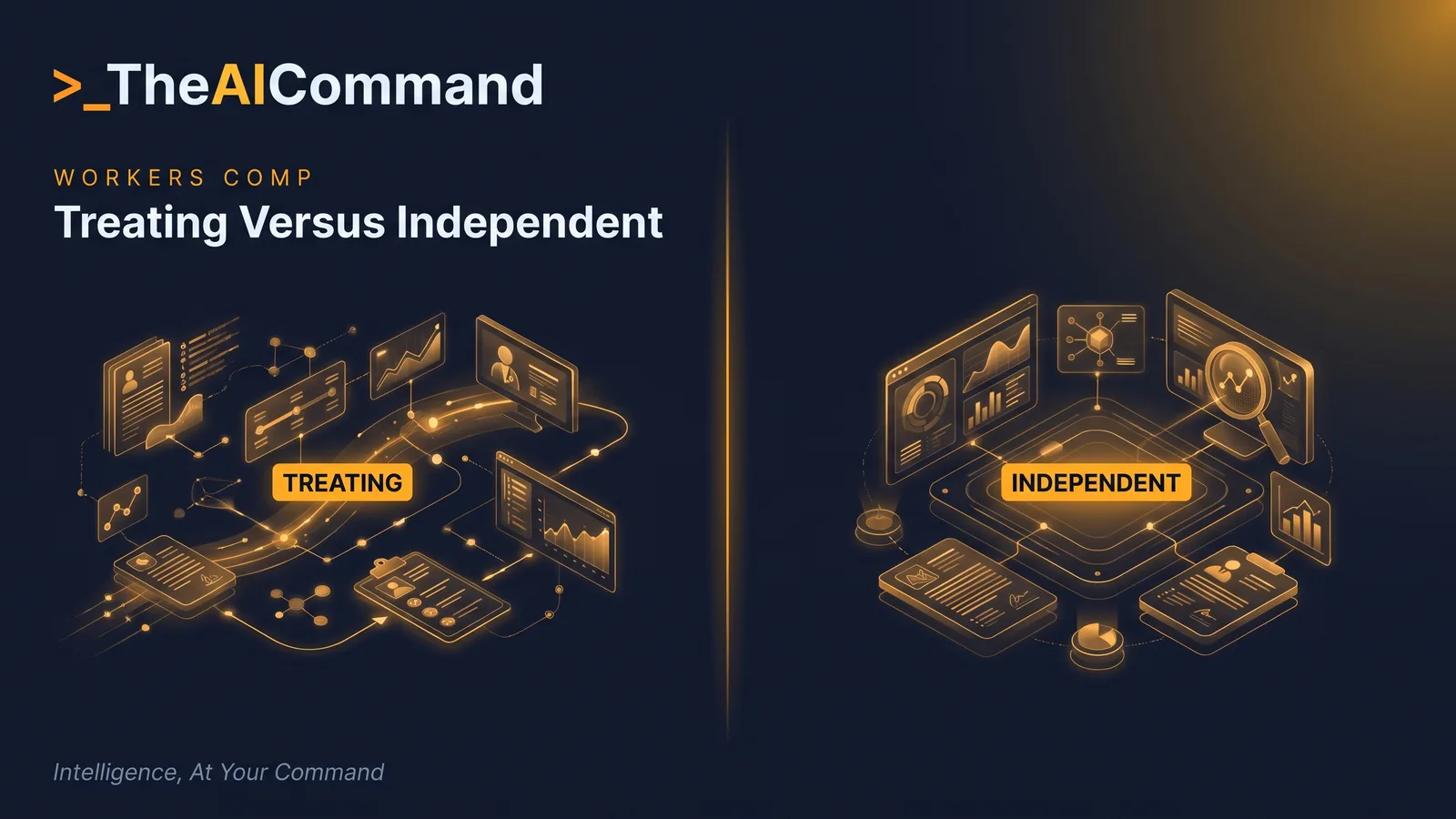
Conflicting medical evidence is normal, not exceptional. A treating practitioner brings continuity and a long view of the condition. An independent examiner engaged under section 57 of the SRC Act brings specialist assessment on a specific question. When they disagree, the delegate has to work out where the real difference lies, because two opinions can reach different conclusions while agreeing on almost all the facts, or reach similar conclusions from very different histories. The difference that matters is rarely on the first page.
Comcare's own guidance sets the standard the delegate has to meet. Decisions are made on the balance of probabilities, which means the delegate has to be satisfied that, more likely than not, the facts relied on existed at the relevant time. And on conflicting opinions, Comcare guidance is direct: the claims manager makes a judgement about which opinion they prefer, and an opinion may be preferred because of a greater knowledge of the employee's condition and the history of the claim, or because of the specialist expertise and qualifications of the person giving it. That is a judgement about weight, and it belongs to the delegate.
Where can AI help, and where must it not?
AI is very good at the task that comes before the judgement: reading two long documents and laying their structure side by side. It can extract what clinical question each opinion set out to answer, the history and evidence each relied on, the points where they agree, the points where they diverge, and the places where the record is silent. That comparison turns two dense reports into a clear map of the actual conflict.
What AI must not do is weigh the opinions. It cannot decide which doctor knows the condition better, whose expertise is more relevant to the question, or what is more probable on the whole of the evidence. Comcare guidance is unambiguous that medical professionals do not determine liability, and it is the claims manager's responsibility to determine liability under the SRC Act. A model has even less standing than the doctors it is summarising. It has no clinical training, no delegation, and no accountability. It is a comparison engine, not a decision-maker.
There is a reason to insist on a structured comparison rather than a single summary. Ask a model to sum up two conflicting opinions in a paragraph and it will smooth the conflict into something readable, which is exactly the wrong outcome. The value is not a tidy summary. It is the difference laid bare: this opinion answered that question on this history, the other answered a slightly different question on a different history, and the disagreement turns on one specific point. A summary hides that. A side-by-side comparison surfaces it. When you use AI here, ask for the structure, not the story, because the structure is where the delegate's judgement is best spent.
What does the de-identified workflow look like?
De-identification comes first, always. A claim file holds the claimant's name, claim number, date of birth and detailed medical and personal information, and none of it belongs in an AI tool. Replace every identifier with a placeholder before a single word goes near a model, following a disciplined de-identification routine, and keep the key that maps placeholders back to the file offline and under your control.
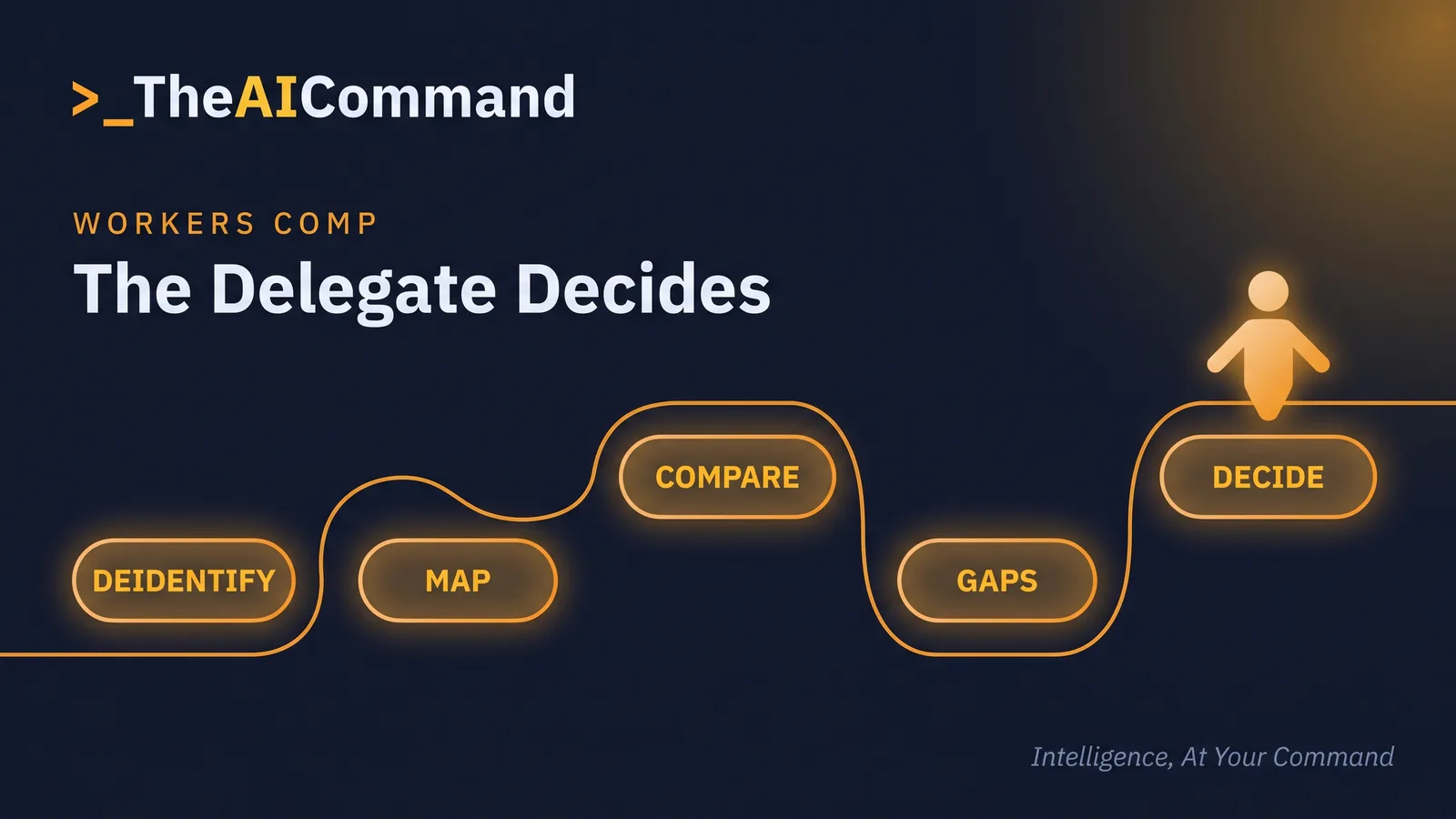
- De-identify both opinions. Strip names, claim numbers, dates of birth and any detail that could identify the person, replacing them with placeholders such as [CLAIMANT_NAME], [CLAIM_NUMBER] and [CONDITION]. The model sees structure, not a person.
- Map each opinion on its own. Ask AI to set out, for each de-identified opinion separately, the clinical question it addressed, the history and evidence it relied on, the reasoning it gave, and its conclusion. Keeping them separate first stops the model from blurring the two.
- Compare the two. Ask AI to produce a side-by-side comparison: where the opinions agree, where they diverge, and the specific point on which the difference turns. This is the map the delegate actually needs.
- Flag the gaps. Ask the model to list what each opinion did not address, any factual assumption it made, and anything in the de-identified record that neither opinion accounts for. Gaps are often where the next step lives, whether that is a clarifying question or a further examination.
- The delegate weighs and decides. With the conflict mapped, the delegate applies the comparison back to the real file and makes the judgement Comcare guidance describes: which opinion to prefer, and why, and the liability determination under section 14 on the balance of probabilities. The model's map is a working aid attached to the file. The decision, and the reasons, are the delegate's.
A human-in-the-loop reminder
The comparison AI produces is only as good as the reports it read, and it will sometimes miss nuance, flatten a qualification, or present two things as agreeing when a clinician would see a meaningful difference. Read the model's map against the actual opinions before you rely on it. It organises the evidence. It does not certify it. Every point that will bear on the determination has to be confirmed against the source report by the person making the decision.
For practitioners. Use a two-pass prompt. First, ask the model to map each de-identified opinion separately: "For this de-identified medical opinion, set out the clinical question it addresses, the history and evidence it relies on, its reasoning and its conclusion. Do not compare it to anything yet." Then, in a second prompt, give it both maps and ask: "Compare these two de-identified opinions. List where they agree, where they diverge, and the single point the disagreement turns on. Then list what each did not address. Do not tell me which is more persuasive." That last sentence keeps the model on the right side of the line.
For governance leads. A defensible position needs three things on the file. Evidence that de-identification happened before any AI use, so no personal or health information left your control. A record that the AI output was a working comparison, not the decision, with the delegate's own reasons written separately. And a delegate who can explain, in their own words, why they preferred one opinion over another against Comcare's stated considerations. If the reasons in a determination could have been produced by the model, the process was not defensible. The reasons have to be the delegate's.
A worked example
A claim for [CONDITION] has two opinions in conflict. The treating specialist, who has managed [CLAIMANT_NAME] for two years, links the condition to the employment. An examiner engaged under section 57 attributes it to a pre-existing degenerative process. Both reports run to many pages.
The delegate de-identifies both, then runs the two-pass workflow. The maps show something the length of the reports had obscured: the two doctors agree on the diagnosis and the clinical findings, and disagree only on causation, where the treating specialist relies on the timing and history of symptoms and the examiner relies on imaging said to show long-standing change. The comparison also flags a gap, that neither opinion addresses a period in the history where the file notes a relevant event.
That map does not decide anything. What it does is put the delegate straight to the real question, causation, with the competing bases clearly stated and a gap identified that may warrant a clarifying question before determining. Because the gap is visible, the delegate can see that determining on the current record would mean deciding a contested causation question without addressing a relevant event in the history, and can choose to resolve that first. The map did not make that choice. It made the choice available, which is the difference between a delegate deciding on a full picture and one deciding on whatever the reports happened to emphasise.
The delegate then weighs the two opinions against Comcare's considerations, makes the call under section 14 within a defensible AI-assisted determination framework, and writes their own reasons. The afternoon of sorting became twenty minutes of reading a map, and the judgement got the delegate's full attention. That is the whole point of using the tool.
What goes wrong if you skip the map?
The workflow has one failure mode that matters more than the rest: trusting the model's output without reading the underlying reports. If a delegate treats the comparison as if it were the evidence, three things can go wrong. The model can present two opinions as agreeing when a clinician would see a meaningful difference in a qualification it flattened. It can miss a point buried in a long report that turns out to be decisive. And it can carry an assumption from one opinion forward as if it were established fact. None of those are reasons to avoid the tool. They are reasons to keep the delegate reading the source. The comparison points you to the questions. The answers come from the reports, checked by a person, and the reasons in the determination are written by the delegate, never lifted from the map.
There is a privacy dimension to hold as well. The whole workflow depends on de-identification holding at every step. It is easy to de-identify the first opinion carefully and then paste the second in a hurry with a name or a date still in it. Treat the de-identification as the control it is: check each document before it goes to the model, and never let the convenience of a quick comparison erode the discipline that keeps personal and health information out of the tool.
SRC Act sections referenced
- Section 14: liability to pay compensation for an injury.
- Section 4: definitions, including injury and disease.
- Section 57: power to require an employee to undergo a medical examination.
- Section 60: reviewable determinations (a decision to require a section 57 examination is a determination for section 60 purposes).
Bottom line
When two medical opinions conflict, AI earns its place by mapping the comparison on a de-identified file, not by deciding it. The delegate still weighs the opinions and determines liability under section 14 on the balance of probabilities, and the reasons in the determination have to be the delegate's, checked against the source reports rather than lifted from the model's map.
Do this Monday:
- De-identify both opinions before anything goes near a model, replacing identifiers with placeholders such as [CLAIMANT_NAME] and [CLAIM_NUMBER].
- Map each opinion on its own first, then ask for a side-by-side comparison of where they agree, where they diverge, and the single point the disagreement turns on.
- Ask the model to flag the gaps: what each opinion did not address, and anything in the record that neither opinion accounts for.
- Read the model's map against the source reports before relying on it, and confirm every point that will bear on the determination.
- Weigh the opinions yourself and write your own reasons for the section 14 determination, never lifted from the map.
Content disclaimer: This article is for general educational purposes only and does not constitute legal advice, liability determination guidance, or a substitute for professional judgement. Workers compensation decisions must be made by appropriately qualified and authorised persons under the Safety, Rehabilitation and Compensation Act 1988. All AI outputs described in this article require human review before use in any claims management context.
TheAICommand. Intelligence, At Your Command.