
AI can organise the impairment file. People assess it.
A permanent impairment claim is one of the most evidence-heavy tasks in workers compensation. Under section 24 of the Safety, Rehabilitation and Compensation Act 1988, an employee whose injury results in a permanent impairment may be entitled to a lump sum, and the size of that entitlement turns on a percentage: the degree of whole person impairment. Reaching that percentage means working through specialist medical reports, often several of them, sometimes contradictory, accumulated over months or years, and assessing them against a detailed statutory Guide. It is slow, exacting work, and it is exactly the kind of document-heavy task where case managers are now wondering whether AI can help.
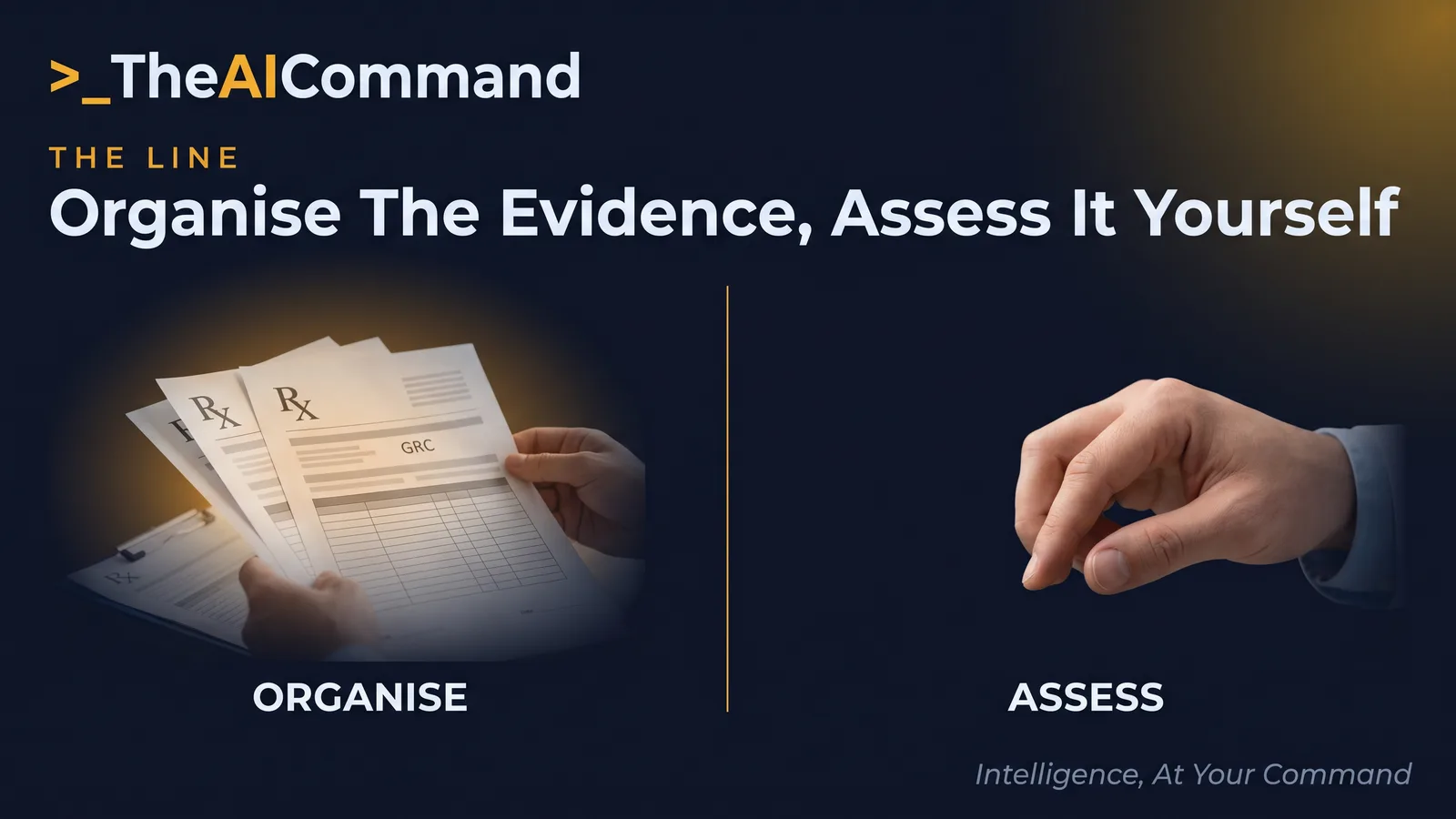
It can, in a narrow and useful way. AI can carry the organisation of the evidence so that the people who must exercise judgement spend their time on the judgement. What it cannot do, and must never be allowed to do, is assess the impairment or make the determination. This guide sets out where the line sits and how to work on the right side of it.
What does the law actually ask for a section 24 claim?
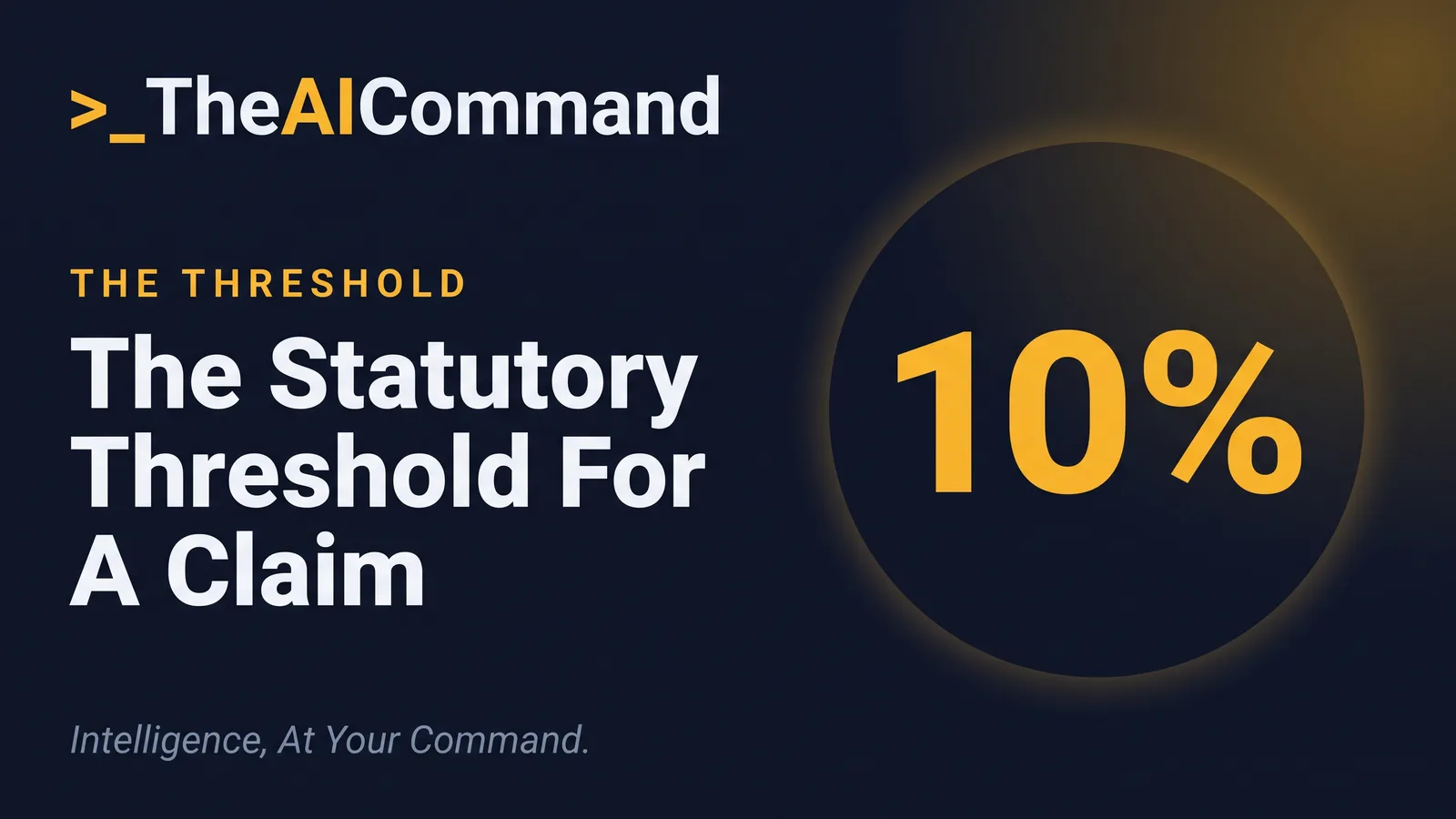
Three sections frame the task, and it helps to keep them straight. Section 24 provides compensation where an injury results in a permanent impairment. To attract compensation the impairment must be permanent and must reach a minimum degree, generally at least 10 per cent whole person impairment, with specific exceptions for things such as hearing loss and the loss of the use of fingers, toes, or the sense of taste or smell. Section 27 provides separate compensation for non-economic loss, the effect of the impairment on the person's life beyond the physical measure. And section 28 is the quiet but decisive one: it is the provision under which Comcare issues the approved Guide to the Assessment of the Degree of Permanent Impairment, currently Edition 3.0.
That approved Guide is the spine of the whole exercise. It is built on the concept of whole person impairment, expresses each impairment as a percentage of a notional whole, and uses a combined values method so that multiple impairments from a single injury are combined rather than simply added, with a ceiling of 100 per cent. The assessment against the Guide is a clinical task carried out by a suitably qualified medical practitioner. The determination that follows is made by an authorised delegate. Neither role is one a model can occupy. The percentage is a medical judgement; the entitlement is a statutory decision.
Where does AI genuinely help with an impairment file?
The bottleneck in a permanent impairment claim is rarely the assessment itself. It is everything around it: assembling the right reports, putting them in order, understanding what each one says, and noticing what is missing or inconsistent before the file goes to a qualified assessor. That preparatory work is where AI is strong, on one strict condition that the data is de-identified first.
Assembling and date-ordering the evidence. A claim file accumulates reports from treating doctors, specialists and independent medical examiners over a long period. AI can take a de-identified set of those reports and build a clean chronology in minutes, ordering them by date and tagging each by author type and the body region it addresses. Starting from a structured chronology rather than an undated pile changes how the rest of the work feels.
Mapping evidence to the Guide's structure. The approved Guide is organised by body systems and detailed tables. A model can read a de-identified report and indicate which parts of the Guide it appears to speak to, producing a map of where the evidence is dense and where it is thin. This is orientation, not assessment. It tells the assessor where to look first; it does not tell them what to conclude.
Surfacing gaps and inconsistencies. Two specialists may describe the same condition differently, and AI can map that conflict without resolving it. A report may assess one body region and be silent on another the claim depends on. AI is good at flagging these divergences for a human to examine, because comparison across long documents is precisely the kind of pattern work it does well. Every flag is something to verify, never a finding.
Drafting the neutral summary. Once a person has done the thinking, AI can help turn the assessor's reasoning into a clear, plainly written summary for the file. The reasoning is the human's. The drafting assistance is the machine's.
The de-identification rule comes first
Before any of this, the evidence must be de-identified. Medical reports in an impairment claim are dense with the most sensitive information a person has: diagnoses, prognoses, treatment, personal history. None of it should reach a general AI tool in identifiable form.
The discipline, which our de-identification toolkit for case managers sets out in full, is straightforward and non-negotiable. Replace the claimant's name with a placeholder such as [CLAIMANT_NAME]. Replace the claim number with [CLAIM_NUMBER] and the date of birth with [DATE_OF_BIRTH]. Strip or mask any other detail that could identify the person, including unusual employer or location specifics. Keep the key that maps placeholders back to the real identity in a separate, controlled location, never in the same document or prompt. And use only an AI tool your organisation has approved for sensitive data, never a public consumer model where the input may be retained or used for training. A chronology built for "[CLAIMANT_NAME], injured on [DATE_OF_INJURY]" is just as useful to the assessor and carries none of the risk if it is ever exposed.
This is not a formality. The privacy obligations on scheme operators are real, and a de-identification step that is skipped once is the step a future audit will find. Build it into the workflow so that the file is de-identified before it is ever loaded, not cleaned up afterwards.
Which impairment tasks must stay with a human?
It is worth naming, plainly, the parts of this work that are not available to a model under any configuration.
The assessment of whole person impairment against the approved Guide is a clinical judgement reserved for a suitably qualified medical practitioner. It involves interpreting clinical findings, applying the Guide's tables and rules, and reaching a percentage. A model can describe what a report says; it cannot decide what the report means for the percentage, and it has no standing to.
The weighing of conflicting evidence is a human judgement too. When two examiners disagree, deciding which assessment to prefer, and why, is an act of reasoning that has to be explainable and attributable to a person. An AI flag that two reports diverge is useful. An AI conclusion about which one is right is not something to rely on, and not something a delegate could defend.
The combining of multiple impairments adds another layer that belongs to the assessor. Where a single injury produces impairment across more than one body region, the Guide uses a combined values method rather than simple addition, and Comcare publishes specific guidance for assessing permanent impairment where multiple injuries are involved. AI can lay out which regions are in play and which reports address each, but the combination itself follows the Guide and the assessor's clinical reading, not a model's arithmetic.
Section 27 compensation for non-economic loss sits in the same category. The effect of an impairment on a person's life is assessed through the methods the Guide provides, and that assessment is a judgement about a human being's lived experience. It is not a calculation to delegate to software.
And the determination is a statutory decision. Whether the entitlement is met, on the evidence, applying the Act, is a decision for the authorised delegate, the same principle that governs any AI-assisted determination under the SRC Act. The model has no part in it beyond having helped organise the material the delegate and the assessor relied on.
The workflow, end to end
Putting it together, a defensible AI-assisted preparation looks like this.
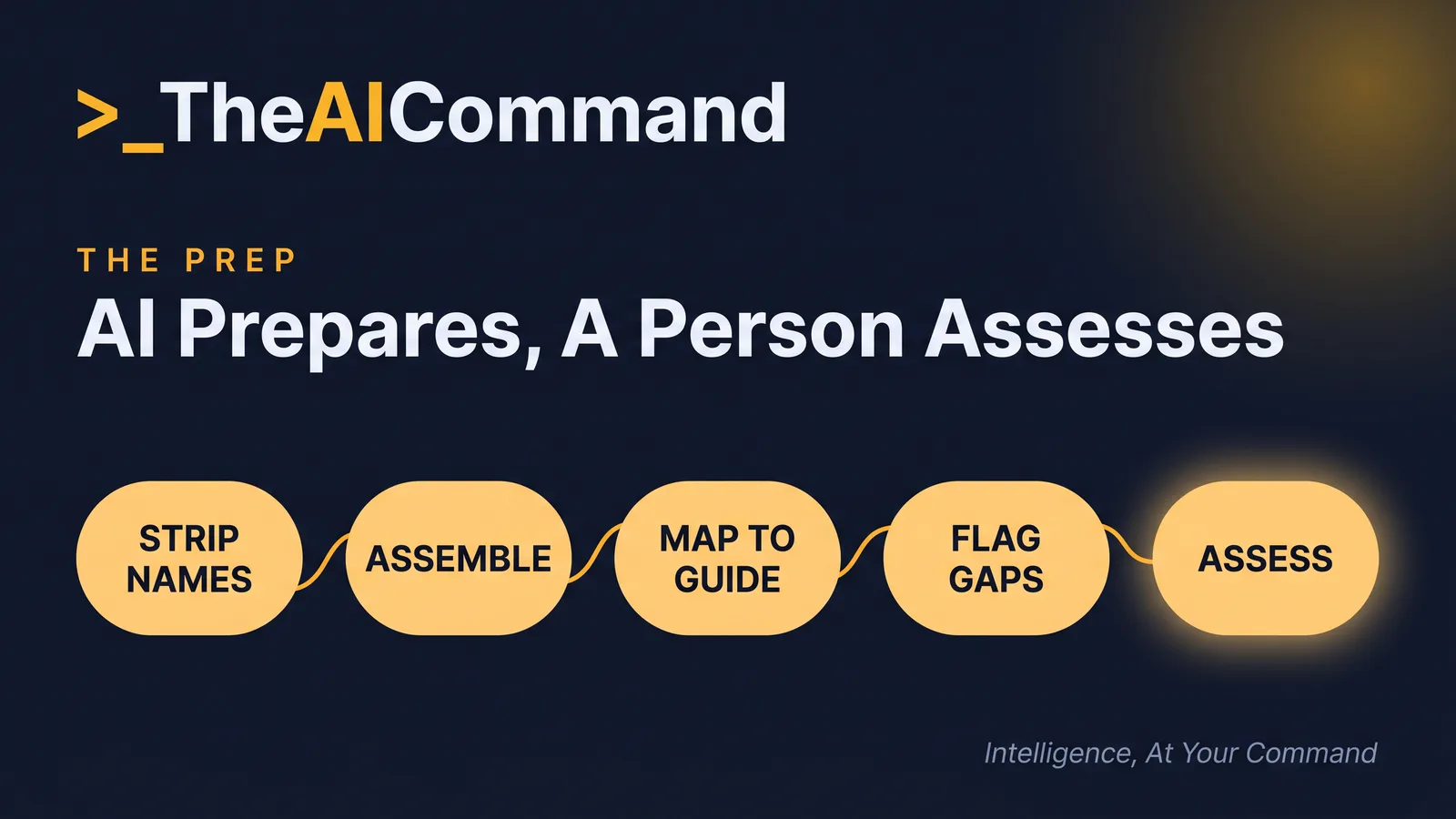
- De-identify the file. Apply placeholders and confirm no identifying detail remains before anything is loaded into an approved tool.
- Assemble and date-order. Have AI build a chronology of the de-identified medical reports, tagged by author and body region.
- Map to the Guide. Ask the model to indicate which parts of the approved Guide each report appears to address, producing an orientation map.
- Flag gaps and conflicts. Have AI surface where reports disagree or where evidence on a claimed condition is missing. Read those passages yourself.
- Send a clean, complete file to the qualified assessor. The assessment of whole person impairment against the Guide is made by the suitably qualified medical practitioner.
- Determine, and record the human decision. The delegate makes the determination on the entitlement. Record that the assessment and the determination were made by people, on the evidence.
The human-in-the-loop point is not a closing caveat here. It is the structure. AI prepares; people assess and decide. At no step does the model produce the percentage or the outcome, and the file should make clear that it did not.
A worked example
Consider [CLAIMANT_NAME], whose accepted claim involves a shoulder injury and a later-claimed secondary condition. The file holds reports from a treating surgeon, two independent medical examiners and a general practitioner, gathered across eighteen months, and they do not all agree. A case manager preparing this file for assessment de-identifies every report, then has an approved AI tool build a dated chronology and tag each report by the body region and the issues it addresses. The model maps the reports against the structure of the approved Guide and flags that two of them assess the shoulder differently and that the secondary condition is addressed in only one. The case manager reads those specific passages, confirms the inconsistency is real, and ensures the file sent to the qualified assessor is complete and clearly ordered. The assessor makes the whole person impairment assessment. The delegate makes the determination. The model never offered a percentage, and the file records that the judgement was human throughout. The time saved was in the preparation. The judgement was never on the table.
That is the whole proposition. A permanent impairment claim rewards careful, well-organised evidence and exacting judgement. AI can make the evidence well-organised. The judgement stays exactly where the Act puts it.
For a case manager carrying a heavy portfolio, the benefit is real and worth being honest about. The hours an impairment file consumes are mostly spent ordering reports, re-reading them to find the one line that matters, and chasing the gap nobody noticed until late. Moving that work to an approved, de-identified AI step gives those hours back, and it tends to produce a cleaner, more complete file for the assessor, which is its own quiet improvement in fairness for the claimant. None of that changes who assesses the impairment or who determines the claim. It changes how prepared they are when they do. Keep the de-identification evidence and the record of who assessed and who determined, and the file will hold up to scrutiny precisely because the judgement was always human.
Bottom line
AI can carry the organisation of a section 24 permanent impairment file: assembling and date-ordering de-identified reports, mapping them to the approved Guide, and flagging gaps and inconsistencies. It cannot assess whole person impairment or make the determination. The time is saved in the preparation, while the whole person impairment assessment and the determination stay with a qualified medical practitioner and the authorised delegate.
Do this Monday:
- De-identify every medical report, replacing name, claim number and date of birth with placeholders, before the file touches any approved AI tool, and keep the re-identification key separate.
- Have the approved tool build a dated chronology of the reports, tagged by author and body region.
- Ask the model to map each report to the approved Guide and flag gaps and inconsistencies, then read those passages yourself to verify.
- Send a clean, complete file to the qualified medical practitioner for the whole person impairment assessment.
- Record that the assessment and the determination were made by people, on the evidence.
Content disclaimer: This article is for general educational purposes only and does not constitute legal advice, liability determination guidance, or a substitute for professional judgement. Workers compensation decisions must be made by appropriately qualified and authorised persons under the Safety, Rehabilitation and Compensation Act 1988. All AI outputs described in this article require human review before use in any claims management context.
TheAICommand. Intelligence, At Your Command.