
Giving every team the same AI licence does not create equal capability. Audit five conditions instead: safe access, protected practice time, suitable work, review burden and recognition. Then repair the opportunity gaps your rollout metrics cannot see.
A licence tells you who can open the tool. It does not tell you who can use it safely on work that matters.
One team has approved data, representative tasks, scheduled practice, available reviewers and a forum that recognises good judgement. Another has the same licence but only sensitive live work, no practice space and a reviewer queue that consumes every experiment. Your dashboard calls both teams enabled. Their opportunity to build capability is plainly different.
Fair capability does not require identical permissions or identical tasks. Risk, customer impact and regulatory obligations can justify different controls. It requires each team to have a credible, properly controlled route from access to useful practice. Run a five-condition distribution audit to find where that route breaks.
Why is one licence not equal capability?
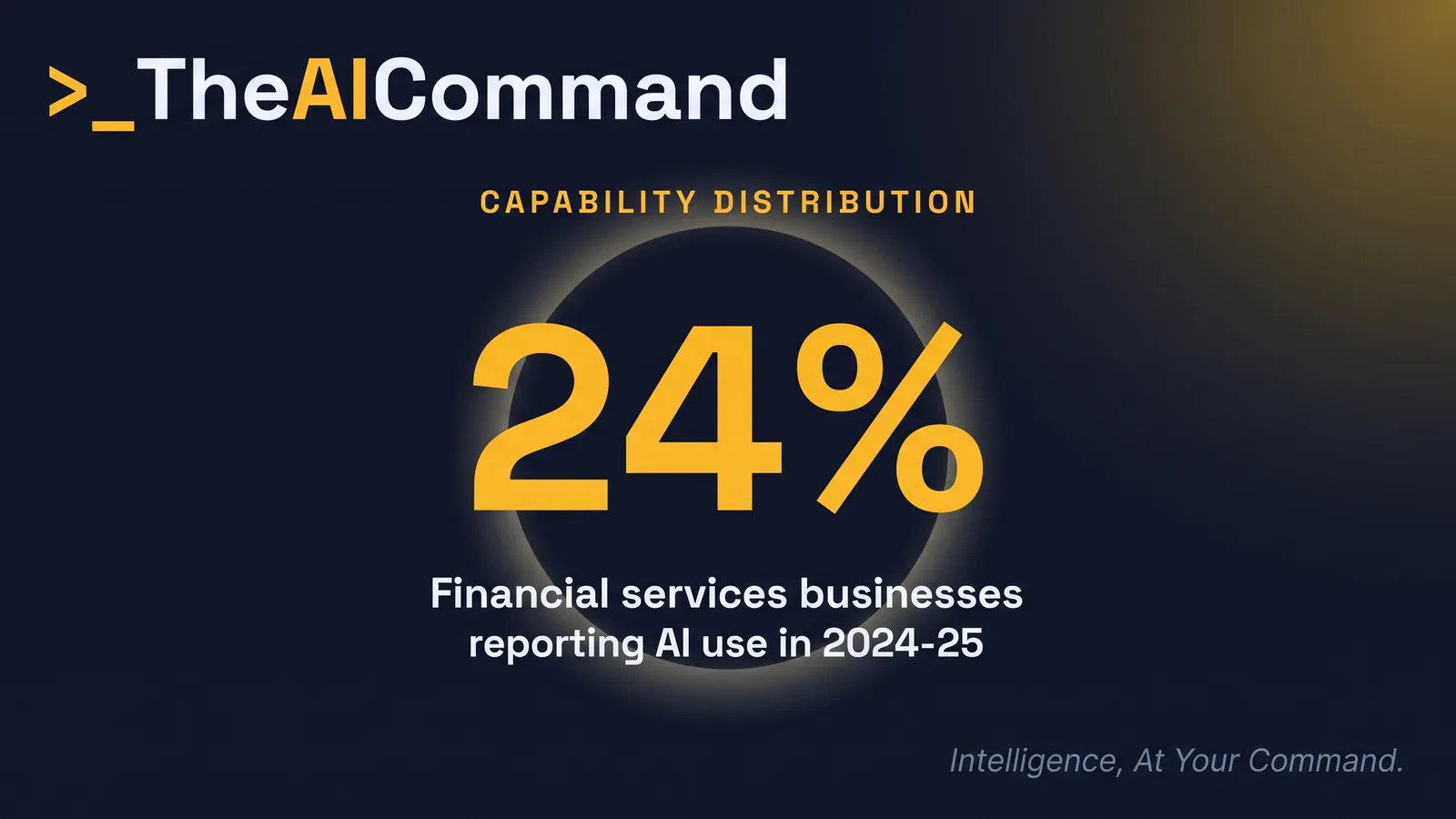
Australian adoption data makes licence counts particularly tempting. According to the Australian Bureau of Statistics, 12 per cent of businesses reported using AI in the 2024-25 financial year, including 24 per cent of businesses in Financial and Insurance Services. The ABS also says the question is not designed to measure intensity or extent of use within the business (Australian Bureau of Statistics).
That limitation matters inside an organisation. A business-level adoption figure cannot tell you whether a complaints team has approved source material, whether a risk team can find time to practise or whether an operations team can obtain human review. Counting issued licences has the same blind spot at a smaller scale, which is why counting prompts is the wrong measure too.
Jobs and Skills Australia describes Australian adoption as multi-speed. Its national study says large firms and the market sector are adopting faster, and identifies investment capacity, firm-level capability and workforce skill mix as conditions that shape adoption (Jobs and Skills Australia). That is organisation-level analysis, not evidence of inequality between teams in one bank or insurer. It does support a useful leadership premise: access sits inside a wider set of enabling conditions.
Two peer-reviewed studies show why those conditions deserve attention, while also setting strict limits on what leaders can claim.
Noy and Zhang assigned incentivised, occupation-specific writing tasks to 453 college-educated professionals and randomly gave half of them access to ChatGPT. In that online experiment, average completion time fell by 40 per cent and assessed output quality rose by 18 per cent. Lower-performing participants benefited more, and measured inequality between workers decreased (Science).
That was a short experiment using bounded mid-level writing tasks, not a continuing workplace rollout in Australian financial services. It shows that access can reduce a performance gap under tested conditions. It does not show that a licence will do so when teams receive different tasks, support, controls or time.
Brynjolfsson, Li and Raymond studied the staggered introduction of a conversational assistant across 5,172 customer-support agents at one company. Access increased issues resolved per hour by 15 per cent on average, with larger gains among less experienced and lower-skilled agents. The most experienced and highest-skilled agents recorded small speed gains and small quality declines (Quarterly Journal of Economics).
The tool, occupation and firm were specific, most agents were based in the Philippines, and people retained discretion over the suggestions. The authors emphasise that the findings capture medium-run effects in a single firm and do not identify aggregate employment or wage effects. The finding is not a productivity target. It is evidence that the effect of one tool was distributed unevenly even within a relatively uniform job.
Your leadership question is therefore not, "Who received AI?" It is, "Who received a safe and realistic opportunity to become capable with it?"
How do you audit opportunity rather than activity?
Use a capability distribution audit. It compares five conditions at team level. It does not count prompts, grade individual literacy, inventory skill ownership, forecast staffing or test who follows a preferred style of AI use.
- Safe access: Can the team reach an approved tool with the permissions, data pathways, source material and support required for its work? A login without an approved input route is constrained access.
- Protected practice time: Is time scheduled for supervised experimentation, reflection and correction, or must learning compete with live service demand? Count delivered time, not a calendar invitation that was repeatedly cancelled. The reps argument in protect the reps applies here too.
- Suitable tasks: Does the team have representative, permitted tasks on which AI assistance could matter? Generic demonstrations do not substitute for work that teaches the team where the tool helps and where it fails.
- Review burden: Can an authorised human review the output within a useful timeframe? Include the time, scarcity and complexity of review, the quiet cost mapped in the AI review tax. Do not lower a necessary standard to make the distribution look equal.
- Recognition: Does the organisation notice safe reuse, corrections, escalations and shared learning, or only visible output and speed? This tests whether capability-building is supported across teams. It is not a ledger for attributing individual expert edits.
For each condition, record clear, constrained or absent, followed by evidence, the reason for any constraint, a named owner and a repair date. Do not total the ratings into a maturity score. The pattern is more useful than the arithmetic. A team with safe access but no suitable task needs a different intervention from a team whose work is blocked by scarce review.
Use this prompt to structure approved, de-identified team evidence. A human people leader, risk representative and operational owner must verify every rating and decide whether a difference is justified. AI must not decide fairness, employee performance or access rights.
Use this checklist before accepting the map:
- The comparison uses actual access records, delivered practice time, named tasks and observed review arrangements.
- Teams are compared only where the conditions are meaningfully comparable.
- Higher controls are recorded with their operational or risk rationale, not treated automatically as unfair.
- No individual prompt histories, private chats or personal productivity scores are used.
- Review work and teaching work are visible rather than treated as free support.
- Each material constraint has a human owner who can authorise or escalate a repair.
The audit is about opportunity design. It is not a demand for every team to use AI at the same rate. A team may test the tool and reasonably use it less because the available tasks are unsuitable. That is different from never receiving a safe way to test the proposition.
What should you change first?
Repair the largest opportunity gap that can be addressed without weakening the control environment. That may mean creating a representative practice pack, protecting a small amount of time, adding a reviewer clinic or recognising the people who make corrections reusable. The structured on-ramp in the AI new starter apprenticeship is one ready-made repair.
Consider this fictional example. [TEAM_ALPHA] and [TEAM_BETA] in [FINANCIAL_SERVICES_FUNCTION] both hold an enterprise AI licence. [TEAM_ALPHA] has an approved source set, 45 minutes of protected practice each fortnight, two representative low-consequence tasks, a reviewer roster and a monthly demonstration of verified lessons.
[TEAM_BETA] handles more sensitive matters. Its members cannot place live files into the tool, which is an appropriate control. However, the team has no de-identified practice pack, no approved substitute task and no reserved reviewer time.
The fair repair is not to copy [TEAM_ALPHA]'s permissions. [DATA_OWNER_ROLE] can approve a de-identified or synthetic practice pack. [RISK_OWNER_ROLE] can confirm two bounded tasks. [REVIEWER_ROLE] can run a fortnightly clinic, and [PEOPLE_LEADER_ROLE] can recognise verified corrections and escalations in the existing team forum. Human professionals still review every output and retain every decision required by law, duty, policy or good practice.
This prompt creates a small repair experiment. The relevant data, risk, operational and people leaders must approve the inputs, task boundary and review standard before it starts, then interpret the result themselves.
Start small enough to learn. A 30-day repair should establish whether the team now has a usable opportunity, not prove a business case or force adoption. Keep output quality, errors, review effort and participant feedback beside any activity count.
Do this Monday
- Choose three teams. Select teams in the same function with different work profiles. Tell them the exercise examines operating conditions, not individual enthusiasm or prompt volume.
- Collect evidence for the five conditions. Use approved access pathways, four weeks of delivered practice time, current task lists, reviewer arrangements and existing recognition forums.
- Map constraints with the teams. Rate each condition clear, constrained or absent. Record the reason and let the operational and risk owners correct the description.
- Select one repair. Choose a gap that can be changed safely within 30 days. Name the approvals, owner, evidence and stop conditions before work begins.
- Review distribution, not uniformity. At day 30, ask whether each team has a credible route to safe practice. Keep justified differences, repair neglected conditions and let accountable humans decide what happens next.
Bottom line
Equal licences can conceal unequal opportunity. Audit safe access, protected practice time, suitable tasks, review burden and recognition before calling capability fairly distributed. Repair the route to safe practice without weakening the controls that different work requires. The aim is not identical usage, but a defensible opportunity for every team to learn where AI assistance belongs and where human judgement must remain decisive.
This article is general information and education only. It is not legal, compliance, financial or professional advice. Obligations vary by organisation and circumstance. Verify current requirements against the primary sources cited and seek advice specific to your situation.
References
- Australian Bureau of Statistics, "Characteristics of Australian Business, 2024-25 financial year", released 25 June 2026. https://www.abs.gov.au/statistics/industry/technology-and-innovation/characteristics-australian-business/latest-release
- Jobs and Skills Australia, "Our Gen AI Transition - Adoption", Paper B of Australia's AI Transition: Jobs, Skills and The Future of Work, accessed 31 July 2026. https://www.jobsandskills.gov.au/studies/generative-artificial-intelligence-capacity-study/our-gen-ai-transition-adoption
- Shakked Noy and Whitney Zhang, "Experimental evidence on the productivity effects of generative artificial intelligence", Science, 2023. https://doi.org/10.1126/science.adh2586 (published 14 July 2023)
- Erik Brynjolfsson, Danielle Li and Lindsey Raymond, "Generative AI at Work", The Quarterly Journal of Economics, 140(2), published online 4 February 2025. https://doi.org/10.1093/qje/qjae044
TheAICommand. Intelligence, At Your Command.