
A death benefit is divided by loss, not by headcount.
A work injury that ends in death sends a file to a delegate with a decision at its centre that no formula makes for them: how to divide a single lump sum among the people who depended on the person who died. AI can assemble every fact that bears on that decision, sorted against the test the SRC Act sets. It cannot weigh one dependant's loss against another's. That weighing is the delegate's, and section 17 gives it to a decision maker for a reason.
Context for general readers: Under the Safety, Rehabilitation and Compensation Act 1988 (SRC Act), when an injury to an employee results in death, the scheme pays compensation for the people who were economically dependent on them. Section 17 sets out a lump sum for the dependants and a weekly amount for dependent children, and it gives the decision maker a discretion to divide the lump sum between multiple dependants rather than splitting it equally. Comcare's scheme guidance on compensation for injuries resulting in death explains how that discretion is exercised. The decision is a determination, made by a delegate, and it can be reviewed.
This is a piece about the narrowest and most human decision in the scheme, and the narrow job AI can do around it. A death benefit is not a calculation of what a life was worth. It is a legislated sum, divided among dependants according to what each of them actually lost when the employee's earnings stopped. AI can take the assembly work off the delegate's desk, so their attention goes to the judgement rather than the paperwork. Every example here uses placeholders, because in production the file is de-identified before it goes near an AI tool, and a death claim carries some of the most sensitive relationship data in the scheme.
The provisions below were read against the SRC Act at Compilation No. 82, compilation date 1 July 2026, as at 26 September 2026.
What section 17 actually provides
Section 17 has two moving parts, and it helps to keep them separate. The first is a lump sum. The second is a weekly amount for dependent children. The lump sum is the part that has to be divided, and the division is where the judgement sits.
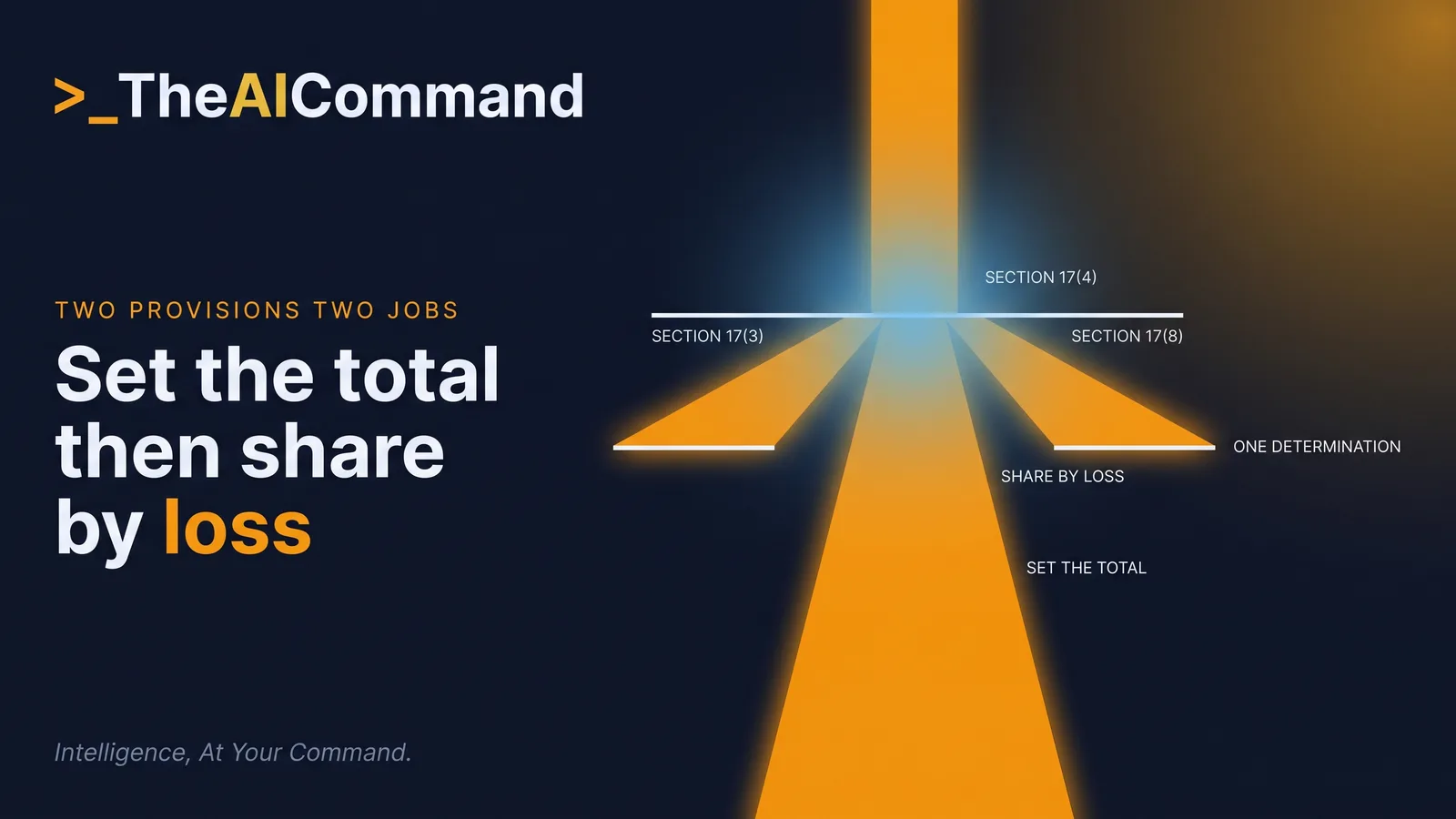
The total lump sum is set first. Under section 17(3), if the employee dies leaving dependants some or all of whom were wholly dependent on the employee at the date of death, Comcare is liable to pay the amount the subsection specifies for the benefit of all of those dependants. Section 17(4) deals with the case where no dependant was wholly dependent but some were partly dependent: the amount is then one Comcare determines, not exceeding the section 17(3) figure, having regard to any losses those dependants suffered as a result of the cessation of the employee's earnings. That distinction between wholly and partly dependent does one job: it quantifies the total that will be paid. It does not decide how the total is shared. Comcare's guidance is explicit that the lump sum is not a measure of the monetary value of the income lost. It is a statutory amount that the Act then allocates according to relative loss.
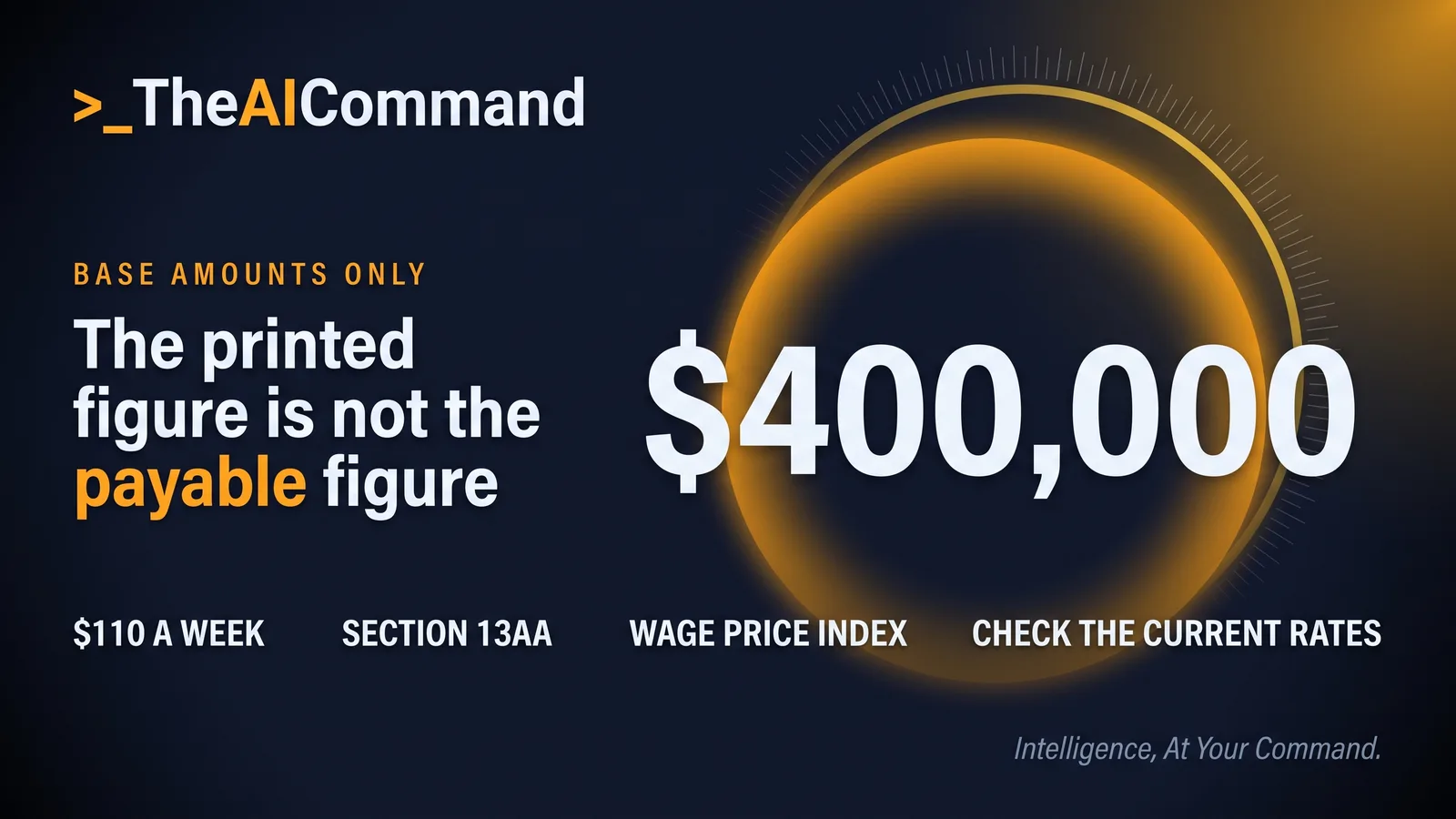
The figures printed in the Act are not the figures payable. The text of section 17(3) still reads $400,000, and section 17(5) still reads $110 a week. Those are base amounts that section 13AA has indexed every year since, so a delegate who reads the number off the statute has the wrong number.
Once the total is fixed, the question changes from how much to who gets what. And that is a separate provision, with a different logic.
Why is the lump sum apportioned by loss, not split equally?
Section 17(8) is the heart of a death claim. Where an amount is payable for the benefit of two or more dependants, "Comcare shall determine the shares of those dependants in that amount as Comcare thinks fit, having regard to any losses suffered by those dependants as a result of the cessation of the employee's earnings". Two things follow from that wording, and both matter.
First, the shares are not equal by default. The statute does not divide the sum by the number of dependants. It directs the decision maker to the losses each dependant suffered when the employee's earnings stopped, and to allocate the sum with regard to those relative losses. A spouse who relied on the employee's full earnings and a largely independent adult child did not lose the same thing, and section 17(8) does not pretend they did.
Second, the wholly-versus-partly distinction that set the total does not carry into the apportionment. Section 17(8) contains no reference to it. The only consideration the subsection names is the losses suffered, so every dependant is weighed on their own loss, on the facts of that household, not on a category assigned earlier.
Two further subsections shape the file. Section 17(9) reads a reference to a dependant as a dependant by or on behalf of whom a claim is made, so the apportionment is among claimants, not among everyone who might have claimed. Section 17(10) provides that where claims are made by or on behalf of two or more dependants, Comcare makes one determination in respect of those claims. Every share is fixed in the same decision, so the reasons for each share sit side by side and have to be consistent with one another.
The phrase thinks fit signals a broad discretion, but broad is not unbounded. Comcare's guidance is clear that it is exercised on reasonable grounds and documented transparently, and that the reasoning matters most where the delegate departs from a straightforwardly proportional result, or considers that applying the guidance's principles would produce a result that would not reasonably correspond to the economic losses each dependant suffered. This is delegated judgement on specific facts, and it produces a determination: a decision that can be taken to reconsideration and then to the Administrative Review Tribunal, where the reasons will be tested. A record that captures only the numbers, and not why they were chosen, is the record that fails there.
The weekly amounts for prescribed children
Alongside the lump sum, section 17(5) provides a weekly amount for a prescribed child who was wholly or mainly dependent on the employee at the date of the injury or at the date of death, and also for a prescribed child of the employee born after the death, or one who would have been wholly or mainly dependent had the employee not died. Under section 17(6) it is not payable for any period during which the child is not a prescribed child. This runs in parallel to the lump sum. It is not carved out of it.
Two definitions do the work here. A prescribed child, under section 4(1), is a person under 16, or a person aged 16 or more but under 25 who is receiving full-time education at a school, college, university or other educational institution and is not ordinarily in employment or engaged in work on their own account. And under section 4(5), a spouse or a prescribed child of the employee who lived with the employee immediately before the date of death is taken to have been wholly dependent, which removes the need to prove day-to-day reliance for the people most obviously affected. These are the kinds of status questions AI can help map from a de-identified file, because they turn on documented facts such as age, enrolment and living arrangements, not on discretion.
How indexation sets the figure
The lump sum is a statutory figure, and it moves. The amounts in sections 17(3), 17(4) and 17(5) are indexed on 1 July each year under section 13AA, which uses the Wage Price Index. That is a deliberate contrast with section 13, which indexes other amounts, including the funeral maximum in section 18(4)(a), by the Consumer Price Index. The death benefit tracks wages rather than prices. The practical consequence for a delegate is simple and easy to get wrong: the correct total is the indexed amount current at the relevant date, not a figure remembered from a previous claim or copied from an old template. Confirm the current amount against Comcare's published statutory rates before the total goes anywhere near an apportionment. No AI tool is trusted to recall a statutory figure from training; the number comes from the current rates table, not the model.
Where does AI fit, and where does it stop?
The decision breaks cleanly into two parts, and the line between them is the whole point. There is the assembly: identifying the dependants, establishing each one's dependency status, and gathering the evidence of what each actually lost when the earnings stopped. Then there is the exercise of the discretion: weighing those losses against each other and fixing the shares. AI is useful for the first part and is kept out of the second, the same division that runs through every AI-assisted determination under the SRC Act.
Working from a de-identified file, AI can build a dependant map: who the claimed dependants are, their status against the section 4 definitions, and whether the section 4(5) deeming applies. It can assemble, for each dependant, the evidence going to economic loss, the reliance on the employee's earnings, the household's financial structure, and what changed at the date of death. It can draft a reasoning skeleton that lists the factors section 17(8) makes relevant and leaves a blank space against each dependant for the delegate to complete. It can flag gaps, such as a claimed dependant with no evidence of economic support on file, or a prescribed child whose enrolment is asserted but not documented. That structured comparison surfaces the real questions. It does not answer them.
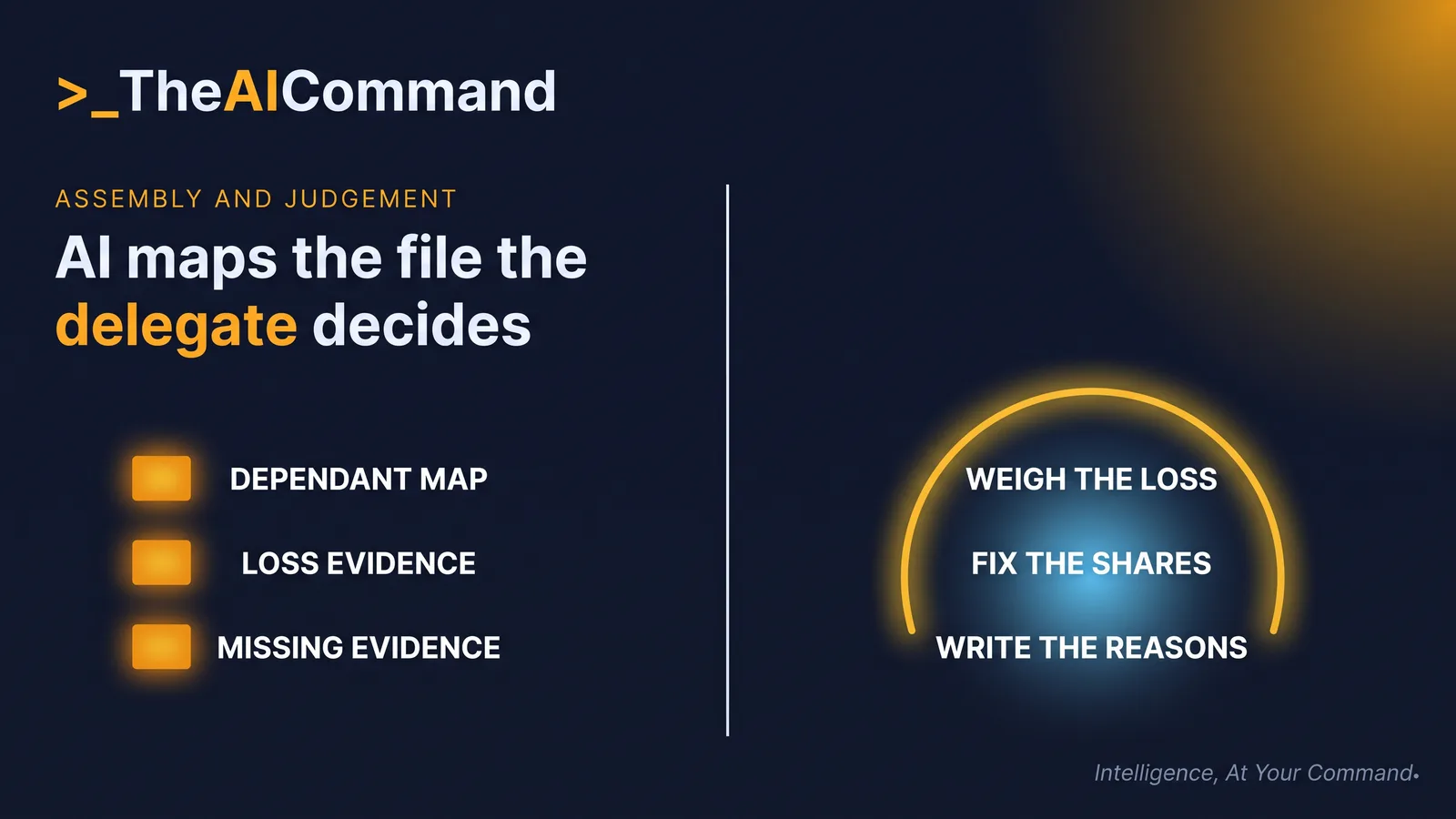
What AI cannot do is fix the shares. It cannot decide that one dependant receives more than another, because that is the exercise of the discretion section 17(8) gives to the decision maker, on the specific facts of one family. A tool that outputs apportionment percentages is the wrong tool for this step, because a number presented with false confidence is harder to argue with than a blank. The delegate reads the source evidence alongside the AI-built map, weighs the losses in their own reasons, and records the AI's role in the file note at the time of decision, so that the reasoning trail can be reconstructed later if the determination is reviewed.
De-identification callout. A death claim holds some of the most sensitive information in the scheme: relationship structures, economic dependency, and the circumstances of a person's death. Before any of it reaches an AI tool that sits outside the scheme's perimeter, remove full names, claim numbers, dates of birth, addresses and the identities of dependants, and replace them with stable placeholders the delegate can re-attach afterwards. Use [CLAIMANT_NAME], [CLAIM_NUMBER], [DATE_OF_INJURY] and neutral dependant tokens such as [DEPENDANT_A] and [DEPENDANT_B] with a [RELATIONSHIP] label. The de-identified analysis is a draft the delegate applies back to the real file.
Two prompts you can adapt
The first prompt builds the dependant map and gathers the loss evidence, without proposing any share.
What to check: confirm every dependant on the claim form appears in the map and no one appears who is not on it, because section 17(9) confines the apportionment to claimants. Check each age and enrolment against the source documents before relying on a prescribed-child status. Delete any sentence that ranks, weights or compares dependants, because that is the finding the prompt reserves to the delegate. Confirm no real name or claim number survives in the output.
The second prompt drafts a reasoning skeleton for the delegate to complete in their own words, and it confirms the total is set and indexed before any apportionment is contemplated.
What to check: confirm the template carries one determination for all the dependants, as section 17(10) requires, not one per dependant. Check the total and the date against the current statutory rates table yourself, because the prompt only records a figure it was given. Confirm every assessment line is blank and no share, ranking or percentage has been filled in.
Do this Monday
- Set the total first. Confirm whether at least one dependant was wholly dependent at the date of death, which fixes whether section 17(3) or section 17(4) applies.
- Confirm the indexed figure. Check the current lump sum against Comcare's published statutory rates, because section 13AA moves it every 1 July, and never carry a number across from an old claim.
- De-identify the file before any AI tool touches it. Strip names, claim numbers, dates of birth, addresses and dependant identities, and swap in placeholders you can re-attach.
- Use AI to build the dependant map, to assemble the loss evidence for each dependant, and to flag what is missing.
- Read the source evidence yourself. The AI map is a guide to the file, not a substitute for it, especially on the question of what each dependant actually relied on.
- Make the apportionment in your own reasons, weighing each dependant's loss under section 17(8), and explain any share that departs from a straightforwardly proportional result.
- Record the AI's role in the file note at the time of decision: which tool, what de-identified data it saw, and how you used its output.
The section 17 apportionment checklist
- The total is set under section 17(3) or 17(4), and you have confirmed which applies.
- The lump sum figure is the section 13AA indexed amount current at the relevant date, checked against the statutory rates.
- Prescribed children are identified against section 4(1), and any section 4(5) deeming is recorded.
- The file was de-identified before any AI tool touched it, with placeholders noted for re-attachment.
- Each dependant's economic loss is evidenced, and gaps have been listed and either filled or accounted for.
- The apportionment is the delegate's, made on these facts under section 17(8), in one determination under section 17(10), and recorded in the delegate's own reasons.
- Any departure from a proportional result is explained in those reasons.
- The AI's role is captured in the file note at the time of decision.
A worked example
An accepted claim follows the death of an employee, claim number [CLAIM_NUMBER], date of injury [DATE_OF_INJURY]. Three dependants are claimed: [DEPENDANT_A], a [RELATIONSHIP] who lived with the employee and relied on their earnings; [DEPENDANT_B], a 15-year-old child of the employee living in the household; and [DEPENDANT_C], a 27-year-old adult child who lived independently and was employed full time.
De-identified, the file goes to AI. It maps the three dependants against the section 4 definitions: [DEPENDANT_A] and [DEPENDANT_B] living with the employee, so the section 4(5) deeming of whole dependency may apply, and [DEPENDANT_B] a prescribed child under 16 who may also attract a weekly amount under section 17(5). [DEPENDANT_C], aged 27, independent and employed, is not a prescribed child, and the map flags that there is no evidence on file of any economic support from the employee. It assembles the loss evidence for each and marks the missing reliance evidence for [DEPENDANT_C] as the key gap. It proposes no shares.
The delegate now does the part that is theirs. They confirm the total under section 17(3) at the current indexed figure and request further information on [DEPENDANT_C]'s circumstances. On the evidence, [DEPENDANT_C] was not dependent on the employee for economic support at the date of death, so [DEPENDANT_C] is not a dependant under section 4(1) and takes no share. The delegate apportions the lump sum between [DEPENDANT_A] and [DEPENDANT_B] having regard to the losses each suffered, in one determination, and sets out in the reasons why each share was fixed where it was. The AI structured the analysis. The delegate weighed the loss and made the determination. That division is the whole point.
The bottom line
A death benefit under section 17 is a statutory lump sum, indexed each year under section 13AA, and its hardest question is not how much but who gets what. Section 17(8) answers that with a discretion: the shares turn on the losses each dependant suffered when the employee's earnings stopped, not on an equal split and not on the wholly-versus-partly category that set the total. AI can build the dependant map, assemble the loss evidence and draft the reasoning structure on a de-identified file. The weighing of one loss against another, and the single determination that follows, stay with the delegate the Act empowers to make them.
This article is general information and education only. It is not legal, compliance, financial or professional advice.
TheAICommand. Intelligence, At Your Command.