
Your enterprise agreement now has a machine reader.
On 17 August 2026 the Fair Work Commission published a short notice about a tool it is building. Read quickly it is administrative housekeeping. Read properly it is a lodgement rule rewritten so that software can read an enterprise agreement before a person does.
The Commission's description is unusually direct: "We are developing a new tool called the Agreement Checklist Assistant. This tool aims to help staff carry out pre-approval checks for enterprise agreement applications. It uses AI to help staff identify concerns with an agreement before it is allocated to a Commission Member for approval."
Two things follow for anyone who lodges agreements, and they run on different clocks.
What is already in force, and what is not
The rule is live. The tool is not.
The Fair Work Commission Rules 2024 were amended by the Fair Work Commission Amendment (2026 Measures No. 1) Rules 2026, which commenced on 31 July 2026 after a period of public consultation. Among several changes described as supporting recent legislative reforms and electronic case management, the amendments introduce "a new requirement that applications for approval of an enterprise agreement be accompanied by a digital copy of the agreement". The Commission has updated its forms to include lodgement instructions.
The tool the rule serves is still in development. The Commission says it "will be used by our staff to help them triage agreement approval applications", and its change programme page still describes the Assistant as one it is developing, listing it among initiatives responding to "a significant increase in workload" that the Commission expects to have risen by over 70% across three years by the end of the 2025-26 financial year.
That gap matters for planning. The obligation attaches to the next agreement lodged. The Commission's page still described the tool as in development when it was last updated on 17 August 2026, so the machine that reads the file may well arrive after it.
What a digital copy means, and where it bites
The Commission defines the requirement carefully. "The original digital version of the agreement is a copy that's in a machine-readable format. This is an electronic version of the agreement created in word processing software. In most cases, this will be a Microsoft Word (docx) document." Rich Text Format and PDF are also accepted.
Then comes the sentence that will cost somebody a fortnight.
"If the signed version of the agreement is not in an accepted digital format, an electronic version with identical content, apart from the signatures, must also be lodged. This means parties may need to lodge 2 copies of the agreement."
The Rules put the same standard in tighter language. The amended rule requires that "the text of the original digital copy must be identical to the text of the signed copy" of the agreement, minus the signatures, and it allows one document to do both jobs where the signed copy is itself in an original digital format. The National Practice Lead for Agreements added the trap in a statement issued the same day. The copy "must not be created by scanning or photocopying a document that is in hard copy form". The statement is explicit about the common case: "A PDF document created by scanning a hard copy is not machine readable and will not comply with the Rules."
Identical content, apart from the signatures, is a document control standard applied to a document that real bargaining treats as fluid until the last hour. Anyone who has run a bargaining process knows the shape of the risk. A clause is renumbered after a late agreement to move a provision. A schedule is corrected in the printed pack but not in the master. A track change is accepted in one file and rejected in another. Someone prints, signs and scans the version on the shared drive while the negotiator's laptop holds the version everyone actually agreed.
Until now those drifts were survivable because a person read one document. A second file lodged alongside the first, held to an identical-content standard and read by software built to compare clauses, is a different proposition. The discrepancy no longer depends on anyone noticing.
Non-compliance carries a stated consequence rather than a penalty. The Commission says it will contact applicants who do not provide a digital copy, that a Member may then request an explanation for the non-compliance, and that this may result in delays in processing the application. The National Practice Lead's statement is blunter about the status of the file: every approval application lodged on and from 31 July 2026 is triaged to check for a digital copy, and without one "the application will be regarded as incomplete", with parties given an opportunity to remedy it. Persistent non-compliance "may inhibit the efficient and orderly progression of the application". Delay is the point. An agreement waiting on an explanation is an agreement not operating, with a nominal expiry date that keeps moving toward you.
What the tool actually does
The Commission lists three functions. The Agreement Checklist Assistant will "draw out key timeline information", "compare relevant clauses", and "flag potential issues for further review by our specialist staff".
Those three verbs are worth sitting with, because they describe exactly where agreement approvals have always gone wrong. Timeline information is the arithmetic of the process: when the notice of employee representational rights was given, when access to the agreement began, when voting opened and closed. Clause comparison is the mechanical part of testing an agreement against an instrument. Flagging is triage.
None of it is novel analysis. It is the tireless, uncomplaining execution of checks that a human reader performs unevenly at the end of a long list.
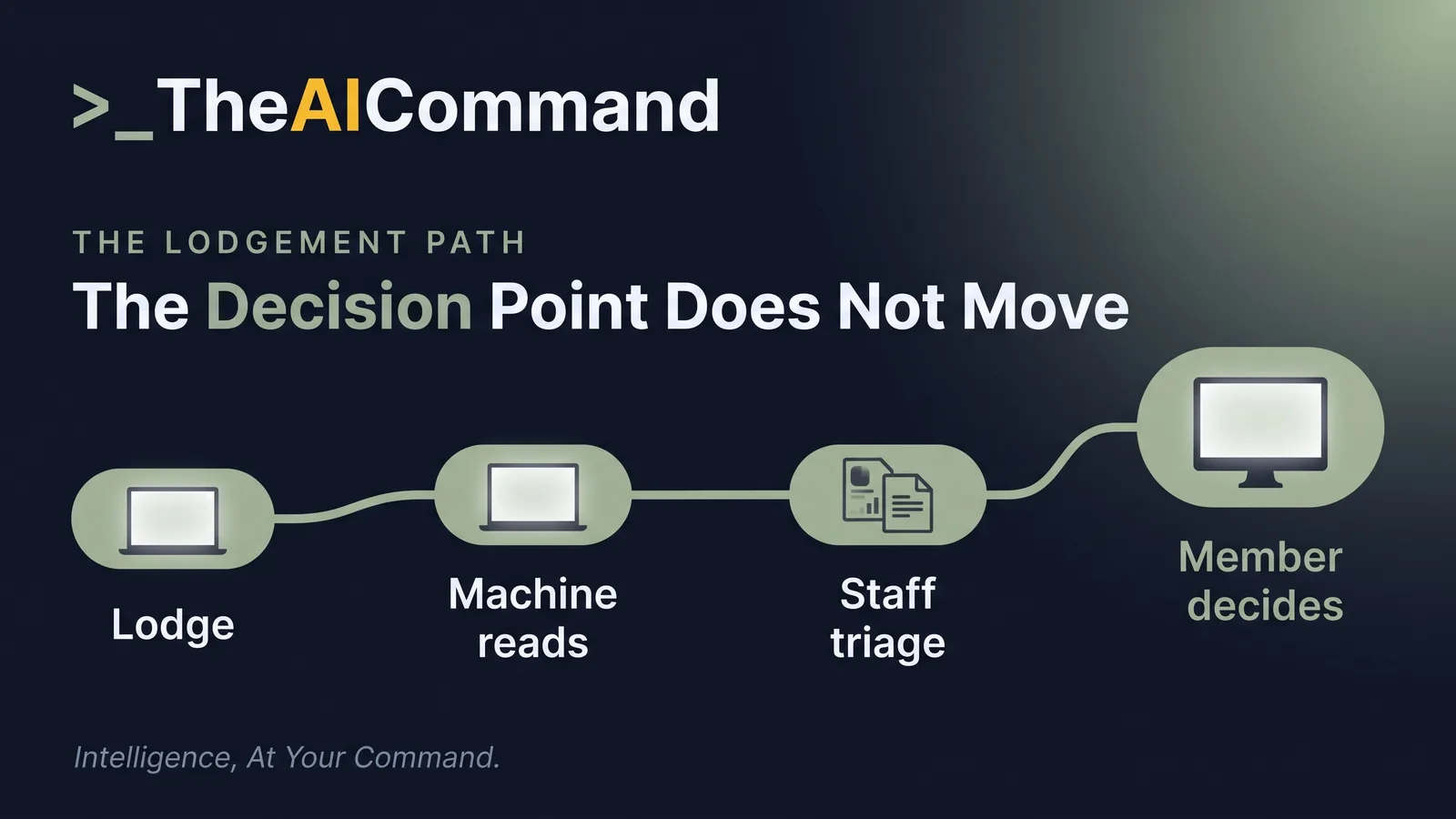
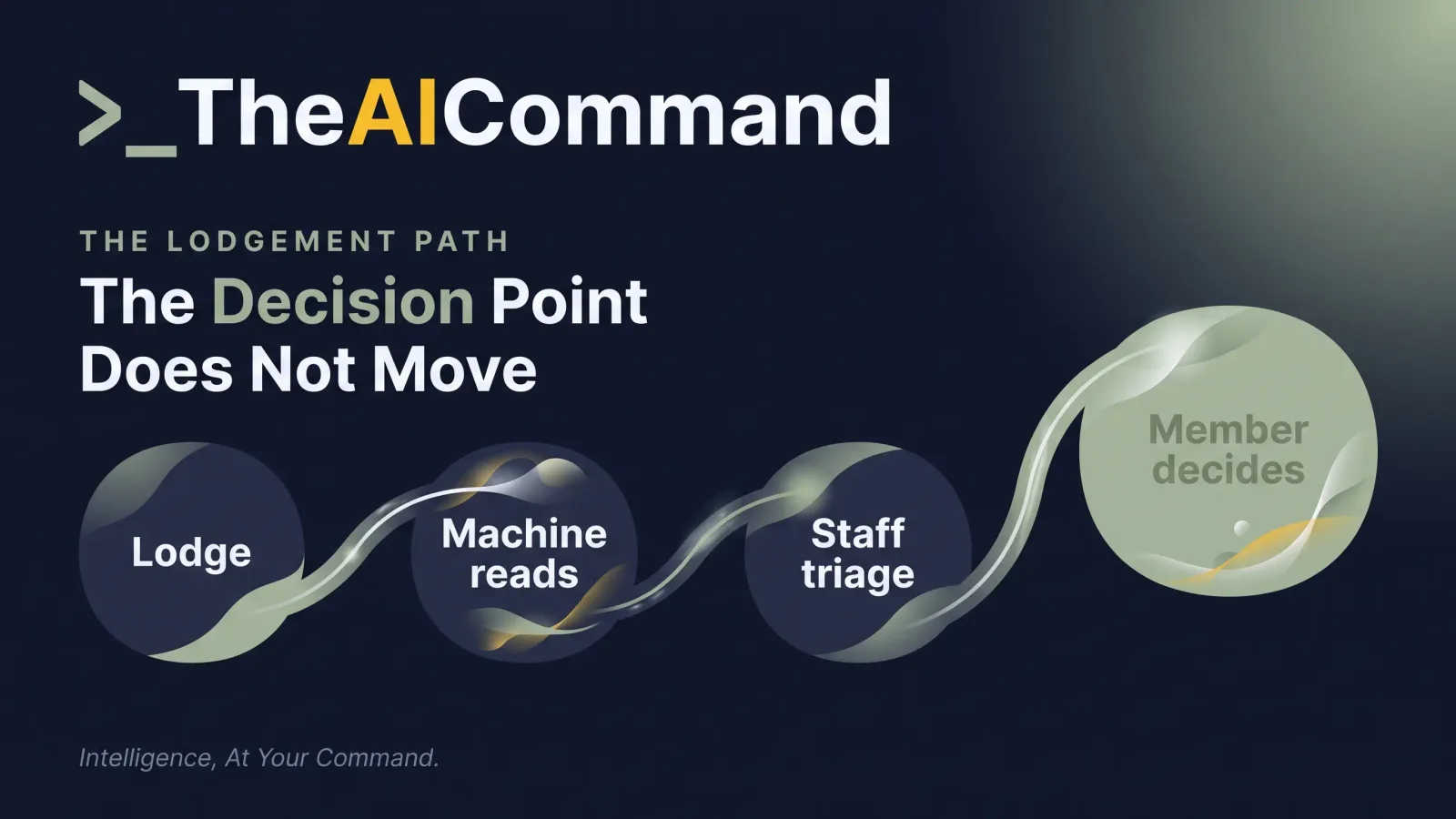
The boundary is stated plainly, and it deserves to be quoted rather than paraphrased: "The Agreement Checklist Assistant is a support tool that will help staff. Human oversight will still happen at key points. Importantly, the tool will not replace the decision-making function of Commission Members."
Prepare for the reader you can predict
The unusual gift here is that the Commission has published what its tool checks. That is a rare thing and it converts preparation from guesswork into a checklist.
A bargaining team can run the same three reads before lodging.
The timeline read: build a single dated chronology of the process from the notice of employee representational rights through to the vote, and reconcile every date against the declarations rather than against memory. If two documents in the application disagree about a date, resolve it now.
The clause read: compare the agreement against the instrument it is measured by, and against itself. Internal cross-references, defined terms used before they are defined, and a schedule that contradicts the body are the ordinary failures.
The consistency read: open the signed copy and the machine-readable copy side by side and confirm the content is identical apart from the signatures. Not similar. Identical.
Nothing about that list requires AI. It is faster with it, and this is the natural place to use it, because the checks are mechanical, the source material is your own, and every finding is verifiable against a document you hold.
TheAICommand works to the Verified Draft Method: de-identify the inputs, ground the model in your own source material, keep a person at the decision point, verify against the primary source, and log what happened. Applied to a lodgement, the model compares two files and produces a difference list. A person decides which differences are real, corrects the master, and records what was changed and by whom.
There is a symmetry worth naming. The Commission has published what its tool does, where the human sits and what the tool will not decide. An employer using AI to draft or check the same agreement can hold itself to the same standard, and if the tool is ever raised, that record is the answer. It is also worth remembering that introducing that tool internally is itself a change to technology, which is the trigger that fires the consultation obligation in a model term or award clause whether or not a single role is affected.
The failure mode to guard against
The risk is not that the tool is wrong. It is that a clean run gets read as an outcome.
A file that produces no flags has passed a set of automated checks operating on the copy you lodged. It has not been approved, and approval remains a decision for a Member on the material before them. The reverse error is just as costly. A flag is a question routed to specialist staff, not a finding against the agreement, and the right response is the evidence that answers it rather than a defensive submission.
That distinction is the same one the Commission has been drawing on the other side of the file. Its three rules for parties using generative AI in a matter sit on disclosure and verification, and the Commission settled that guidance note on 24 August 2026 to apply from 20 October 2026. The problem of AI-invented authorities arriving in Fair Work claims is what happens when a tool's output is treated as a conclusion. A tribunal that asks parties to verify AI output is entitled to say what its own tool does and does not decide. It has.
A worked example
[EMPLOYER] lodges the [AGREEMENT_NAME] on [DATE]. The signed copy is a scanned PDF of a printed document, so a second electronic copy goes with it.
Before lodging, [MANAGER_NAME] runs the consistency read. The two files differ in three places. A clause number changed when a provision moved during the final drafting session, and the printed pack carries the old number in a cross-reference. A schedule heading was corrected in the master but not in the version that went to print. A defined term appears in the singular in one file and the plural in the other.
Only one of those changes what the agreement means, because a cross-reference pointing at the wrong clause changes what the agreement says. The other two change nothing of substance. All three still have to go, because the standard in the Rules is textual identity rather than substantive equivalence, and a heading and a plural are both text. All three are reconciled in both files, the corrections are logged with a date and an author, and the application goes in with matched text. That is a morning's work before lodgement, and it is materially cheaper than the same discovery arriving as a request for an explanation.
Do this Monday
- Find out who lodges. Name the person who prepares the application. They need to know the rule changed on 31 July 2026, because it changed quietly.
- Check your master file format. If the only complete copy of an agreement is a scanned signature page set, the machine-readable copy has to be reconstructed, and reconstruction is where content drift enters.
- Add a consistency step to the lodgement checklist. Signed copy against digital copy, identical apart from signatures, confirmed by a named person before lodgement.
- Build the chronology once. One dated record of the process, reconciled against the declarations, reused across the application rather than rebuilt per form.
- Write down where AI sits in your own bargaining workflow. What it drafts, what it compares, who verifies, what it never decides. One page.
- Brief the bargaining team on the boundary. No flags is not approval. A flag is not a finding. The Member decides. Say it before the first application goes in under the new rule.
Bottom line
A lodgement rule changed on 31 July 2026 so that software could read enterprise agreements before people do, and the Commission has been candid about why: workload. For bargaining teams the consequences are ordinary and immediate. Two copies held to one content standard, dates that must reconcile, and drafting inconsistencies that will now surface mechanically rather than occasionally. The preparation is unglamorous document control, and it is far cheaper than an explanation. The decision at the end of the process has not moved an inch, and nothing here suggests it should.
References
- Fair Work Commission, Agreement Checklist Assistant and changes to agreement applications, 17 August 2026. https://www.fwc.gov.au/about-us/news-and-media/news/agreement-checklist-assistant-and-changes-agreement-applications
- Fair Work Commission, Amendments to the Fair Work Commission Rules, 31 July 2026. https://www.fwc.gov.au/about-us/news-and-media/news/amendments-fair-work-commission-rules
- Fair Work Commission Amendment (2026 Measures No. 1) Rules 2026 (F2026L00987), registered 27 July 2026, commenced 31 July 2026. Inserts subrules 32(1A), 33(1A) and 34(1A). https://www.legislation.gov.au/F2026L00987/asmade/text
- Fair Work Commission Rules 2024, current compilation F2026C00807 (Compilation No. 1), compilation date 31 July 2026. https://www.legislation.gov.au/F2024L00379/latest/text
- Fair Work Commission, National Practice Lead for Agreements statement: Amendment to Fair Work Commission Rules, requirement for digital copies of enterprise agreements, 17 August 2026. https://www.fwc.gov.au/documents/resources/npl-statement-requirement-digital-copies-agreements-2026-08-17.pdf
- Fair Work Commission, Use of AI in Commission cases, 24 August 2026. https://www.fwc.gov.au/about-us/news-and-media/news/use-ai-commission-cases
- Fair Work Commission, Change at the Commission, last updated 17 August 2026. https://www.fwc.gov.au/about-us/operations/change-commission
TheAICommand. Intelligence, At Your Command.