
Nobody is losing a job. You still must consult.
Here is the fact pattern playing out right now. [TEAM] is getting [TOOL_NAME] next month. It drafts first-pass work that people currently write by hand. Headcount does not move, nobody is exiting, and the business case says productivity, not savings. So HR books it as a tool rollout, the vendor runs a training session, and the change goes live. No consultation, because there is nothing to consult about.
That reasoning is wrong on the text of the instrument you already signed.
The exposure is not some future AI law waiting in Canberra. It is a clause sitting in the enterprise agreement or modern award that covers your people today, written for industrial change of a very different kind, and it reads perfectly well as an AI governance rule. The union movement has read it.
What your clause actually says
Start with the trigger. The model consultation term, made by a Fair Work Commission Full Bench in the Fair Work (Model Terms) Determination 2025, applies where the employer "has made a definite decision to introduce a major change to production, program, organisation, structure or technology that is likely to have a significant effect on employees to which this enterprise agreement applies". Technology is named in the trigger. AI is technology.
Now read the definition, because this is where the argument is won or lost. The model term says a major workplace change is likely to have a significant effect if it results in the termination of employment, or a major change in the composition, operation or size of the workforce or to the skills required of employees, or the loss of or reduction in job or promotion opportunities, or the loss of or reduction in job tenure or job security, or the alteration of hours of work, or the need for employees to be retrained or transferred to other work or locations, or job restructuring.
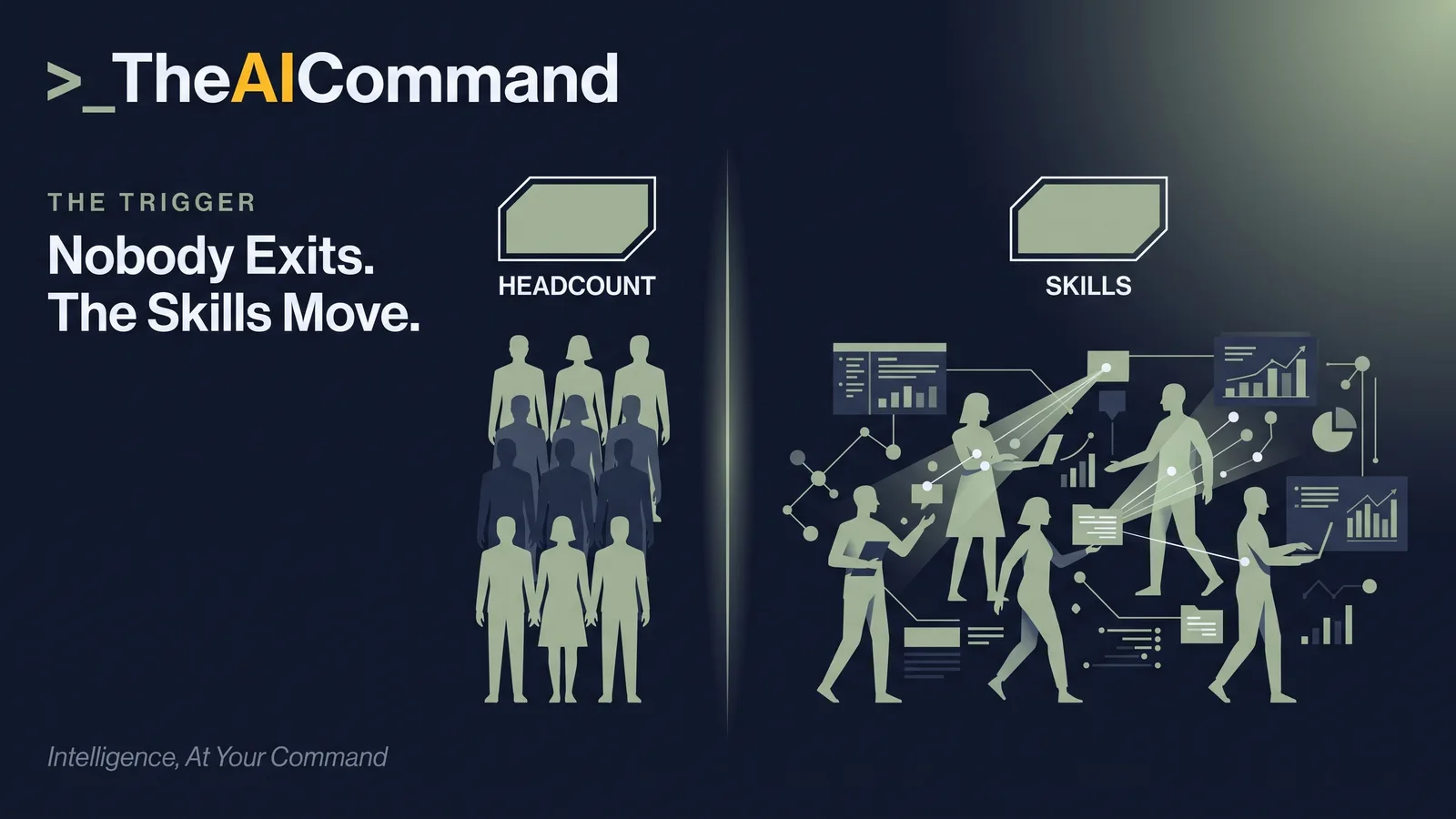
Count them. Seven limbs. Termination of employment is one. The skills required is another. The need to be retrained is another. The list is disjunctive: any single limb is enough. Headcount is not the gate. It is one of seven doors, and an AI deployment that changes what your people do all day walks straight through two or three of the others.
Award-covered employers are typically in the same position. Take the Clerks-Private Sector Award 2020 as the example. Clause 38 requires an employer that makes a definite decision to make major changes in technology likely to have significant effects to give notice to affected employees and their representatives, discuss the introduction of the changes, their likely effect, and measures to avoid or reduce adverse effects, and to commence discussions as soon as practicable after the decision. Clause 38.5 defines significant effects with the same seven limbs, including "major changes in the composition, operation or size of the employer's workforce or in the skills required" and "the need for employees to be retrained or transferred to other work or locations". Read your own award's consultation clause, because the wording is what governs.
<!-- style: split -->
One more thing before you go looking. Per the Fair Work Commission's Enterprise Agreements Benchbook, section 205 of the Fair Work Act requires an enterprise agreement to contain a consultation term for major workplace change. And where an agreement does not include one, or includes one that does not meet all the requirements of the Act, the model term in the Fair Work (Model Terms) Determination 2025 And where an agreement does not include one, or includes one that does not meet all the requirements of the Act, the model consultation term is taken to be a term of that agreement. The current model term is the one set out in Schedule 2 of the Fair Work (Model Terms) Determination 2025.. So "our agreement is quiet on this" is not an answer. Silence imports the model term.
What is actually happening
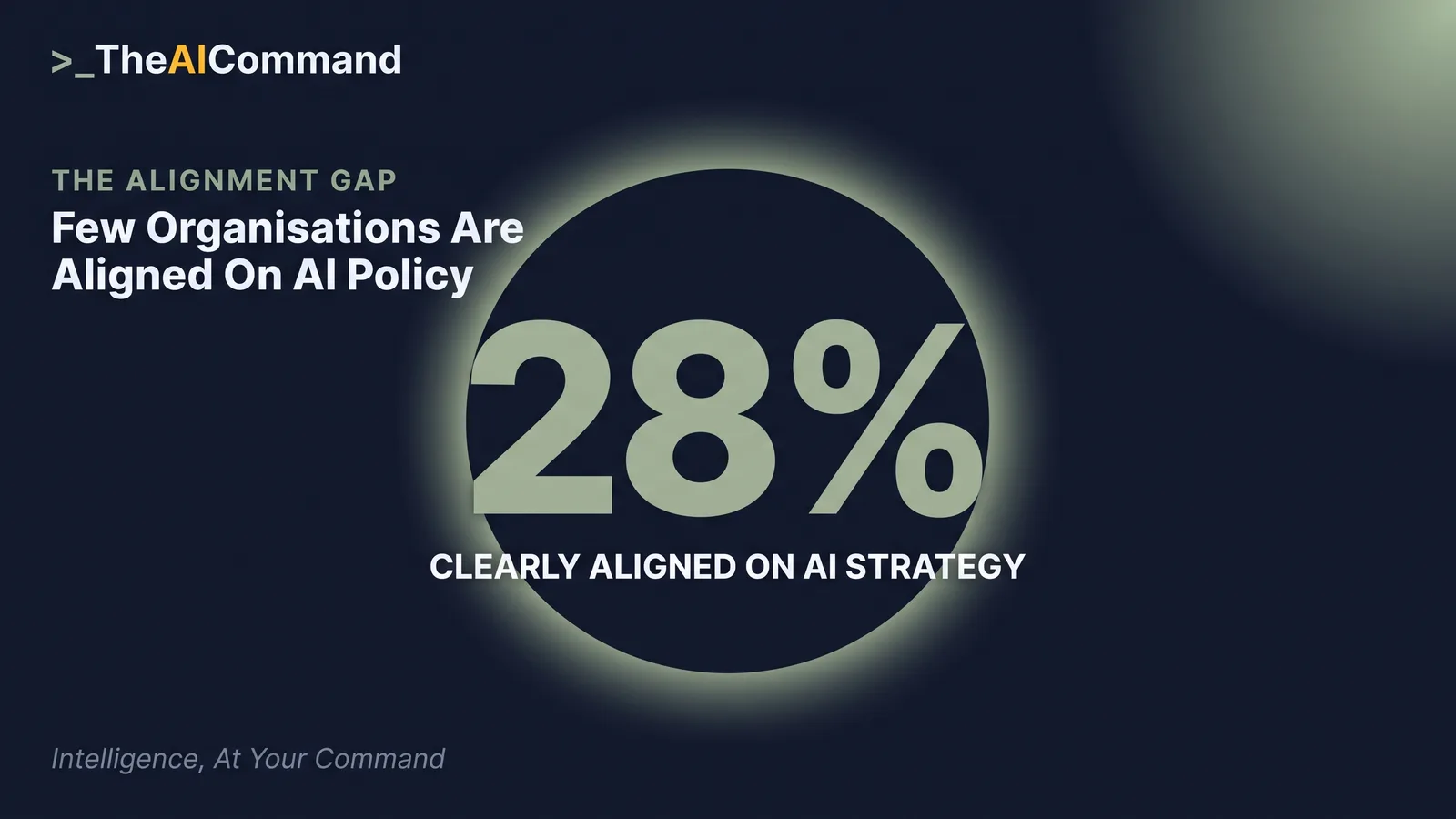
The gap between the duty and the practice is wide. Microsoft's 2026 Work Trend Index for Australia, published on 16 June 2026 and drawing on 2,000 full-time Australian workers within a 20,000-worker sample of AI users across ten countries, found that only 28 per cent of Australians say their organisation is clearly aligned on AI strategy and policies. That is not a consultation statistic and should not be read as one. It measures how few organisations have their AI position settled internally at all. An employer that cannot articulate its own AI strategy is poorly placed to explain the nature of a change, its reasons and its expected effects in writing, which is exactly what the clause requires.
<!-- style: data-halo -->
The other side has moved from theory to enforcement. On 27 February 2026 the ACTU said it had written to employer peak bodies "reminding them of their obligations under the law and to consult with workers when they decide to adopt AI, where it is likely to change employees' jobs or how they do them". Assistant Secretary Joseph Mitchell put the timing beyond doubt: "Employers have an obligation in law to meaningfully consult with workers and their representatives as soon as a decision is made to introduce AI and before its implementation." Mitchell later told HR Leader that the ACTU "will coordinate a response to any employer who does not abide by their legal obligation, placing themselves at risk of disputation proceedings and reputation damage", adding that ""Australia is not America. Australian workers have strong rights that require employers to immediately and transparently engage with their workforce and work out how they will avoid job losses and retrain their workforce." that require employers to immediately and transparently engage with their workforce."
The direction of travel is toward more, not less. The ACTU has sought AI Implementation Agreements since July 2025, enforceable instruments compelling consultation before new AI is introduced, with guarantees on job security, skills and retraining. That is a union policy ask, not law, and it is bargaining ambition rather than current obligation. In January 2026 Australian Unions and Microsoft signed an agreement including mechanisms to elevate workers' voice during development and deployment of AI products. It contains no job-security guarantees, and nobody should sell it internally as though it does. In bargaining, a Fair Work Commission approved enterprise agreement at Private Media reportedly carries AI-specific provisions negotiated with the MEAA, covering human sign-off of AI-assisted editorial output. The clause text and the approval decision could not be verified first-hand, so treat it as a signal, not a model to copy.
The instruments are being rewritten around you. The duty is already in force under the instrument you have today.
The practitioner play: the consultation trigger test
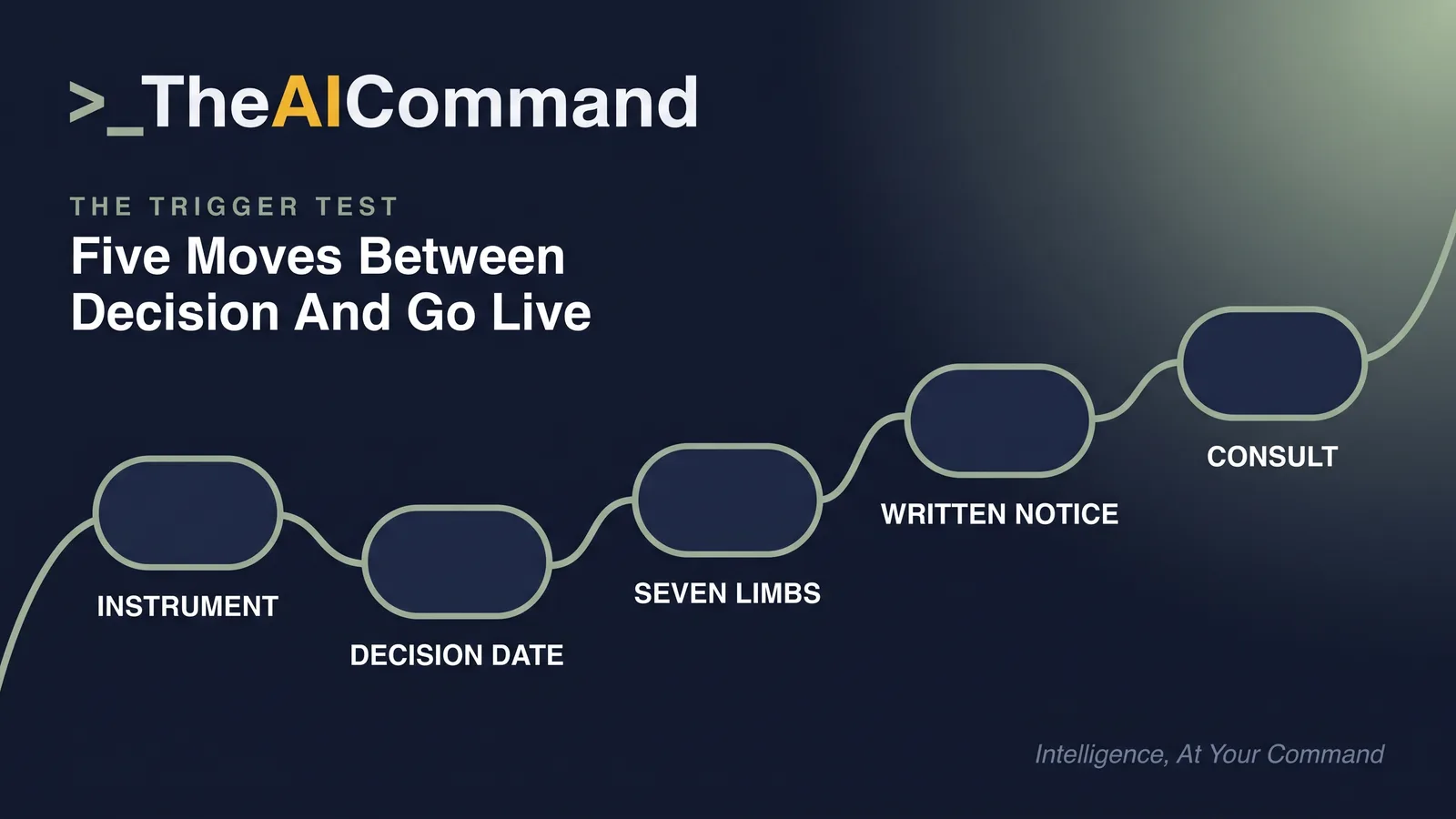
This takes about thirty minutes and it converts a silent exposure into a documented decision. Run it before deployment, not after.
<!-- style: process-flow -->
- Find the instrument. Identify which enterprise agreement or modern award covers the affected people, and pull the actual clause text. If your agreement has no compliant consultation term, the model term applies and that is what you read.
- Pin the definite decision date. Record [DECISION_DATE]. The clock starts here, not at go-live. It is when the decision became definite: the contract signed, the budget approved, the rollout locked.
- Test the change against every limb. Take [TOOL_NAME] and [TEAM], and work through all seven limbs of significant effect one at a time. Do not stop at termination. One limb is enough.
- Build the written pack the clause names. The model term requires you to provide in writing all relevant information about the change, including its nature, the reasons for it, the expected effects on employees, and any other matters likely to affect them. Confidential and commercially sensitive information is carved out, which is not a licence to say nothing.
- Consult before implementation, not after. Discuss the introduction of the change, its likely effect, and measures to avoid or reduce adverse effects, with affected employees and their representatives.
- Record what you heard and what you did with it. The model term requires prompt and genuine consideration of matters raised. Write down what came back and what changed as a result, including where nothing changed and why.
Step 3 is the one AI is genuinely good at, because it is a structured reading task against a pasted clause. Here is a prompt for Claude or ChatGPT that keeps the model on the reading side of the line.
A worked example
[TEAM] is a twelve-person shared-services group. [TOOL_NAME] will draft first-pass responses to routine internal requests, which the team currently writes from scratch. The decision became definite on [DECISION_DATE] when the subscription was approved. Nobody is exiting. Hours do not change. Reporting lines do not change. On the old reasoning, this is a tool rollout and consultation never comes up.
Run the limbs. Termination of employment: not triggered. Alteration of hours: not triggered. Job restructuring: arguable at most. But the skills required move from drafting to reviewing, a different competency, judged and supervised differently. That is the skills limb. And to review safely, every member of [TEAM] needs training on what the tool gets wrong and how to check it. That is the retraining limb. Two limbs, comfortably, on a change nobody thought was a change.
So the duty fires. What that costs is a written notice, a conversation, and a record. What it buys is the thing every AI rollout needs and rarely gets: [EMPLOYEE_NAME] telling you, before go-live, which of the tool's outputs are quietly wrong in ways only someone who has done the job for six years would notice. Consultation done properly is not a tax on the rollout. It is the best pre-mortem available, and it is already mandatory.
The governance line
The division of labour here is clean. AI maps the limbs, drafts the notice and organises the record. The human decides whether the duty is triggered, and the human decides what to do with what the consultation surfaces.
That boundary is what the clause demands. The obligation to give prompt and genuine consideration to matters raised is a human mental act. A model cannot perform it, and a consultation record that reads as machine-generated invites exactly the argument you least want to face: that nobody actually considered anything. Consultation run as theatre is worse than consultation run late, because it manufactures the evidence against you.
Two adjacent duties, briefly, because conflating them causes real errors. Privacy sits alongside this: if the tool observes how people work, how it handles that data is a distinct obligation the consultation notice does not discharge. And an AI rollout that changes how work is done can also require WHS consultation, which arises from the primary duty of care and the duty to consult workers on health and safety matters. That is a different legal source. This duty is industrial: it lives in the award or agreement, and you can satisfy one without satisfying the other.
One more distinction. Consultation as an element of genuine redundancy under section 389 governs what you must do when jobs go. This duty bites at deployment, before and entirely absent any redundancy.
None of this is legal advice. It is general guidance, and the clause that binds you is the one in your instrument, not the one quoted here. Read yours.
What never to automate
- Never let the model decide whether the duty is triggered. It reads and reasons. The call, and the accountability for it, sits with a person who can explain it.
- Never generate the genuine consideration of employee feedback. The clause requires a human to think about what was raised. A drafted response to feedback nobody read is the evidence against you.
- Never run a notification and call it consultation. Telling people what will happen is not discussing the change, its effects and measures to reduce adverse effects.
- Never consult after go-live. The clock runs from the definite decision. Consultation after implementation is a debrief.
- Never assume no redundancies means no duty. Termination is one limb of seven. Skills and retraining are two more.
- Never paste identifiable employee data into a public model to draft the notice. Use [TEAM] and [TOOL_NAME], not names and performance history.
- Never rely on the vendor's capability blurb as your effects analysis. The vendor describes what the tool does. You must describe what it does to your people.
Bottom line
Nobody losing a job is not the test, and on the text of the instrument it never was. The trigger is a definite decision to introduce a major change to technology likely to have a significant effect, and significant effect is defined across seven limbs joined by "or". Termination of employment is one. A major change to the skills required is another. The need for employees to be retrained is a third, and an AI deployment that moves a team from drafting to reviewing walks through both of those without touching headcount. The clock runs from the definite decision rather than go-live, so consultation that starts after implementation is a debrief with a compliance label on it. AI is genuinely useful for the reading task, mapping the change against each limb and drafting the notice the clause requires in writing. Deciding whether the duty is triggered, and giving prompt and genuine consideration to what consultation surfaces, remains a human act that a person has to be able to explain.
Do this Monday
- Pull the actual clause, not a summary of it. Identify the enterprise agreement or modern award that covers the affected people and read the consultation clause word for word. An agreement that is silent imports the model term, so silence removes nothing.
- Fix the definite decision date on the record. Write down the moment the decision became definite: the contract signed, the budget approved, or the rollout date locked. Everything else in the sequence hangs off that date.
- Work the change against every limb. Mark each limb of significant effect as triggered, arguable or not triggered, and treat anything you cannot clearly rule out as arguable rather than clear.
- Draft the written pack the clause names. The nature of the change, the reasons for it, the expected effects on employees, and any other matters likely to affect them, with commercially sensitive material carved out rather than used as an excuse for saying nothing.
- Diarise the consultation before go-live. Invite affected employees and their representatives, and open on the change, its likely effect and measures to avoid or reduce adverse effects, rather than presenting the rollout as settled.
- Record what was raised and what changed as a result. Include the items where nothing changed and the reason, because the genuine consideration is the part that later gets tested.
- Check the adjacent duties separately. A tool that observes how people work carries a distinct privacy obligation, and a change to how work is done can also trigger the WHS consultation duty, which arises from a different legal source and is not discharged by this notice.
References
- Fair Work Commission Full Bench, Fair Work (Model Terms) Determination 2025, F2025L00202, Schedule 2 (Model consultation term for enterprise agreements), made 21 February 2025, registered 25 February 2025. https://www.legislation.gov.au/F2025L00202/asmade/2025-02-25/text/original/pdf
- Fair Work Commission, Clerks-Private Sector Award 2020 (MA000002), clause 38 (Consultation about major workplace change). https://www.fwc.gov.au/documents/modern_awards/pdf/ma000002.pdf
- Fair Work Commission, Enterprise Agreements Benchbook, Consultation term (p.47), published 12 July 2021. https://www.fwc.gov.au/documents/benchbooks/enterprise-agreements-benchbook.pdf
- ACTU, "AI: Unions put corporate Australia on notice", media release, 27 February 2026. https://www.actu.org.au/media-release/ai-unions-put-corporate-australia-on-notice/
- HR Leader, "Unions coming for employers that don't consult workers on AI adoption", 2 March 2026. https://www.hrleader.com.au/law/27876-unions-coming-for-employers-that-don-t-consult-workers-on-ai-adoption
- Microsoft, "Aussie Workers Charge Ahead with AI, While Leadership Falls Behind", 2026 Work Trend Index (Australia), 16 June 2026. https://news.microsoft.com/source/asia/2026/06/16/aussie-workers-charge-ahead-with-ai-while-leadership-falls-behind/
- ACTU, "Unions seek enforceable agreements on the use of AI", media release, 29 July 2025. https://www.actu.org.au/media-release/unions-seek-enforceable-agreements-on-the-use-of-ai/
- ACTU, "Australian Unions and Microsoft sign agreement on Workers' Rights and Artificial Intelligence", media release, 15 January 2026. https://www.actu.org.au/media-release/australian-unions-and-microsoft-sign-agreement-on-workers-rights-and-artificial-intelligence/
TheAICommand. Intelligence, At Your Command.