
Four percent of Australians call AI companies trustworthy. That figure is seven months old at publication, and it is the first time this survey series has measured AI companies at all. As a headline it settles nothing. As a distribution it changes what belongs in a collection notice.
The measurement behind the 4 percent
The Office of the Australian Information Commissioner (OAIC) published its media release, Australians more concerned about privacy as trust in AI languishes, survey finds, on 28 May 2026. It states "Trust in AI (4%) and social media (3%) is minuscule."
The numbers come from the Australian Community Attitudes to Privacy Survey 2026. The survey's own overview chapter, "Australian Community Attitudes to Privacy Survey 2026, Overview", records the method: 1,504 adults aged 18 and over, weighted to be nationally representative, with fieldwork from 16 to 30 March 2026 through a probability panel. The media release gives 1,511 unique respondents; the figure used here is the report's own methodology snapshot. It is a triennial tracking study, so no later edition exists as at 26 September 2026.
Start with the consequence, because it is a document rather than an attitude. Treat client and employee personal information as carrying a presumption against use for AI model training, and record that presumption where the person can see it: the collection notice, the client engagement wording, and the employee induction pack. The reason is legal rather than reputational. Australian Privacy Principle 6 permits a secondary use with consent, or where the person would reasonably expect it and the secondary purpose is related to the one the information was collected for, and that expectation is built by what was said at the point of collection. A vendor toggle cannot build it, because the person whose information it is never sees that screen.
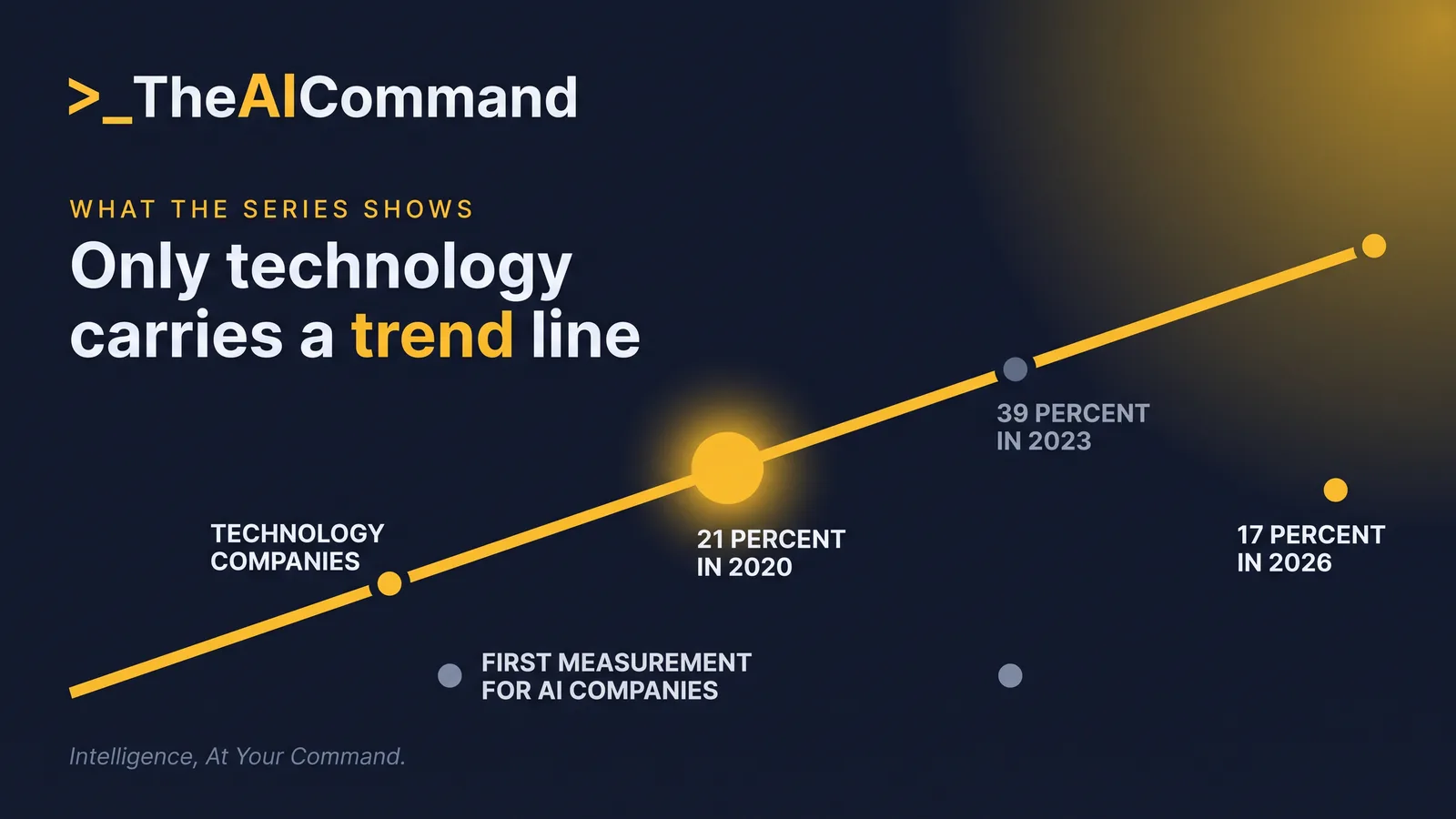
One claim this dataset does not support is a decline. Figure 13 records AI companies as not applicable for both 2020 and 2023, so 2026 is the first measurement of that sector in the series.
Is this a public that refuses AI?
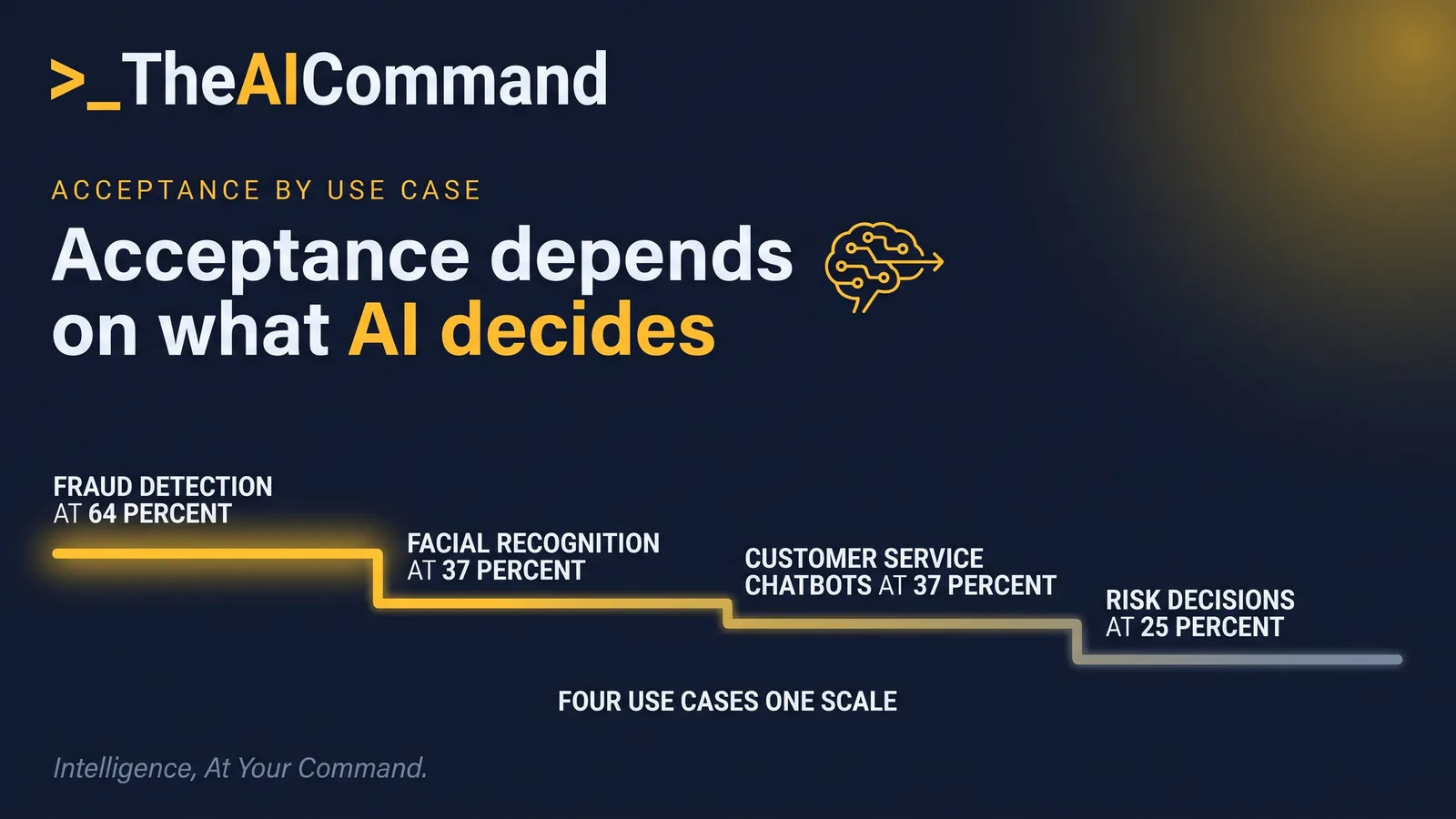
It is not, and the difference is the whole practitioner point. The survey's chapter, "Digital technologies", reports acceptance by use case. Acceptance runs at 64 percent for using AI to detect fraud, 37 percent for facial recognition or biometric identification, 37 percent for customer service chatbots, and 25 percent for automated eligibility or risk decisions.
Read those four figures as one line and the pattern is legible. Support is highest where AI runs behind the process and protects the person, and it collapses where AI decides something about the person.
The second measure is reuse. The chapter puts it at 71 percent who find it somewhat or very unacceptable for an organisation to reuse information given for a service to train AI systems after that service ends, with 45 percent calling it very unacceptable. A separate item records 93 percent treating the use of personal information to train AI models and products as unfair and unreasonable.
The third is conditions rather than refusal. Ninety-six percent say some conditions should be in place before AI is used in decisions that affect them, unchanged from 96 percent in 2023. That is a public asking for terms, which is a document problem and therefore solvable.
Where does AI sit on the trust ladder?
At the bottom, with two others, and the ladder sets the comparison a client or an employee brings. The survey's chapter, "The role of organisations", records trust by sector as the share rating each as very or somewhat trustworthy with personal information.
Figure 13 records very trustworthy at less than 0.5 percent, somewhat trustworthy at 4 percent, neither trustworthy nor untrustworthy at 18 percent, somewhat untrustworthy at 29 percent and very untrustworthy at 49 percent. The untrustworthy share is therefore 78 percent, and the 4 percent is the positive share, not the negative one.
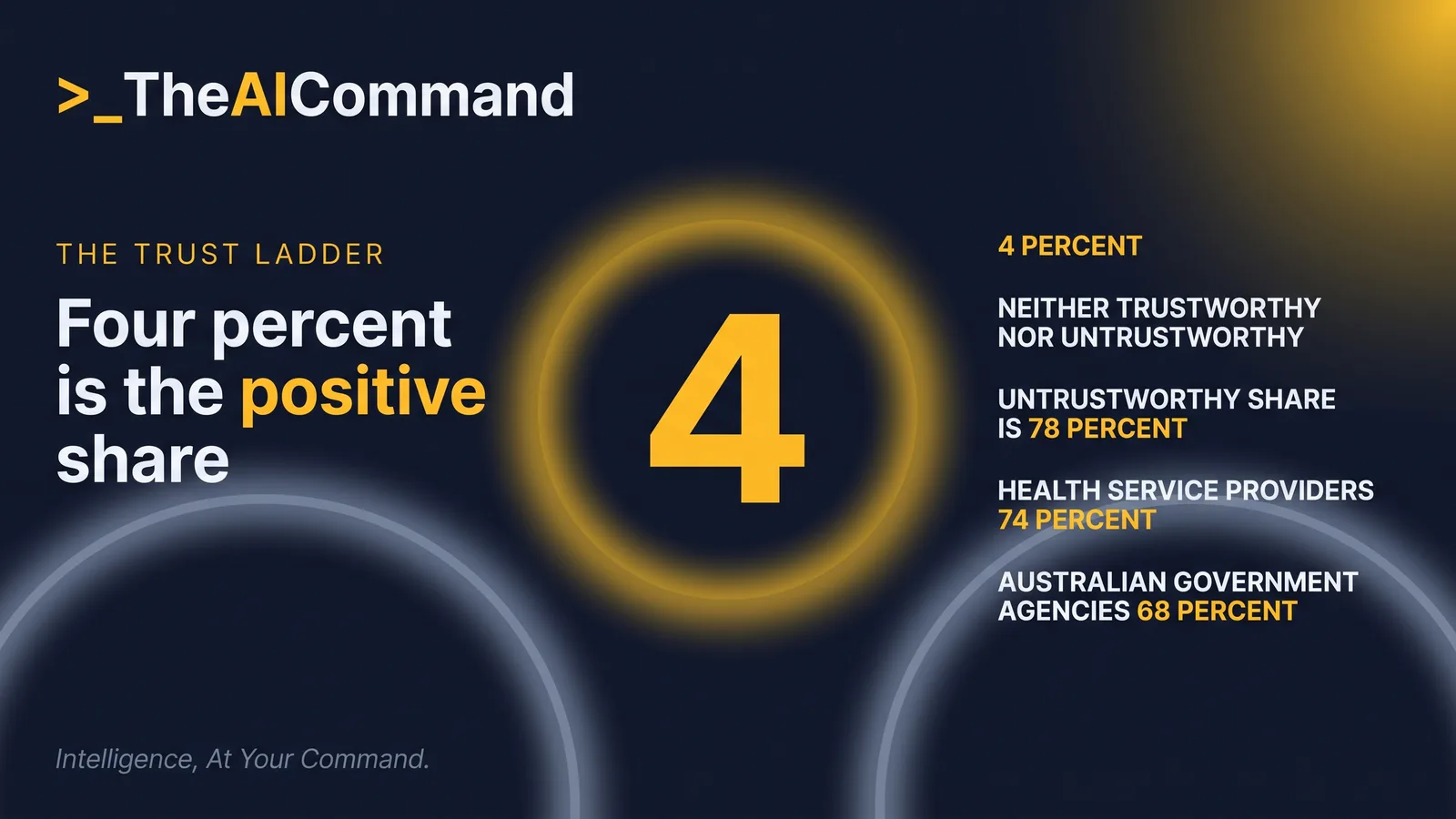
Data brokers sit at 4 percent, but the survey notes the label was changed from credit reporting bodies in 2026 and that comparisons with 2023 are to be interpreted with caution.
The two series worth reading
Two of those comparisons are steep. Technology companies moved from 21 percent trustworthy in 2020 to 39 percent in 2023 and back to 17 percent in 2026, below where the series started. Social media companies sit at 3 percent, down from 14 percent in 2023. Whatever happened between those editions did not spare the sectors that build and distribute these products, so the trust a client brings to a conversation about an assistant is the 17 percent figure, not the 74 percent beside it.
Does a vendor toggle create a reasonable expectation?
No. A setting records what the vendor does, not what the person was told. Australian Privacy Principle 6.1, in the Privacy Act 1988 (Cth) Schedule 1 as read in Compilation No. 104, compilation date 4 June 2026, provides that where an entity holds personal information collected for a particular purpose, "the entity must not use or disclose the information for another purpose (the secondary purpose) unless" a gateway in 6.2 or 6.3 applies, or the person consents. The first of those gateways, 6.2(a), requires two things: that "the individual would reasonably expect the APP entity to use or disclose the information for the secondary purpose", and that the secondary purpose is related to the primary purpose, or directly related to it where the information is sensitive information. Australian Privacy Principle 5.1 requires an entity to notify the individual at or before collection, or as soon as practicable after it, and 5.2(d) lists among the matters notified "the purposes for which the APP entity collects the personal information". Those provisions are cited as at 26 September 2026.
The OAIC has already applied that structure to assistants. Its guidance on privacy and the use of commercially available AI products, published 21 October 2024 and updated 17 January 2025, states that "If personal information is being input into an AI system, APP 6 requires entities to only use or disclose the information for the primary purpose for which it was collected". The same guidance says a secondary use may be within reasonable expectations where it was expressly outlined in a notice at the time of collection and in the privacy policy, and recommends as best practice that organisations do not enter personal information into publicly available generative AI tools. Its companion guidance on privacy and developing and training generative AI models, published 21 October 2024 and updated 23 October 2024, treats training on information an organisation already holds as a secondary use where training was not a primary purpose of collection, and points to consent or a meaningful and informed opt-out where that use cannot clearly be established as within reasonable expectations.
Set that against the vendor documentation. OpenAI's help centre page on how your data is used to improve model performance states "By default, we don't use inputs or outputs from ChatGPT Business, ChatGPT Enterprise, ChatGPT Edu, or our API to improve our models", while describing a different position for its services for individuals, where content may be used to train models unless the setting is turned off. That page carries a relative update label rather than a fixed date, so the position above is recorded as checked on 26 September 2026. Anthropic's privacy centre article, "Is my data used for model training?", dated 16 March 2026, opens by scoping itself: "This article is about our consumer products such as Claude Free, Pro, Max and when accounts from those plans use Claude Code." Two vendors, two positions set by account type rather than by the information pasted in, and in neither case does the control sit with the person whose information it is. The defaults are set out in full in Your Account Type Decides What the Model Learns.
Three things follow. Australian Privacy Principle 6 does not prohibit using personal information to train an AI system; it permits the use with consent, or where the person would reasonably expect it and the secondary purpose is related to the one it was collected for. A vendor toggle is not itself a breach. But it cannot do the work 6.2(a) requires, because the reasonable expectation is formed by what the person was told, and nothing in a settings screen reaches them. This is general information and education only. It is not legal, compliance, financial or professional advice.
Which conditions does the public treat as essential?
The survey asked which conditions are essential before AI is used in decisions affecting people, and the answers read as a specification rather than a sentiment. Figure 33 of the Australian Community Attitudes to Privacy Survey 2026 records eleven of them. The five below are the ones this article carries, because they are the ones a deployer writes down, and the table also carries the share who want no conditions at all.
Every one of the three conditions in the table with a 2023 comparison moved upwards, and the share saying no conditions are necessary held at 4 percent. That last 4 percent is the share wanting no conditions, not the 4 percent who rate AI companies trustworthy.
Three of these five are not properties of a model at all. Human review, disclosure that AI is in use and a challenge route are contract terms, notice wording and process design, written by the organisation deploying the tool rather than the company that built it, and they can be in place this quarter without changing vendor. The retention limit sits beside the training column instead, because the vendor page states it and the organisation then holds it as a term.
That split decides the shape of the register, one row per assistant, with the columns a vendor page can answer beside the columns only the organisation can:
An organisation that buys a commercial assistant and uses it internally is a deployer, and the commercially available AI products guidance is written for that position.
Three prompts that produce the wording and the register
TheAICommand works to the Verified Draft Method: de-identify the inputs, ground the model in your own source material, keep a person at the decision point, verify against the primary source, and log what happened.
The first prompt drafts the wording that has to exist before any of this is defensible. Attach the template engagement letter and induction pack rather than an executed copy, and run it in an assistant the organisation holds under a commercial agreement that documents no training on customer content.
What to check: every purpose in the two paragraphs traces to a sentence that genuinely appears in the attached privacy policy, read in the policy rather than in the quote. A purpose with no quote beside it has been invented and is deleted. The "Not supported by the policy" list holds purposes the engagement letter claims that the policy does not carry, so an entry there is a gap in the policy and the first item for the privacy officer. Once the register is built, come back and confirm the no-training sentence matches the register row for every account type people actually sign in with, and delete it where the register does not support it. Until then the sentence stays bracketed.
The second prompt turns these five community conditions into a register row per tool. The vendor pages answer two columns and the reader's own documents answer the rest.
What to check: every populated vendor cell carries a quoted line, a URL and a date stamp, and every cell without all three reads "not stated" rather than a plausible answer. Every deployer cell names an internal document and a clause, or reads "not written yet" against a named role. A row that reads as compliant with no evidence is discarded. The "Set by a toggle, not by a term" list matters most, because those answers change when someone signs in differently.
The third prompt runs before anything is pasted into a general assistant. Run it as a manual find and replace, or in an assistant held under a commercial agreement that documents no training on customer content. Identified text does not go into a consumer account.
What to check: the numbered list matches the original field by field, read side by side rather than skimmed. Anything in the original that is absent from the list was missed, not judged unnecessary. Confirm the returned text has the same paragraphs and the same line count as what went in, and that the number of placeholders equals the number of entries in the list, because a step that quietly summarises has changed the record.
What the numbers do not tell you
State the limits before anyone quotes the 4 percent. The sample is 1,504 adults weighted to be nationally representative. Fieldwork closed on 30 March 2026, so as at 24 October 2026 these are attitudes recorded seven months earlier.
The survey measures stated attitudes, not behaviour, so nothing here predicts what the same people will accept inside a service they want. It measures the Australian community, not a particular client base or workforce.
One further boundary. The Privacy Act reforms on automated decision transparency commence after this publication date, so nothing here rests on them being in force as at 24 October 2026. The obligations cited are the ones already operating, and the reforms are covered in Your Privacy Policy Now Has to Name the Decisions.
Do this Monday
Build the first page of the Notice and Assistant Register: one table of the purposes of collection named in the privacy policy, and beside it the assistant table above. The owner is the privacy officer, or whoever already owns the privacy policy.
The first step fits in under an hour. Open the current privacy policy and list, verbatim, every purpose of collection it states. Run the first prompt against the policy, the engagement letter and the induction pack, then correct every sentence against the policy rather than accepting what came back. Then run the second prompt for the one assistant most people use, against its published help page and whatever internal document already governs its use, even if that is only the induction pack, and paste the single row beside the purposes table. Listing the rest of the assistants from billing or single sign-on records, and the one question to the team, which assistant do they use and which account do they sign in with, carry into the rest of the week.
The check that proves it worked is mechanical. Read the client-facing paragraph beside the privacy policy: every purpose named in it appears as a sentence in the policy. In the assistant row, every vendor cell carries a quoted line with a URL and a date checked, or the words "not stated", and every deployer cell names a document and clause, or reads "not written yet" against a named role. A row with no "not written yet" in it on day one has been filled in by guesswork. If a purpose appears in the paragraph but not in the policy, the policy is the document that has to change first, and that goes to the privacy officer this week.
The bottom line
Four percent of Australians rate AI companies as trustworthy and 78 percent rate them untrustworthy, and neither figure is a trend, because 2026 is the first year the sector was measured in this series. The distribution is the usable part: 64 percent accept AI for fraud detection, 25 percent accept automated eligibility decisions, 71 percent call reuse of service data for training somewhat or very unacceptable, and 96 percent say conditions should be in place before AI is used in decisions that affect them. Three of the five conditions set out above are notice wording, contract terms and process design rather than model behaviour, so they sit inside the reader's control. Australian Privacy Principle 6 permits a secondary use with consent, or where the person would reasonably expect it and the secondary purpose is related to the one the information was collected for, and that expectation is built at collection, which a vendor setting cannot reach. Write the purposes into the notice, and record the assistants against those conditions with a date and a URL.
TheAICommand. Intelligence, At Your Command.