
Teams get more from AI when managers give adoption a steady operating rhythm of weekly, monthly and quarterly cadences instead of launching another isolated pilot. Managers in Australian workplaces face a common challenge: teams are experimenting with artificial intelligence tools, but these efforts often remain isolated pilots without a repeatable rhythm or consistent outcomes. According to the 2026 Stanford AI Index, organisational AI adoption has reached 88 percent, yet many teams struggle to move beyond ad hoc use. Meanwhile, the Microsoft Work Trend Index highlights that organisational culture and managerial support have twice the impact on AI success compared to individual effort alone.
This article provides practical guidance for managers to embed AI adoption into team workflows by establishing a clear operating rhythm. It focuses on setting weekly, monthly and quarterly cadences that ensure continuous learning, risk management and value capture. The goal is to turn isolated AI experiments into repeatable routines that improve quality, speed and safety.
Why Do Managers Need an AI Operating Rhythm?
AI adoption is no longer an optional experiment. The Stanford report notes that generative AI reached nearly 53 percent population-level adoption within three years, and documented AI incidents rose sharply in 2025. This rapid growth means both risks and opportunities are escalating fast. Without a structured operating rhythm, teams risk:
- Repeating failed pilots or abandoning AI tools prematurely
- Missing emerging risks such as privacy breaches, bias or operational errors
- Failing to capture productivity gains or improve workflows
- Creating inconsistent user experiences and knowledge silos
The Microsoft Work Trend Index found that 66 percent of AI users said AI helped them spend more time on high-value work, but 86 percent still treated AI output as a starting point requiring human judgement. Managers must redesign work to integrate AI outputs responsibly, not just urge better prompting or tool use.

AI tools are powerful but imperfect. They can accelerate tasks such as drafting documents, analysing data or generating insights, but they also introduce new challenges. For example, AI-generated outputs may contain errors, bias or outdated information. Without human oversight and a structured process for review, these risks can escalate into operational failures or compliance breaches. An operating rhythm helps managers embed these checks and balances into everyday work.
How Do You Establish a Practical AI Operating Rhythm?
An operating rhythm is the set of regular meetings, decisions, measures and review habits that turn AI strategy into repeatable work. For AI adoption, this means setting a clear cadence at three levels:
Weekly: Team AI Rhythm Review
At the team level, a 30-minute weekly meeting focused on AI use keeps momentum and surfaces issues early. The agenda should include:
- What AI use cases saved time or improved quality this week?
- Were there any new risks, errors or user frustrations?
- What can be standardised or scaled?
- What should be stopped or paused?
This quick feedback loop encourages continuous learning and prevents risk accumulation. It also builds team confidence and accountability.
For example, a customer service team using AI chatbots might report that the chatbot reduced average call handling time by 15 percent this week but flagged some customer queries that the AI could not resolve. The team can decide to escalate those queries to human agents and plan additional training for the AI model. This weekly check-in ensures the AI tool is improving service without creating new problems.
Monthly: Cross-Team Use Case Review
Monthly meetings bring together managers and AI champions from different teams to review adoption signals and share lessons. This forum can:
- Analyse metrics such as cycle time reduction, error rates and user satisfaction
- Identify patterns in AI impact and emerging risks
- Plan targeted training or process redesign
- Decide on prioritising new AI use cases or retiring ineffective ones
Monthly reviews help break down silos and align AI efforts across the organisation.
For instance, the finance, marketing and operations teams might share their AI use cases and outcomes. Finance could report improved accuracy in invoice processing, marketing might highlight better customer segmentation, and operations could discuss AI-enabled scheduling improvements. Together, they identify common challenges such as data quality issues and agree on a cross-functional data governance initiative.
Quarterly: Strategic AI Governance and Risk Assessment
Quarterly governance meetings involve senior leaders, risk managers and compliance officers. The focus is on:
- Reviewing the AI portfolio against strategic goals and regulatory requirements
- Assessing cumulative risks including privacy, bias, operational resilience and compliance
- Updating AI policies, controls and assurance practices
- Allocating resources for capability building and technology upgrades
This cadence ensures AI adoption is sustainable, safe and aligned with organisational priorities.
For example, a quarterly meeting might review whether AI use cases comply with privacy regulations and internal policies, assess any reported incidents or complaints, and decide on investments in AI literacy training or new monitoring tools. This strategic oversight prevents risks from escalating and supports continuous improvement.
How Do You Measure Whether AI Adoption Is Working?
Managers need clear signals to judge if AI adoption is working. These signals should cover:
- Quality: Has AI improved accuracy, reduced errors or enhanced decision support?
- Speed: Are workflows faster or cycle times shorter with AI assistance?
- Risk: Are new risks identified and mitigated promptly? Are privacy and compliance standards met?
- Learning: Is the team gaining AI skills and sharing knowledge?
Tracking these signals requires simple but consistent data collection integrated into the operating rhythm. For example, teams can log time saved or errors caught during weekly reviews, while monthly meetings aggregate this data for trend analysis.
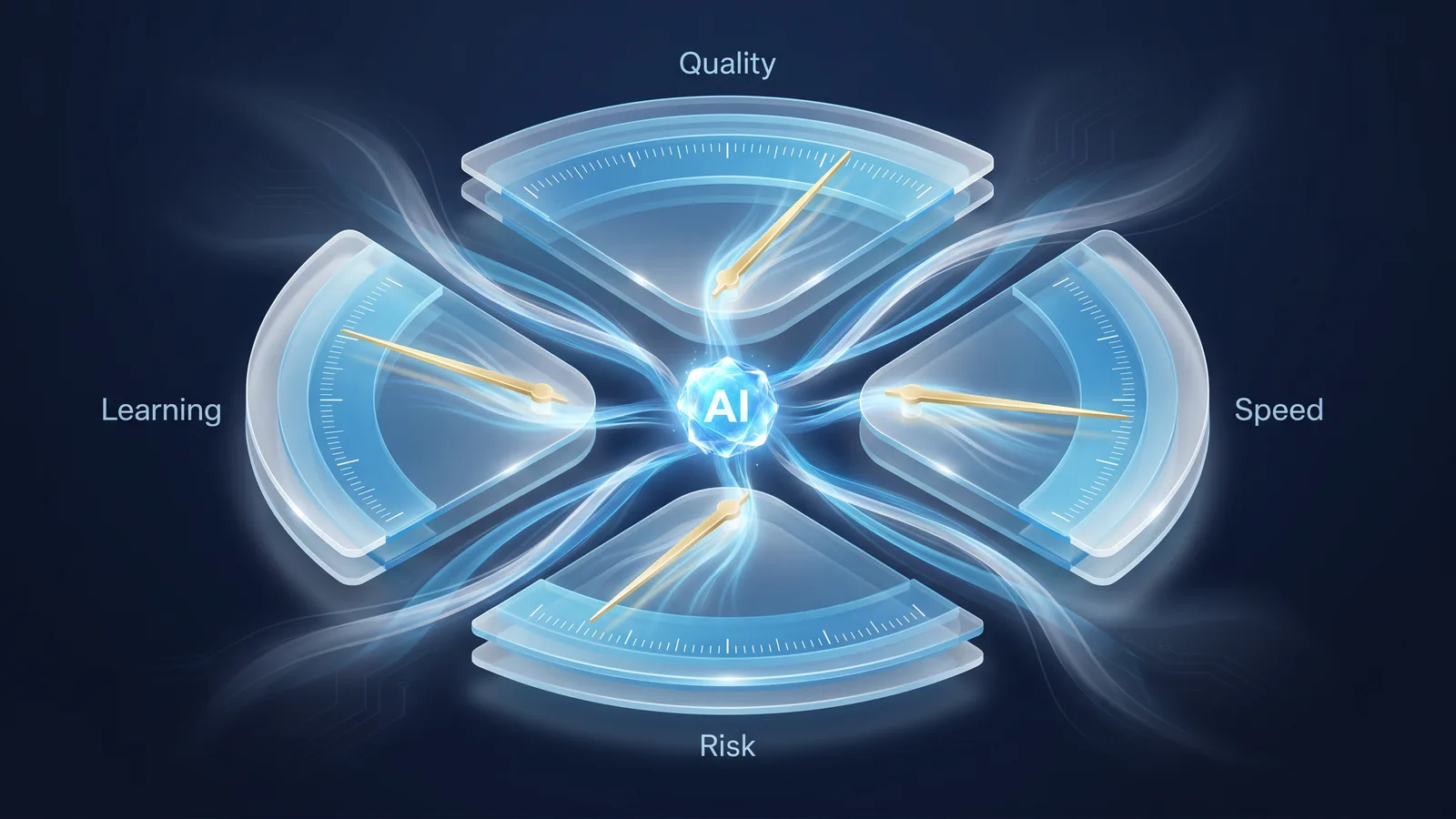
A practical dashboard might include metrics such as:
By regularly reviewing these signals, managers can make informed decisions about scaling AI use, adjusting controls or investing in training.
Avoiding Common Pitfalls
Many AI pilots fail to scale because managers focus on technology rather than work redesign and governance. Key pitfalls to avoid include:
- Treating AI as a tool for individuals only, not redesigning team workflows
- Ignoring emerging risks such as privacy complaints or algorithmic bias
- Lacking clear accountability and documentation for AI use cases
- Failing to invest in training and human oversight
The Australian Government's Guidance for AI adoption emphasises the need for accountable people, stakeholder feedback and continuous monitoring. Embedding these into your operating rhythm is essential.
For example, a team might deploy an AI tool for automated credit assessments without documenting decision criteria or monitoring for bias. This can lead to unfair outcomes and regulatory scrutiny. A proper operating rhythm would include regular reviews of AI decisions, clear accountability for outcomes and mechanisms for affected customers to raise concerns.
Practical Example: Running a 30-Minute AI Rhythm Review
To get started, try this simple exercise with your team:
- Schedule a 30-minute meeting focused on AI use.
- Ask: What AI tools or features saved time this week?
- Identify any risks or issues encountered.
- Discuss what should be standardised or stopped.
- Assign follow-up actions for training or process changes.
This quick review builds awareness and starts the habit of regular AI reflection.
For instance, a marketing team might find that AI-generated campaign ideas reduced brainstorming time but noticed some outputs were off-brand. They decide to create a style guide for AI prompts and schedule a training session on prompt engineering. This practical approach turns AI use into a managed, evolving process.
Integrating AI Operating Rhythm with Organisational Culture
The Microsoft Work Trend Index highlights that culture and manager support are critical to AI success. Establishing an operating rhythm is not just about meetings and metrics; it is about fostering a culture of curiosity, responsibility and continuous improvement.
Managers should encourage teams to:
- Treat AI outputs as starting points, not final answers
- Share successes and failures openly to learn collectively
- Maintain human judgement and ethical standards in AI use
- Seek feedback from stakeholders, including customers and regulators
Embedding these values supports sustainable AI adoption and helps avoid overreliance on technology without oversight.
AI Operating Rhythm: A Summary Table
Conclusion
AI adoption is now widespread and accelerating, but without a clear operating rhythm, teams risk wasted effort and unmanaged risks. Managers must establish weekly, monthly and quarterly cadences that integrate AI into workflows, measure adoption through practical signals and govern risks responsibly. This approach turns isolated pilots into repeatable routines that deliver real value and build sustainable AI capability.
By embedding AI into the fabric of team operations and leadership oversight, organisations can harness AI's potential while managing its challenges. The operating rhythm is the practical framework that makes this possible.
Bottom line
An operating rhythm, not another pilot, is what turns scattered AI experiments into repeatable team routines. Weekly team check-ins, monthly cross-team reviews and quarterly governance keep adoption learning, safe and aligned to strategy, while quality, speed, risk and learning signals show whether it is working. The technology is imperfect, so human oversight and work redesign stay central at every cadence.
Do this Monday:
- Schedule a 30-minute weekly AI rhythm review and ask what saved time, what created risk, what to standardise and what to stop.
- Set the three cadences: a weekly team check-in, a monthly cross-team review and a quarterly governance meeting.
- Start logging quality, speed, risk and learning signals during the weekly review.
- Treat AI outputs as starting points that require human judgement, not final answers.
- Redesign the work around AI rather than leaving it as an individual tool.
This article provides general educational information only and should be reviewed by a suitably qualified person before use.
TheAICommand. Intelligence, At Your Command.