
Why Do Boards Need a Practical AI Use Case Register?
An AI use case register that boards can actually use is an evidence layer, not a compliance checklist: each entry records a named owner, the AI type and purpose, the risks, the human oversight and controls in place, and a review rhythm, so directors can challenge management with confidence. Boards and risk committees are increasingly expected to oversee AI adoption with confidence and rigour. However, many AI use case registers remain little more than compliance checklists or vague inventories that do not provide the decision-ready evidence directors require. Without clear, actionable information, boards struggle to challenge management, understand the risks involved, and monitor controls effectively.
The Australian Government's Policy for the Responsible Use of AI in Government version 2.0, ASIC's AI Transparency Statement, APRA's recent Letter to Industry on AI, and the Voluntary AI Safety Standard all provide practical guardrails and examples of accountable AI governance in action. These documents emphasise named accountability, clear use case impact assessments, ongoing monitoring, and human oversight.
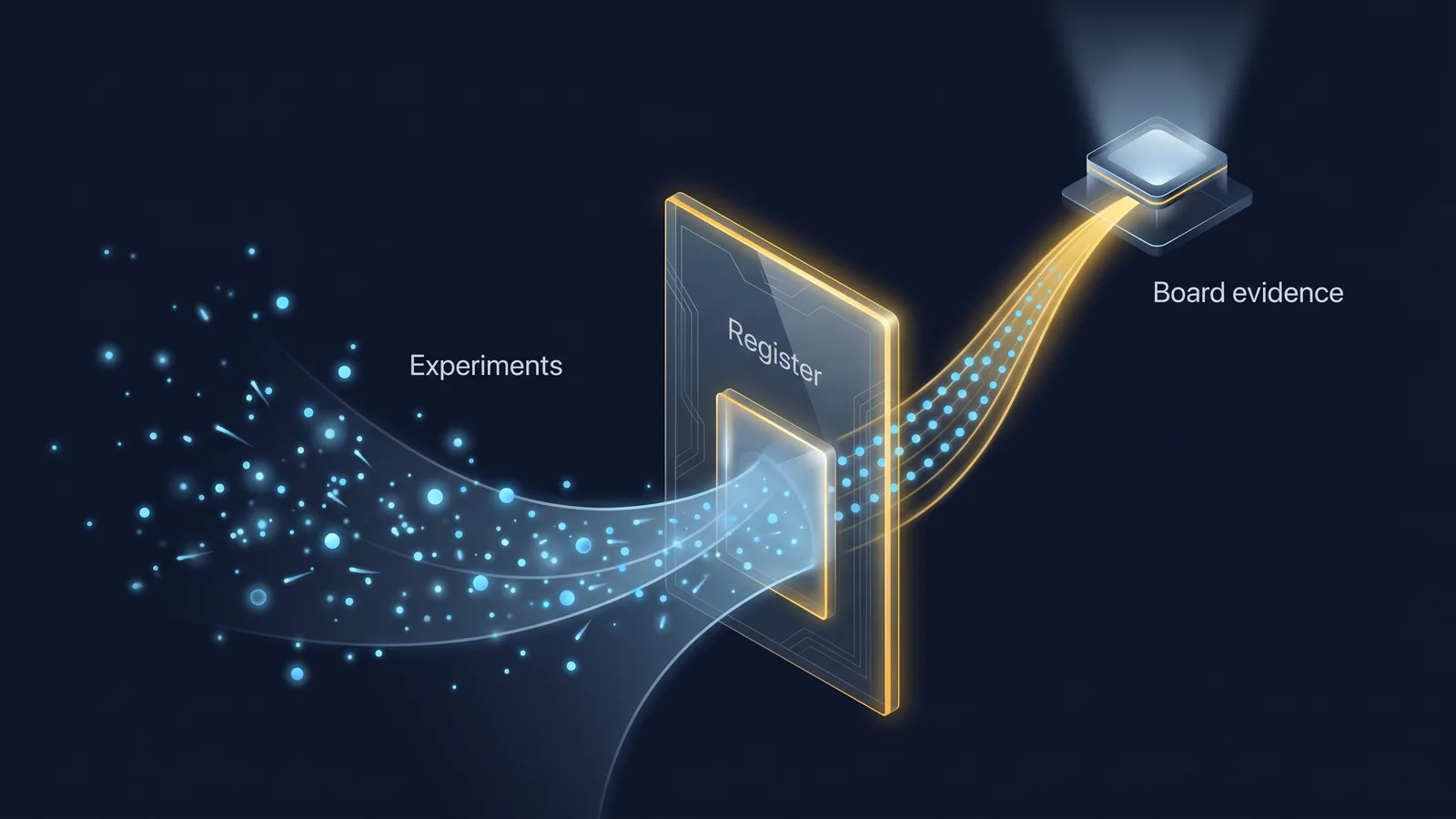
A well-structured AI use case register is the backbone of this approach. It is not simply a list; it is the evidence layer that links AI experimentation, risk ownership, human review, monitoring and escalation. This article focuses on how governance, risk and compliance (GRC) teams can build such a register that boards and risk committees can actually use.
What Fields Should a Decision-Ready AI Use Case Register Include?
To be genuinely useful for governance and risk oversight, each AI use case entry must capture sufficient detail to assess risk, controls, and outcomes. The register should be a living document, updated regularly and reviewed by accountable owners.
Below is a recommended set of fields based on Australian government policy and regulator guidance:
This structure aligns with the Australian Government's AI in Government Policy requirements for internal use case registers and ASIC's transparency expectations for documented human oversight and risk controls.
Who Owns the Register and How Often Is It Reviewed?
A register is only as good as the governance around it. Assigning clear ownership and establishing a regular review rhythm are essential to maintain its value.
- Ownership model: Each use case must have a named business owner accountable for the AI's performance, risk management, and compliance. This should be a senior manager with authority and access to relevant teams such as risk, compliance, IT and privacy.
- GRC oversight: The AI governance or risk committee should own the overall register, ensuring completeness, quality and escalation of issues. They should receive regular reports summarising key risks, changes and incidents.
- Review frequency: Use cases in production should be reviewed at least quarterly, with pilots reviewed monthly. Reviews must verify risk controls, human oversight effectiveness, incident reports and any changes in scope or technology.
- Escalation: Significant issues or emerging risks identified during reviews must be escalated promptly to the board or risk committee with clear recommendations.
This approach mirrors APRA's findings that assurance practices must keep pace with AI's scale and complexity, and ASIC's call for documented human review before AI-driven actions.
Examples: Poor vs Useful Register Entries
To illustrate the difference, here are two contrasting examples of register entries for a hypothetical AI use case in credit underwriting.
Poor Register Entry
Why this is poor: The entry lacks detail on controls, impact assessment, and human oversight specifics. The review frequency is too infrequent for a high-risk use case. There is no evidence of privacy impact or complaint handling. This entry would not support meaningful board oversight.
Useful Register Entry
Why this is useful: This entry provides clear accountability, detailed controls, documented human oversight, and evidence of impact assessment and privacy considerations. The review rhythm is appropriate and there is a process for escalation. This entry supports informed board challenge and assurance.

Practical Tips for Building Your Register
- Start with high-risk or high-impact use cases
Prioritise AI applications that affect customers, employees or critical operations. For example, an AI-assisted complaints triage tool that influences customer outcomes could be a starting point for risk assessment.
- Use a standard template
Consistency in fields and terminology makes the register easier to maintain and review. Consider adapting the table above as a baseline.
- Integrate with existing risk and compliance systems
Link AI use cases to broader risk registers, privacy impact assessments and vendor management processes to avoid duplication and improve oversight.
- Train owners and reviewers
Ensure those responsible understand AI risks, controls and regulatory expectations. Training might include practical scenarios such as reviewing a draft register entry for a chatbot pilot and identifying the missing controls.
- Automate where possible
Use tools to track changes, send review reminders and generate reports for governance committees. Automation reduces manual errors and improves timeliness.
- Document human oversight clearly
Specify who reviews AI outputs, when and how, especially for agentic AI that can act autonomously. For instance, a monthly review by the accountable business owner can be documented.
- Include incident and complaint handling
Record AI-related issues and how they were resolved to support transparency and continuous improvement. This aligns with OAIC's emphasis on complaint handling in AI assurance.
- Review and update regularly
AI systems evolve rapidly; the register must reflect current risks and controls. Establish a calendar for reviews and audits.
Review Steps for Maintaining the Register
- Step 1: Quarterly Review Meeting
Gather use case owners, risk and compliance representatives to review entries for accuracy, control effectiveness and any incidents.
- Step 2: Risk Reassessment
Update risk categories and impact assessments based on new data, incidents or changes in AI technology.
- Step 3: Human Oversight Verification
Confirm that human review processes are functioning as intended and document any exceptions or escalations.
- Step 4: Privacy and Complaint Review
Check privacy impact assessments and complaint logs for each use case to ensure compliance and responsiveness.
- Step 5: Escalation and Reporting
Identify any significant issues and prepare reports for the risk committee or board, including recommendations for action.
- Step 6: Update Register Entries
Make necessary updates to the register, including status changes, new controls or revised ownership.
Summary Table: Key Elements and Responsibilities
Conclusion
An AI use case register is a practical tool that transforms AI governance from policy statements into auditable evidence. By adopting a structured register aligned with Australian government policy, ASIC transparency practices, APRA's risk expectations and the Voluntary AI Safety Standard guardrails, GRC teams can provide boards and risk committees with the clarity and assurance they need.
This register is not a one-off compliance task but a dynamic evidence layer connecting experimentation, risk ownership, human review, monitoring and escalation. It supports informed decision-making, strengthens risk management and builds trust in AI adoption.
Bottom line
An AI use case register earns its place only when it works as decision-ready evidence rather than a static inventory. Give every use case a named senior owner, capture the controls, human oversight, impact and privacy considerations in enough detail for directors to challenge, and review production cases quarterly and pilots monthly with a clear escalation path to the board or risk committee.
Do this Monday:
- Start with your highest-risk or highest-impact AI use cases, those affecting customers, employees or critical operations.
- Adopt a standard template so every entry captures owner, AI type, purpose, risk, controls, human oversight, impact and privacy consistently.
- Assign a named senior manager as the accountable owner for each use case.
- Set the review rhythm: quarterly for production, monthly for pilots, with prompt escalation of significant risks.
- Link the register to your existing risk, privacy and vendor management processes to avoid duplication.
Content disclaimer: This article is for general educational and informational purposes only. It does not constitute legal advice, regulatory guidance, or a substitute for professional compliance judgement. Regulatory obligations vary by entity type, licence, and circumstance. Always refer to primary source guidance from APRA, ASIC, or the relevant regulatory authority.
TheAICommand. Intelligence, At Your Command.