
Many organisations are approaching AI adoption as a training problem. They run prompt-writing sessions, publish acceptable-use guidance and encourage employees to experiment. That is useful, but it is not enough. If AI changes how work is produced, reviewed and improved, then HR must also redesign roles, expectations, capability frameworks and quality controls.
The evidence is already pointing in that direction. Microsoft's 2026 Work Trend Index reports that organisational factors such as culture, manager support and talent practices account for twice the reported AI impact of individual effort alone. The same report says 66 percent of AI users report that AI lets them spend more time on high-value work, 86 percent treat AI output as a starting point, and 50 percent identify quality control of AI output as a more important skill. The headline is clear: AI value is not only about access to tools. It is about how work is organised around those tools.
Training is only the visible layer
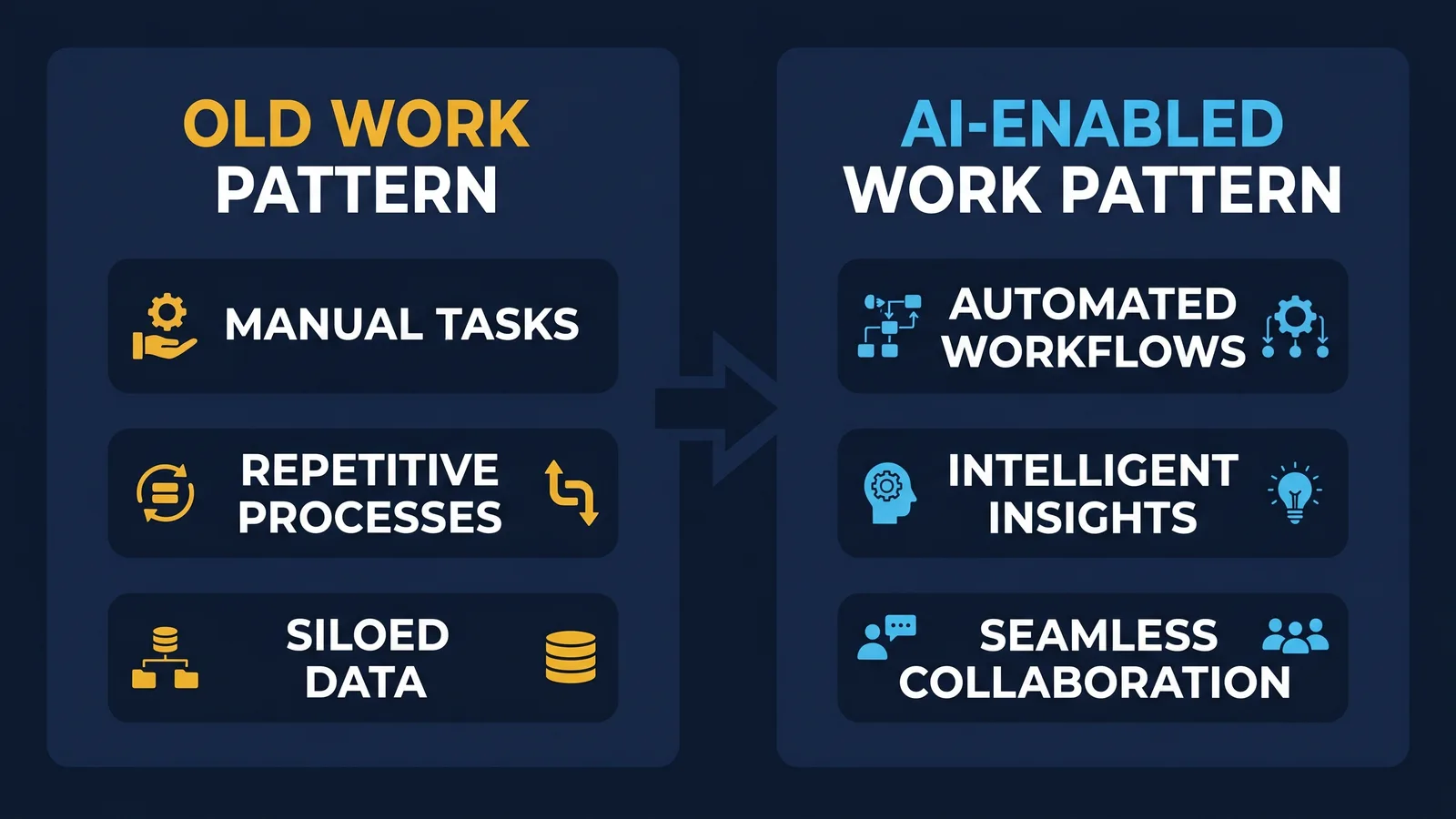
AI literacy programmes often start with prompts, use cases and risk reminders. Those elements matter. The problem is that they assume the job stays the same and the employee simply works faster. In practice, AI can change the sequence of work. A first draft may take minutes instead of hours. Research may begin with synthesis rather than blank-page searching. Managers may review AI-assisted work rather than original human drafting. Entry-level employees may need to evaluate outputs before they have developed deep subject expertise.
That shift creates a role-design question. If AI handles parts of drafting, summarisation, comparison and formatting, what should people spend more time doing? The answer should not default to more work. It should be better judgement, deeper analysis, stakeholder communication, quality review, ethical assessment and continuous improvement.
If HR ignores these changes, AI can create hidden capability gaps. People may appear more productive while becoming less able to explain their reasoning. Managers may approve work that reads well but is factually weak. Junior employees may miss the developmental work that once built judgement.
Why does quality control become a core skill?
The Fair Work Commission's AI transparency statement notes that AI may be explored for summarising documents, emails and other content, transcription, redaction and creative content, while also stating that generative AI will not make statutory decisions under workplace legislation. That distinction is useful for HR because it separates assistance from accountability. AI can help produce work, but people remain responsible for the quality and consequences of that work.
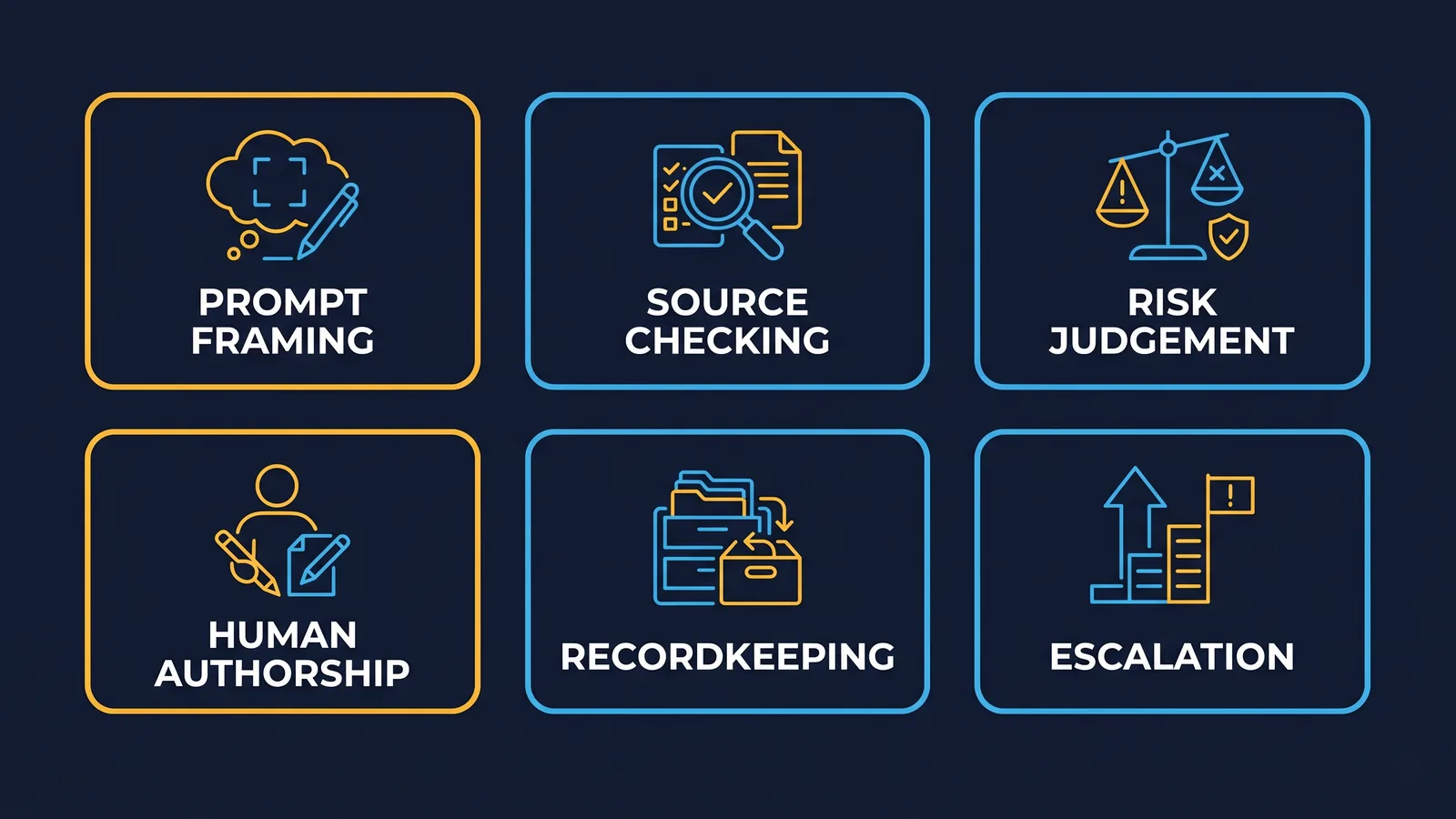
Quality control should therefore become part of capability frameworks. Employees need to know how to verify AI output, identify unsupported claims, check sources, protect confidential information, recognise bias, preserve records and decide when not to use AI. Managers need to know how to set expectations for AI-assisted work and how to review it without assuming fluency equals correctness.
These capabilities should appear in job descriptions, performance conversations and learning pathways. They should not be left as informal tips shared by enthusiastic early adopters, because verifying AI output is a management skill in its own right.
Should role redesign start with tasks or titles?
HR teams should avoid predicting which jobs will disappear and start by mapping tasks. A role can contain tasks that are good candidates for AI support, tasks that require human judgement, tasks that are sensitive or high risk, and tasks that should not be automated. This task-level view is more useful than broad statements that a profession is safe or unsafe.
McKinsey's 2025 State of AI survey reports that 88 percent of respondents say their organisations use AI in at least one business function, while about two-thirds have not begun scaling AI across the enterprise. That gap reflects a familiar organisational problem. Experimentation spreads faster than operating model change. HR can help close the gap by turning scattered use cases into deliberate work redesign.
This approach helps HR protect both productivity and learning. If AI removes every basic drafting task from an early-career role, the organisation may gain short-term speed and lose long-term capability. HR should identify which tasks can be safely accelerated and which tasks should remain part of training, even if AI could perform them faster.
Managers need new habits
AI adoption often assumes employees will self-manage the transition. That is unrealistic. Managers need new habits to set the tone. They should ask whether AI was used, what source material was checked, what risks were considered and what human judgement changed. They should avoid punishing transparency. If employees fear disclosing AI use, governance will fail.
The Australian Government's AI transparency statements model shows the value of openness. Public agencies publish statements to provide a consistent basis for understanding AI adoption and to build trust. HR can apply the same idea internally. Teams should be able to discuss AI use openly, including mistakes, limitations and lessons learned.
Manager training should include scenarios. For example, a manager might review an AI-assisted report that contains confident but unsupported claims. Another scenario might involve an employee pasting sensitive information into an unapproved tool to save time. A third might involve a team using AI to summarise employee feedback and accidentally removing important minority views. These scenarios build practical judgement, not just policy awareness.
Why must workforce planning include governance capacity?
Deloitte's 2026 State of AI in the Enterprise reports that worker access to AI rose by 50 percent in 2025, while only one in five companies has a mature governance model for autonomous AI agents. It also reports that 34 percent of organisations are truly reimagining the business rather than only optimising existing processes. HR should treat those findings as a warning. Access can scale faster than governance capacity.
As AI adoption grows, organisations need people who can review outputs, maintain knowledge bases, test workflows, manage change, handle incidents, update policies and train others. These are not always traditional technology roles. Many sit in operations, HR, risk, legal, learning and line management.
The bottom line
AI upskilling is necessary, but it is not sufficient. HR needs to redesign work around changed tasks, new quality expectations and human accountability. The aim is not to make every employee a technologist. The aim is to help people use AI in ways that improve judgement, trust and performance.
The organisations that benefit most from AI will not simply train staff to prompt better. They will redesign the work so people can think better.
References
- Microsoft Work Trend Index 2026
- Fair Work Commission, Artificial intelligence transparency statement
- McKinsey, The State of AI
- Australian Government AI transparency statements
- Deloitte, State of AI in the Enterprise 2026
Do this Monday
- Pick one role and map its tasks rather than its title, sorting them into candidates for AI support, tasks that need human judgement, sensitive or high-risk tasks, and tasks that should not be automated.
- Mark the tasks junior staff currently learn from, and decide which ones stay as deliberate practice even where AI could do them faster.
- Add the quality-control capabilities to that role's description: prompt framing, source checking, risk judgement, human authorship, recordkeeping and escalation.
- Rewrite one performance expectation so it measures value, accuracy and trust instead of volume.
- Give managers the four questions to ask about AI-assisted work: was AI used, what source material was checked, what risks were considered, and what human judgement changed.
- Run one manager scenario, such as reviewing a report with confident but unsupported claims, and agree how a disclosure of AI use will be treated so transparency is never punished.
- Name who reviews outputs, who maintains the trusted source material and who owns escalation, so governance capacity grows alongside access rather than behind it.
General information only. Not legal, compliance, financial, or professional advice.
TheAICommand. Intelligence, At Your Command.