AI's next hard constraint is electricity, and Australia has begun writing the rules for it through government expectations for new data centres and a draft AEMC connection standard for large loads. The next AI bottleneck is outside the model.
AI strategy is usually discussed as a race for models, skills, investment and sovereign capability. Australia has added a harder constraint: electricity. The data centres carrying cloud and AI workloads are becoming large enough, fast enough, to affect grid planning, connections and power-system security.
That does not mean every new data centre is an AI factory, or that AI alone explains all digital demand. It means the infrastructure beneath AI is no longer a background procurement detail. It is now visible in national planning, government expectations and the machinery of the National Electricity Rules.
What has Australia done on AI and power?
Three Australian policy signals now point in the same direction.
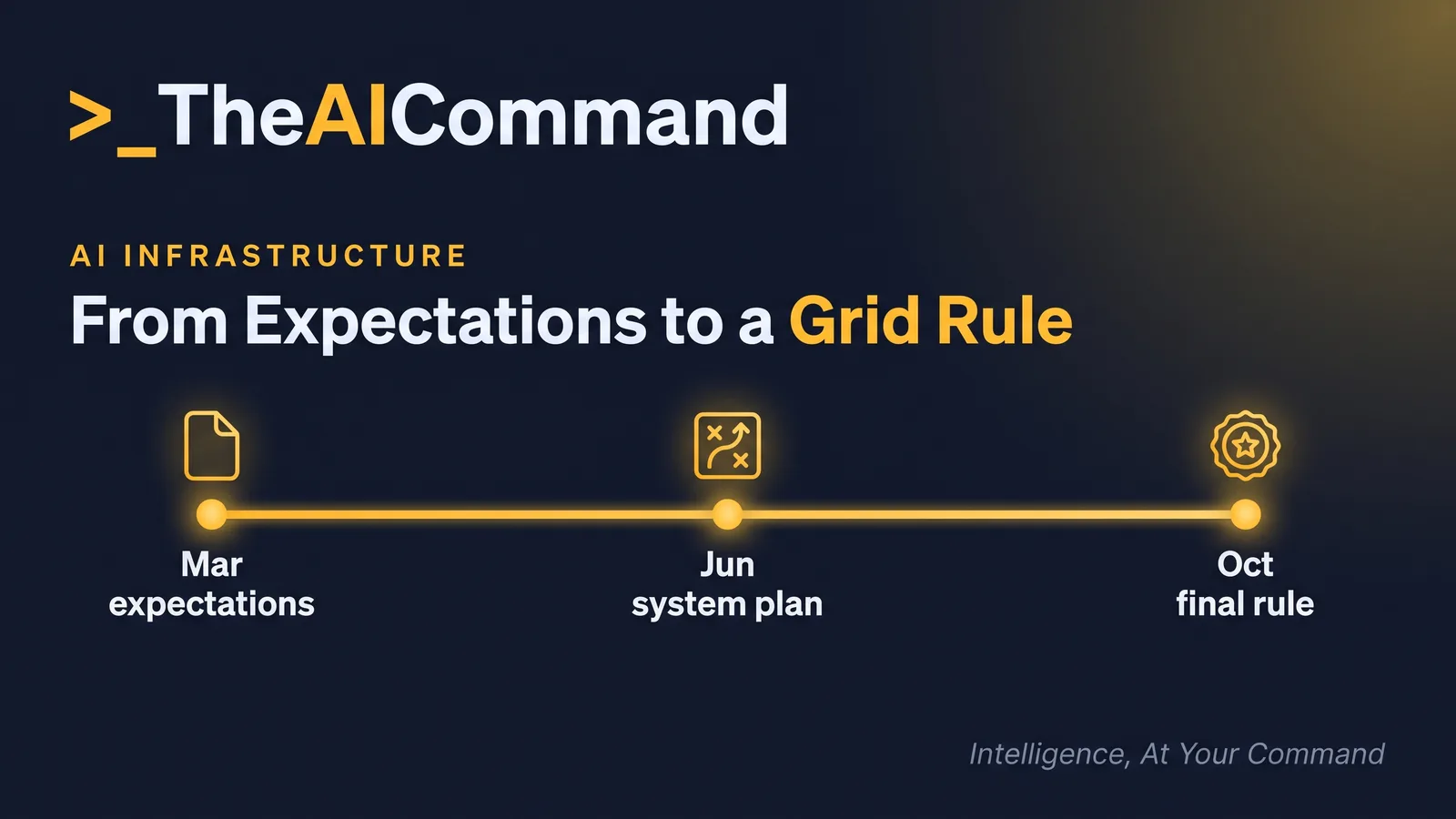
First, the Australian Government published its Expectations of data centres and AI infrastructure developers on 23 March 2026. They apply to new or expanded developments, including co-location sites, hyperscale operations and large AI compute centres. They do not replace existing law. Instead, they state what the Commonwealth expects projects to contribute if they want regulatory assessments to be prioritised.
The energy expectation is unusually concrete. New facilities should secure additional clean generation or storage, cover their share of transmission and distribution costs, improve efficiency, support grid stability through demand flexibility and share appropriate consumption data. The accompanying ministerial release says operators are expected to underwrite new renewable supply and avoid shifting connection costs onto consumers and other businesses.
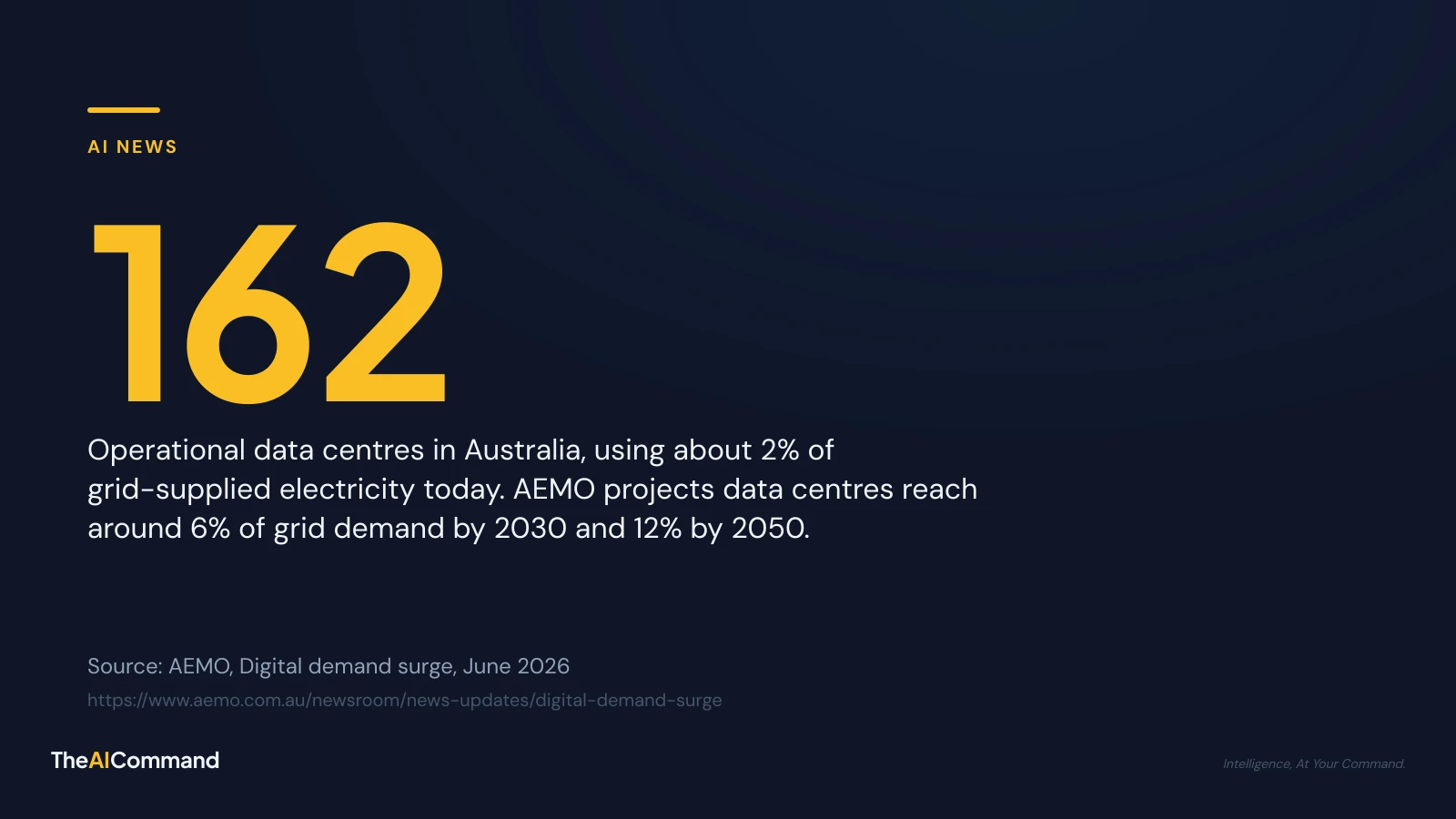
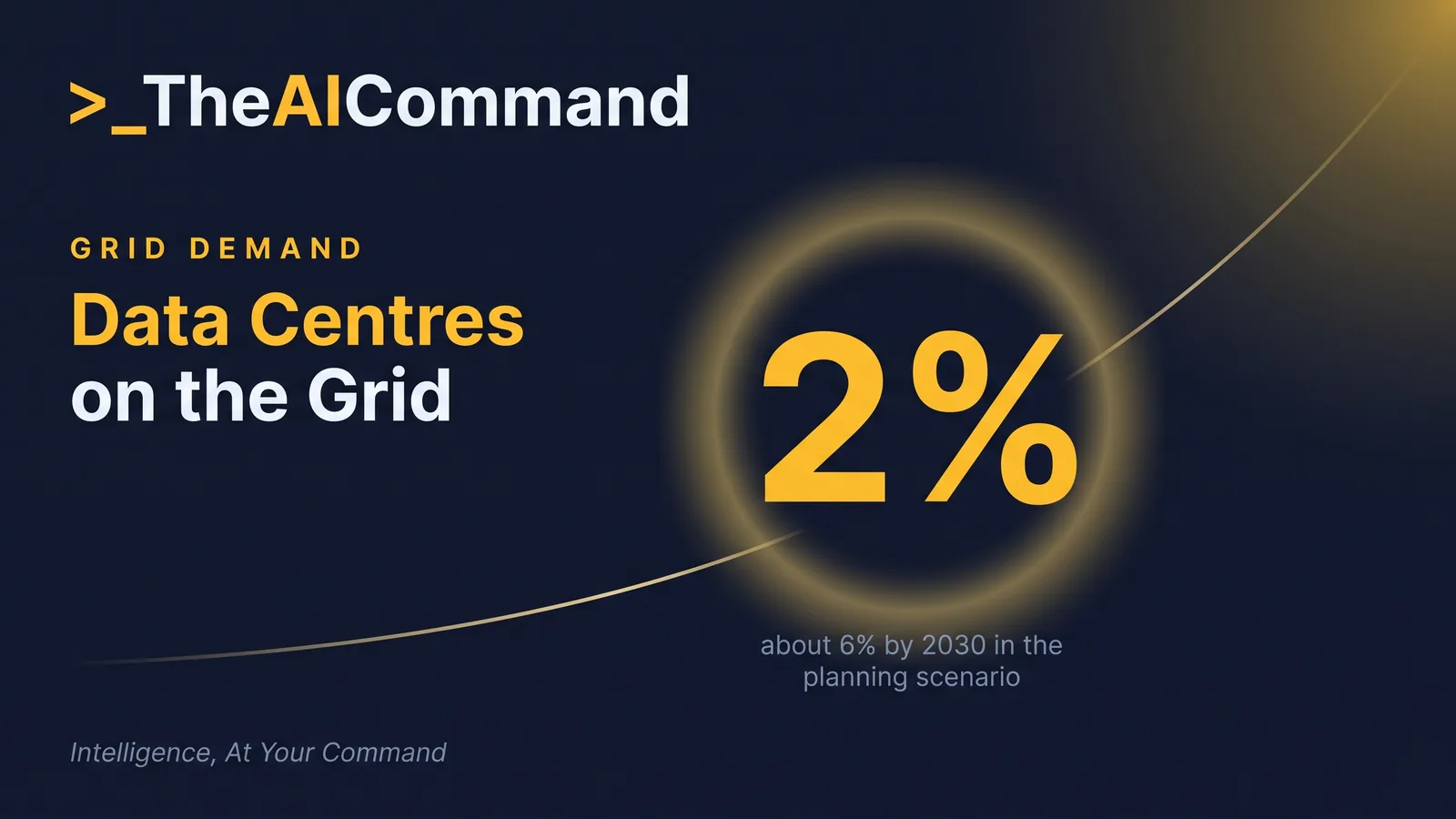
Second, the Australian Energy Market Operator has put data-centre demand into the planning foreground. In its June 2026 digital demand update, AEMO said Australia had 162 operational data centres using about 2 per cent of grid-supplied electricity. Its 2025 assumptions projected consumption of about 12 terawatt hours by 2030, around 6 per cent of grid-supplied electricity, and about 34 terawatt hours by 2050, around 12 per cent.
Those figures cover data centres broadly, not an isolated meter for generative AI. They are scenarios, not promises. Even so, the connection queue is already material. At the end of the March 2026 quarter, AEMO reported 11 projects larger than 5 megawatts progressing through the National Electricity Market transmission connection process. Together they represented 5.4 gigawatts of maximum demand, with about 60 per cent in New South Wales and 40 per cent in Victoria. Most were at an early stage.
Third, the Australian Energy Market Commission has proposed new technical standards for large inverter-based loads, a category that includes many data centres. The Package 2 rule-change page says the draft would introduce a tiered framework, disturbance ride-through requirements and measures for managing instability. The aim is to make connection obligations match a load's potential effect on power-system security.
This is not a final rule. Submissions on the March draft closed on 7 May 2026. The AEMC has extended the final determination date to 29 October 2026 because of the complexity of the issues raised. Any account that says Australia has already enacted the proposed data-centre connection standards is ahead of the record.
What it actually means
Australia is writing two different kinds of rulebook at once.
The government expectations describe the social licence for new AI infrastructure. They ask who pays, what communities receive, how water is managed, whether the project strengthens local research and whether energy demand supports rather than frustrates the transition. They matter because the Commonwealth says projects aligned with them will receive priority in regulatory assessment. They are a policy signal with practical consequences, but they do not themselves amend a statute or the National Electricity Rules.
The AEMC process is narrower and more technical. It asks what a large electrical load must do when the grid experiences a disturbance. Many data centres use inverter-based equipment. If multiple large loads respond badly to the same voltage event, their simultaneous disconnection could make instability worse. The draft standards are designed to make performance requirements clearer before a facility connects and to keep compliance visible through connection agreements.
Put together, the message is plain. A proposal can no longer be assessed only as a building full of servers. It is also a large industrial load, a network connection, a source of ramping uncertainty, a water user, a cybersecurity asset and a long-lived claim on new generation and storage.
This changes the vocabulary of AI strategy. Model access still matters. Chips still matter. Skills still matter. But the next layer of advantage is the ability to secure power, connect it without destabilising the system and show that the costs and benefits are fairly allocated.
That is why the 2026 Integrated System Plan matters to AI leaders even though it is an electricity document. AEMO published its final 2026 ISP on 25 June 2026 as the long-term roadmap for the National Electricity Market. The plan tests higher industrial demand, including from data centres, as electricity consumption approaches roughly twice today's level through the transition. AI infrastructure now sits inside the sensitivity analysis used to plan generation, storage and transmission.
Who should care about AI power constraints?
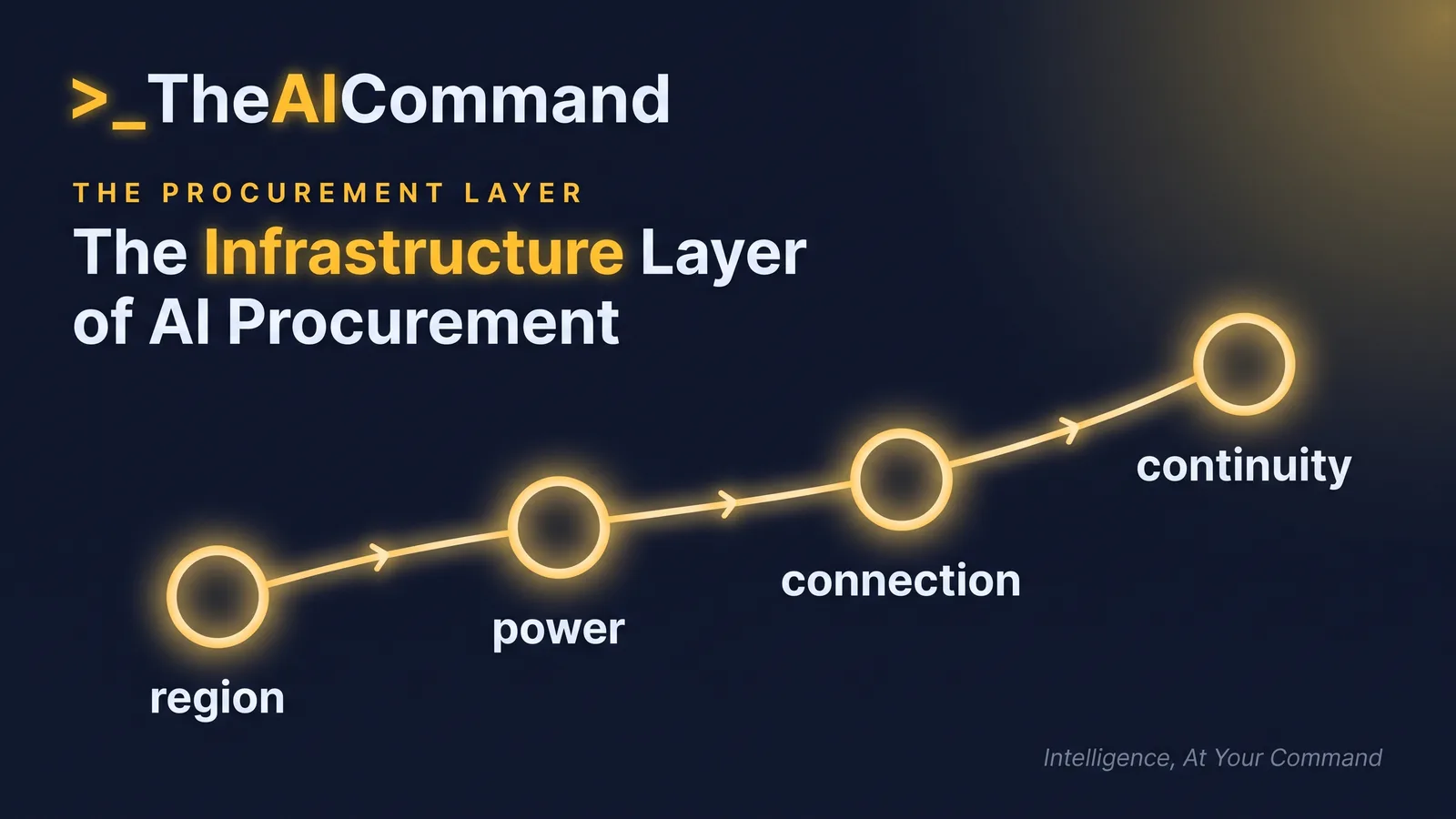
Technology executives should care because compute capacity is partly an energy contracting problem. A vendor's model roadmap says little about whether the Australian region supporting it has a connection, firm capacity, a clean-power pathway and an operating plan for constrained periods.
Procurement teams should care because an AI service's resilience can depend on infrastructure several layers below the contract. The questions now reach past data residency into facility location, grid dependency, power purchase arrangements, backup generation, water use, demand response and the operator's ability to provide reliable consumption data.
Risk and compliance teams should care because public claims about green AI infrastructure are testable. A project that says it is powered by new renewable supply should be able to identify what was added, when it becomes available and what happens when that supply is not producing. A glossy renewable-energy claim is not the same as matching demand with additional clean supply.
Boards and investment committees should care because connection timing is not a small implementation detail. AEMO says current experience points to roughly two years from connection application to energisation, while large data centres typically ramp over five to ten years. Those timelines mean infrastructure assumptions belong in investment cases early, not after the model vendor has been selected.
Policy leaders should care because Australia is trying to hold two objectives together: attract digital investment and protect consumers from poorly coordinated costs. The government's expectations do not reject data centres. They set terms for prioritising projects that bring new capacity, skills and research access while carrying their share of infrastructure cost.
What is the governance question?
The control problem is not whether an organisation should calculate the electricity used by every prompt. Most buyers cannot see that number accurately, and superficial per-query estimates can mislead because utilisation, cooling, hardware, region and time of use vary.
The practical governance question is whether material infrastructure dependencies are known and tested. The same move from policy language to evidence described in From Voluntary AI Guardrails to Audit Evidence applies here. An organisation needs artefacts, not a sustainability paragraph.
For a major AI procurement, the evidence pack could include the service region, hosting model, named infrastructure providers, business-continuity design, energy and water disclosures, the model for allocating emissions, and change-notification rules if workloads move to a different region or underlying facility. The pack should separate vendor statements from independently verified evidence and record which claims remain estimates.
This is also an operational resilience and concentration issue. If several critical AI workflows depend on the same cloud region or the same constrained network zone, buying different model brands may not create meaningful resilience. The application layer looks diversified while the electricity and facility layer is shared.
The site's earlier analysis of the AI pilot-to-scale gap is relevant here. Pilots hide infrastructure assumptions because usage is small. Production makes them visible. A tool can succeed in a controlled trial and still meet a capacity, cost or resilience constraint when thousands of users and agentic workflows run continuously.
Hype check
The power constraint is real. The apocalyptic version is not yet supported.
AEMO's figures are planning scenarios for data-centre demand, not a finding that AI will consume a fixed share of every Australian power bill. The 5.4 gigawatts in the transmission connection process is maximum demand across early-stage projects, not power already being drawn. Some proposals will change, shrink, move or never reach operation.
The connection standards are also still being made. The AEMC draft has attracted complex submissions and the final date moved to October. The final design may differ from the March proposal. Treat the draft as a direction of travel and a preparation signal, not a completed compliance obligation.
Nor is this a case for banning data centres. Flexible loads can support a changing grid if they reduce demand at constrained times, add storage and coordinate connections. New investment can also support research, digital services and regional capability. The policy question is whether those benefits are real, additional and shared, and whether the costs stay with the projects creating them.
The sharper conclusion is less dramatic. AI infrastructure has joined the class of projects that must explain their physical footprint. The model may feel weightless. The system running it is not.
What to do this week
- Add an infrastructure layer to the AI register. For each material service, record the deployment region, cloud and data-centre dependencies, known concentration points, data-residency position and whether the vendor can move workloads without notice.
- Ask the energy questions at renewal. Request evidence on additional clean supply, grid-cost contribution, water use, demand flexibility, business continuity and how environmental claims are calculated. Mark vendor assertions as assertions until they are verified.
- Stress-test one growth scenario. Take the highest-value AI workflow and model what happens if usage grows tenfold, the service region is constrained or pricing changes with energy-intensive operation. Name the fallback and the owner.
- Watch the rule, not the headline. Track AEMC project ERC0394 through the 29 October 2026 final determination. Do not write the March draft into a control as though it is already law.
Bottom line
AI infrastructure in Australia is now an energy-system and rule-making question, not a background procurement detail. Government expectations already ask new data centres to add clean supply and pay their grid costs, while the AEMC's Package 2 connection standards remain a draft with a final determination due 29 October 2026. Treat the direction of travel as clear and the specific rule as still being written.
Do this Monday:
- Add an infrastructure layer to your AI register: deployment region, cloud and data-centre dependencies, and known concentration points.
- Put the energy questions into vendor renewals: additional clean supply, grid-cost contribution, water use and demand flexibility.
- Mark vendor sustainability claims as assertions until they are independently verified.
- Stress-test your highest-value AI workflow for tenfold growth or a constrained region, and name the fallback and its owner.
- Track AEMC project ERC0394 to the 29 October 2026 final determination, and do not code the March draft as law.
Primary sources
- Department of Industry, Science and Resources, Expectations of data centres and AI infrastructure developers, 23 March 2026.
- Minister for Industry and Innovation, An Australian approach to AI: Expectations for data centres that deliver for Australians, 23 March 2026.
- AEMO, Digital demand surge: preparing Australia's power systems for the rise of data centres, June 2026.
- AEMC, Improving the NEM access standards, Package 2 (project ERC0394), current rule-change page.
- AEMO, 2026 Integrated System Plan, 25 June 2026.
TheAICommand. Intelligence, At Your Command.