
OpenAI's GPT-Live can listen and speak at the same time, and it lands in consumer ChatGPT first, not Business, Enterprise or Edu, which makes recording, retention and disclosure the immediate workplace question. Voice just stopped waiting for its turn.
What happened
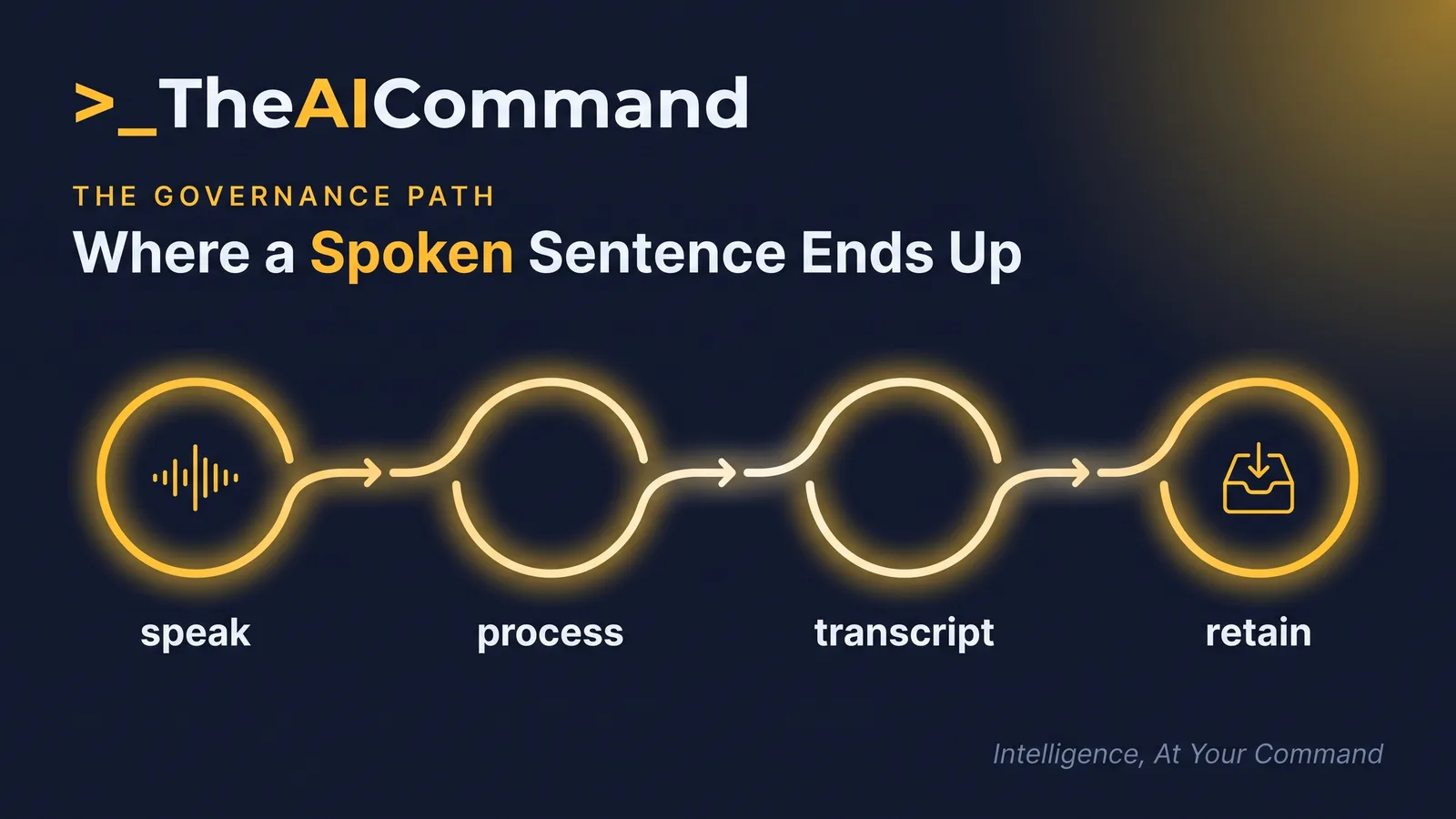
OpenAI launched GPT-Live on 8 July 2026. Its full-duplex architecture continuously processes audio while generating audio. The model can listen while it speaks, decide many times per second whether to speak, keep listening, pause or interrupt, and delegate search or deeper reasoning to GPT-5.5 in the background while keeping the conversation moving.
GPT-Live-1 is becoming the default ChatGPT Voice model for Go, Plus and Pro users, while GPT-Live-1 mini is rolling out to Free users. OpenAI says more than 150 million people each week already talk to ChatGPT using features like Voice and Dictation. The capability is therefore arriving through a familiar consumer interface, not a specialist contact-centre deployment.
The rollout boundary matters. OpenAI's current ChatGPT Voice help page says Live is not available in ChatGPT Business, Enterprise or Edu workspaces at launch. It is also not initially available in Temporary Chats, the desktop app, Work, Codex or custom GPTs. OpenAI says it plans to bring the models to the API soon, but API access was not generally available with the 8 July announcement.
What does full-duplex voice change at work?
Turn-by-turn voice felt like a chatbot read aloud. Full-duplex voice can feel like a participant. It hears pauses, accepts interruption, continues listening as it responds and can keep the exchange alive while another model works behind the scenes.
That changes behaviour. People are more likely to think aloud, test an uncertain idea, mention a colleague, read from a document or use the tool in a room where other voices are present. The friction that once reminded a user to formulate and submit a prompt has been reduced.
This can be useful for rehearsal, language practice, accessibility and hands-free brainstorming. It can also expand the data surface without the user noticing. Spoken context is personal information when it identifies someone. A transcript can be a new organisational record even when the user treated the interaction as an ephemeral conversation, which is the same recording-and-consent problem raised by AI note-takers in HR meetings.
The control question is therefore not whether GPT-Live is always recording the room. OpenAI says the Live session listens continuously during the active conversation and is designed to focus on the user's voice rather than background noise. The better question is what enters an active session, what becomes part of the chat record and what the organisation permits a worker to disclose there.
Who should care about GPT-Live at work?
HR and people teams should care because workplace conversations contain performance, health, conflict and leave information, the same sensitivity that makes workplace AI a privacy trust test HR cannot outsource. Technology teams should care because consumer rollout precedes an approved enterprise path. A prohibition without a usable alternative can move use to unmanaged accounts.
Privacy and legal teams have a specific Australian reference point, and it sits alongside the wider limits on AI worker monitoring in Australia. The OAIC's APP 3 guidance, updated 13 May 2026, says recordings and transcripts of online business meetings, including those generated by AI, can be solicited personal information. Collection must be reasonably necessary for the entity's functions or activities and occur by lawful and fair means. The exact position depends on the employer, data, setting and applicable laws.
What gets recorded and how long is it kept?
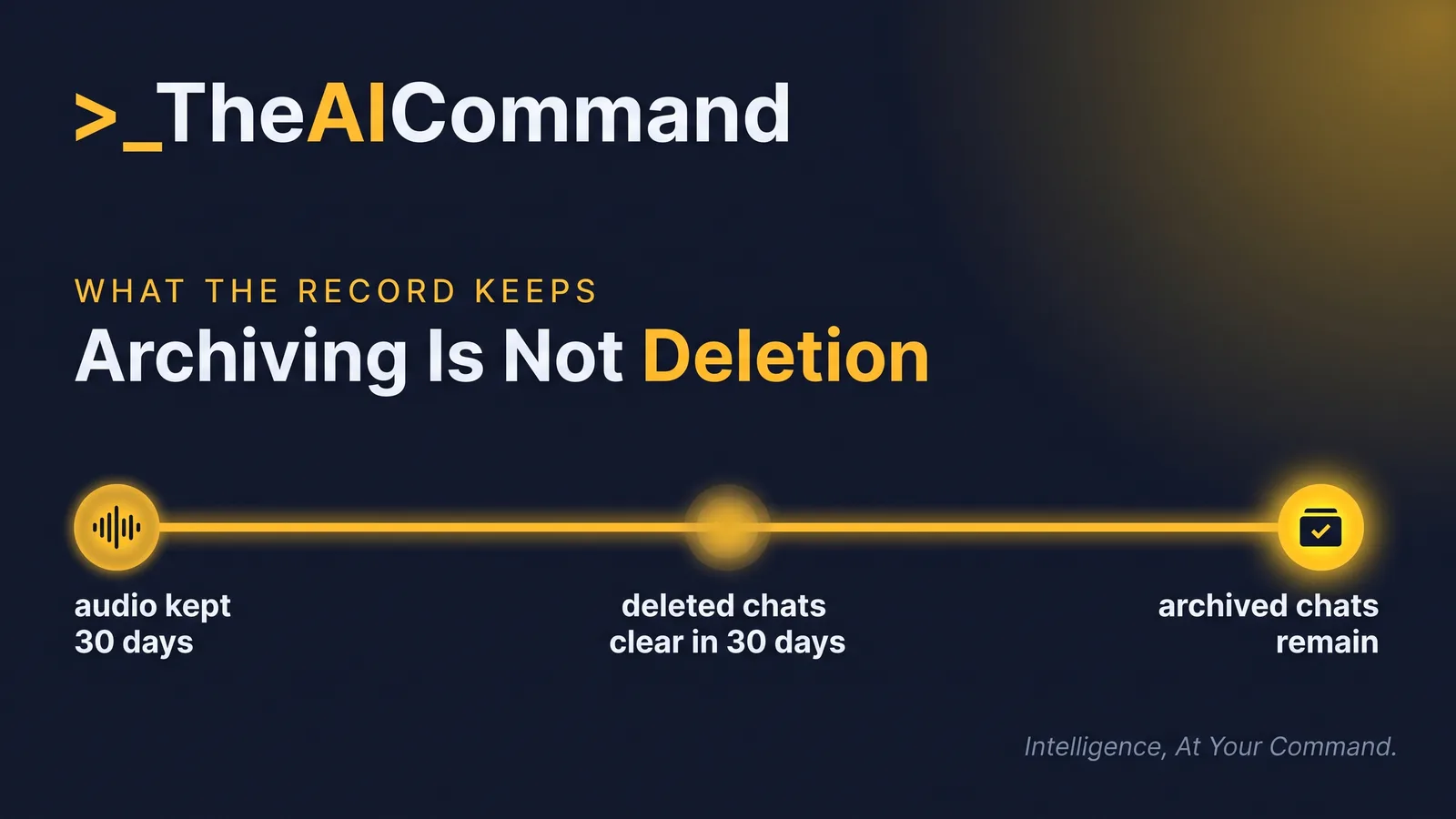
OpenAI's help page says audio clips from Live and Advanced Voice conversations are stored with the transcript in chat history and retained for 30 days. When a user deletes the chat, associated clips are deleted within 30 days, unless OpenAI needs to keep them for security, safety or legal reasons, and subject to any prior choice to share clips for model improvement. Archiving a chat does not delete it or its audio.
That is the product position for ChatGPT Voice. It is not a substitute for an organisation's own privacy assessment, contractual terms or record-retention obligations. The OAIC's guidance on commercially available AI products says the Privacy Act 1988 and the Australian Privacy Principles apply to all uses of AI involving personal information, including speech transcription and translation, for organisations covered by the Act.
Two other layers sit alongside that. Workplace surveillance and listening-device rules are state and territory based, not national: the Workplace Surveillance Act 2005 (NSW) requires notice before employee surveillance in New South Wales, and the Surveillance Devices Act 1999 (Vic) restricts recording private conversations in Victoria, with different regimes in other jurisdictions. And the Fair Work Ombudsman's workplace privacy best-practice guide recommends that policies note any monitoring, data collection or surveillance technology used in the workplace, what information is recorded and kept, who can access it, and how it will be used and stored. Voice AI belongs in that policy conversation even when the immediate product is not described as employee surveillance.
Hype check
GPT-Live is a meaningful interaction change, not yet an enterprise voice layer for every workflow. Business, Enterprise and Edu do not receive Live at launch, the API is planned rather than shipped, and voice with video or screen sharing is unsupported in the new mode. Natural conversation does not improve factual reliability or tell the model whether a disclosure, participant or record is authorised.
What to do this week
None of this requires a working group. The point is to get a small set of rules in place before voice quietly becomes an ordinary input, because retrofitting a policy after a sensitive disclosure has already entered a consumer chat history is a much harder conversation. A worked example makes the risk concrete: a case manager rehearsing a difficult phone call by speaking naturally to GPT-Live could drift from a fictional scenario into the real matter, naming [CLAIMANT_NAME] and describing a diagnosis. That single slip creates an audio clip and a transcript in a consumer account, outside the organisation's records, retention schedule and access controls. The four steps below are designed to make that slip unlikely, and survivable when it happens.
- Publish a one-page voice rule. State which accounts and devices are approved, which information must never be spoken into a consumer service, and whether use is allowed in shared spaces or meetings.
- Test the data path. In a clean test account, document what is captured, what appears in the transcript, how deletion works, who can access history and whether model-improvement sharing is enabled.
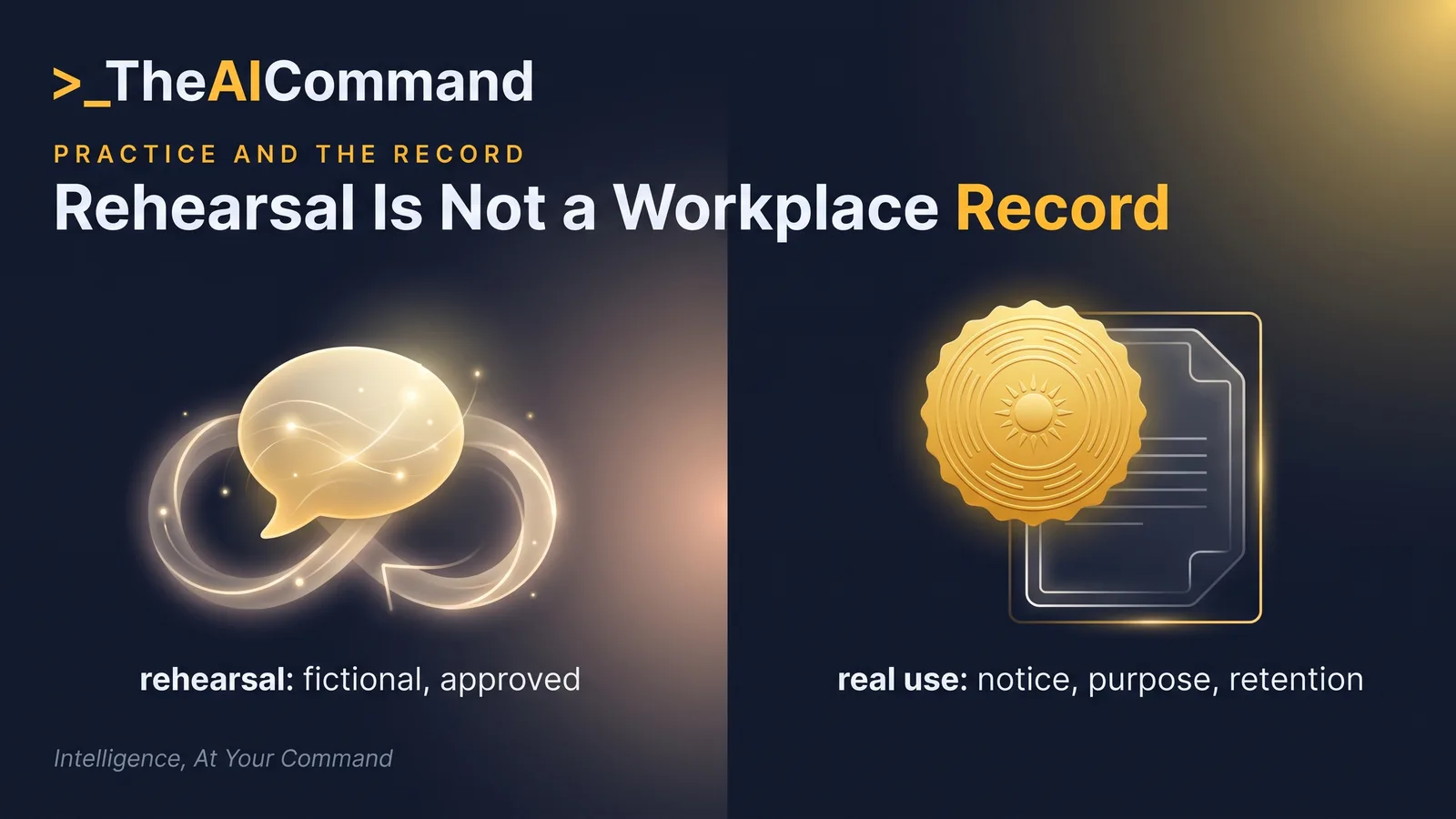
- Separate rehearsal from recording. Permit low-risk fictional practice where useful. Require a specific approval and notice process before any real workplace conversation, customer call or meeting enters a voice system.
- Keep the decision human. Use voice AI to brainstorm, search and draft. A person verifies facts, protects third-party information and decides what becomes part of the official record.
Bottom line
GPT-Live makes voice feel like a continuous work interface, which lowers the friction on what workers speak into a consumer tool and can quietly expand the organisational record. Business, Enterprise and Edu do not receive Live at launch, so the immediate question is what enters a consumer chat history, what is retained and what a worker is permitted to disclose there.
Do this Monday:
- Publish a one-page voice rule covering approved accounts and devices, information that must never be spoken into a consumer service, and use in shared spaces or meetings.
- Test the data path in a clean account: what is captured, what appears in the transcript, how deletion works and whether model-improvement sharing is on.
- Separate low-risk fictional rehearsal from any real workplace conversation, which needs a specific approval and notice process first.
- Keep a person deciding what becomes part of the official record, verifying facts and protecting third-party information.
TheAICommand. Intelligence, At Your Command.