
What psychosocial risks does AI work allocation create?
AI work allocation needs psychosocial risk controls because systems that schedule, monitor and score work can create psychological hazards. Before deploying them, assess job demands, worker control, support, organisational justice and change management. Artificial intelligence (AI) is transforming how work is allocated, monitored and managed across Australian workplaces. From scheduling shifts to prioritising tasks and scoring performance, AI-driven systems promise improved efficiency, consistency and productivity. However, these benefits come with new challenges, particularly in managing the psychosocial risks that affect worker mental health and wellbeing.
Psychosocial hazards are work-related factors that can cause psychological harm. These include excessive job demands, low worker control, inadequate support, and perceptions of unfairness or poor organisational justice. According to Safe Work Australia, persons conducting a business or undertaking (PCBUs) have a legal duty to identify and manage these risks to protect workers' mental health and safety.
Recent legislative reforms in New South Wales underscore the importance of treating AI and algorithmic systems as integral components of work design, not merely technology tools. The NSW Government's Digital Work Systems reforms and SafeWork NSW's Digital Work Systems Guidelines clarify that AI-driven work allocation must be assessed for health and safety risks, including psychosocial impacts.
For HR professionals and managers, this means adopting a structured approach to assess and control psychosocial risks before deploying AI productivity tools that allocate or monitor work, a duty we unpack further in the WHS obligations NSW teams already hold. This article outlines a practical framework based on five key dimensions: job demands, worker control, support, organisational justice and change management.

How do you stop AI from creating unreasonable workloads?
AI systems often aim to optimise productivity by distributing tasks efficiently. However, without careful calibration, they can inadvertently create excessive or unreasonable workloads that increase stress, fatigue and burnout.
For example, an AI scheduling system might assign back-to-back shifts without adequate breaks or push workers to meet unrealistic performance metrics. In some cases, AI may penalise workers for taking lawful breaks or following safe work procedures, unintentionally encouraging unsafe behaviours such as rushing deliveries or care tasks.
The NSW Digital Work Systems Act 2026 explicitly requires PCBUs to consider whether AI-driven work allocation results in excessive or unreasonable workloads or metrics. This legal requirement means HR teams must:
- Review AI allocation rules and outputs regularly to detect workload spikes or bottlenecks.
- Monitor if AI systems penalise workers for taking lawful breaks or adhering to safety protocols.
- Adjust AI parameters to prevent unsafe work intensification.
Involving workers in identifying workload issues is essential. They have practical insights into the demands of their roles and can highlight when AI-generated workloads become unreasonable. This aligns with Safe Work Australia's recommendation to engage workers in psychosocial risk management.
Example: Consider an AI system that assigns delivery routes to drivers. If the system schedules routes that are too long or require unsafe driving speeds to meet deadlines, this creates excessive job demands. HR should review the AI's routing logic and consult drivers to adjust parameters for realistic workloads.
How do you keep worker control under AI scheduling?
Low job control is a significant psychosocial hazard. AI systems that rigidly assign tasks or monitor performance can reduce workers' ability to manage their own work pace or methods, increasing stress and reducing job satisfaction.
The 2026 Microsoft Work Trend Index found that workers value AI tools that support human agency rather than replace decision-making. AI should assist cognitive work, not dictate it.
HR and managers should assess:
- Whether AI allocation allows workers to influence or override assignments.
- If workers can reasonably refuse or negotiate AI-generated schedules or tasks.
- How AI notifications and escalations respect workers' right to disconnect outside working hours, as outlined by the Fair Work Ombudsman.
Embedding human review and consultation before AI work rules take effect is essential to preserve worker control and autonomy, including how you configure AI workflow tools around the right to disconnect.
Example: An AI system that automatically escalates missed tasks to supervisors without considering legitimate reasons can undermine worker control. Introducing a human review step before escalation respects worker agency and reduces stress.
Providing Adequate Support: Human and Organisational Resources
AI systems can change the nature of work and the support workers need. Algorithmic monitoring may increase pressure and scrutiny, requiring stronger managerial support and clear communication channels, and HR should keep it within the limits that apply to AI worker monitoring in Australia.
Poor support is a recognised psychosocial hazard. HR should ensure:
- Managers are trained to understand AI tools and their impact on teams.
- Workers have access to assistance when AI outputs cause confusion or stress.
- Clear procedures exist for raising concerns about AI-driven work allocation or monitoring.
Support also includes technical resources, such as user-friendly interfaces and timely feedback mechanisms.
Example: If an AI tool flags a worker's performance as below standard, the worker should have access to coaching or clarification before any punitive action. This support reduces anxiety and promotes fairness.
Ensuring Organisational Justice: Fairness and Transparency
Organisational justice relates to workers' perceptions of fairness in decision-making and treatment. AI systems can undermine justice if they operate opaquely or produce biased outcomes.
The OAIC guidance on AI and privacy stresses transparency and complaint handling as critical to building trust in AI systems.
HR and managers should:
- Maintain transparency about how AI allocates work and monitors performance.
- Provide clear explanations and avenues for workers to contest AI decisions.
- Monitor AI systems for discriminatory or unlawful practices, as required by the NSW Digital Work Systems Act.
Consultation with workers and their representatives before deploying AI tools helps build fairness and acceptance.
Example: If an AI system uses performance scores to determine bonuses, workers should understand the scoring criteria and have a process to challenge perceived errors or bias.
Managing Organisational Change: Consultation and Continuous Review
Introducing AI work allocation tools is a significant change that must be managed carefully to avoid psychosocial harm, because rolling out AI counts as a workplace change to consult and risk-assess first.
Safe Work Australia recommends effective change management practices, including:
- Early and ongoing consultation with affected workers.
- Training and education about new AI systems.
- Monitoring and reviewing AI impacts on worker health and safety over time.
The NSW Digital Work Systems guidelines require PCBUs to keep records and assist WHS inspectors in reviewing digital work systems.
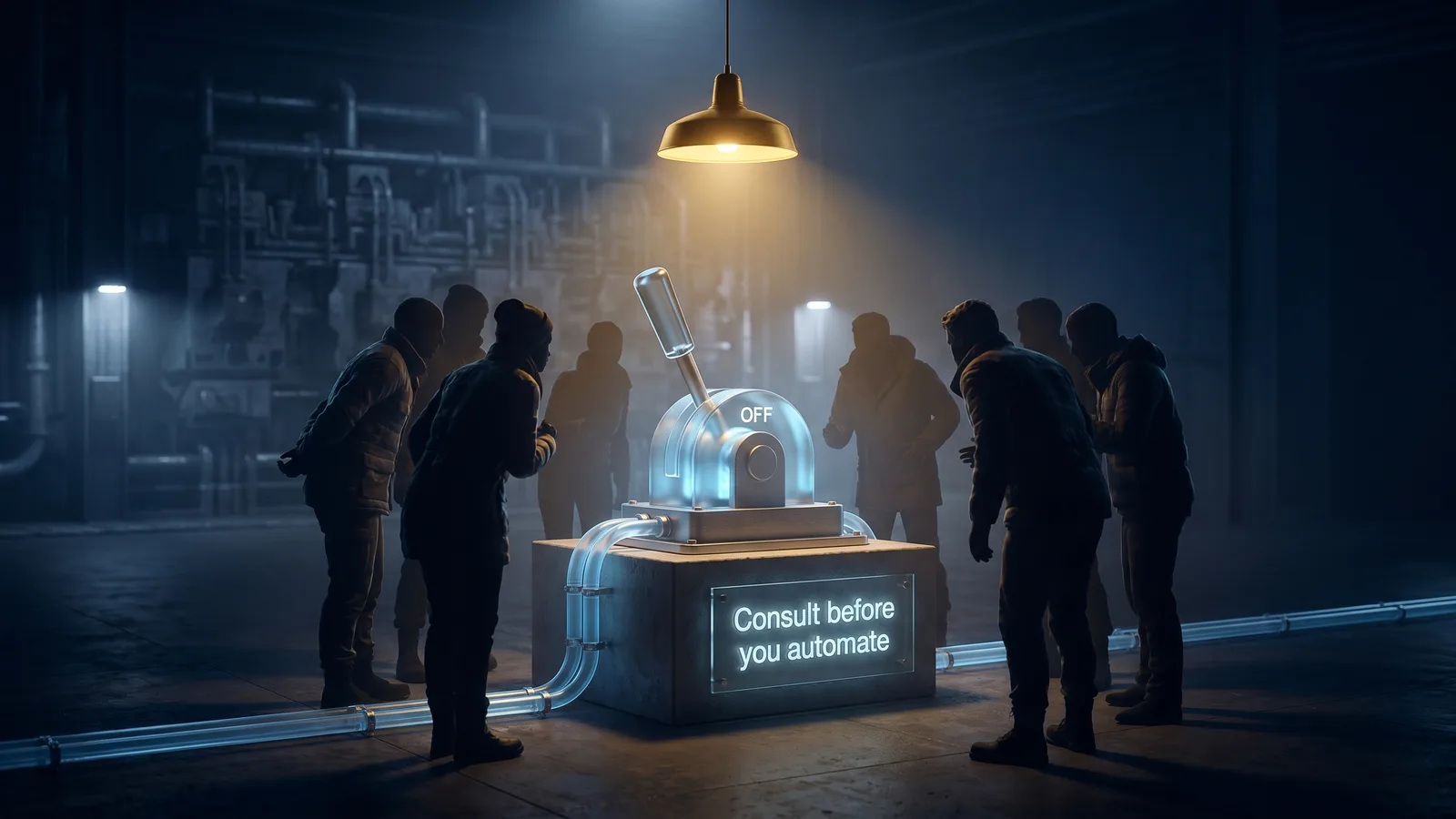
Review Steps for HR and Managers:
- Plan: Identify AI work allocation systems and potential psychosocial risks.
- Consult: Engage workers and representatives early to gather input and concerns.
- Train: Provide education on AI tools and psychosocial risk controls.
- Implement: Deploy AI systems with human oversight and support mechanisms.
- Monitor: Regularly review AI outputs, worker feedback and health indicators.
- Adjust: Update AI parameters and controls based on monitoring and consultation.
Practical Checklist for HR and Managers Before Deploying AI Work Allocation
This checklist can be integrated into existing WHS and HR risk management processes to ensure AI tools enhance productivity without compromising psychosocial safety.
Worked Example: Applying the Psychosocial Risk Framework to an AI Scheduling System
Consider a retail company implementing an AI scheduling system that automatically assigns shifts based on predicted customer traffic and employee availability.
Job Demands: The AI might schedule employees for peak periods with minimal breaks or assign consecutive closing and opening shifts, increasing fatigue. HR should review the scheduling logic to ensure compliance with reasonable work hours and rest periods.
Worker Control: Employees should have the ability to request shift swaps or decline certain shifts without penalty. The system should allow manager overrides and incorporate worker preferences.
Support: Managers must be trained to interpret AI schedules and assist employees with queries or disputes. A helpdesk or feedback channel should be established for scheduling concerns.
Organisational Justice: The scheduling criteria should be transparent, with clear communication about how shifts are allocated. Employees should have a process to appeal or discuss scheduling decisions.
Change Management: Before rollout, the company should consult with employees and unions, provide training on the new system, and monitor impacts on worker wellbeing and turnover.
This example illustrates how applying the psychosocial risk framework can guide safer and fairer AI work allocation.
Conclusion
AI-powered work allocation and monitoring systems offer significant productivity benefits but also introduce psychosocial risks that can affect worker health and safety. Australian legislation, including the NSW Digital Work Systems Act 2026, mandates PCBUs to proactively assess and control these risks.
HR and management must treat AI allocation as a work design issue, not just a technology procurement matter. This means assessing job demands, worker control, support, organisational justice and managing change through consultation and continuous review.
Embedding human oversight, transparent communication and fair processes will help balance productivity gains with psychosocial safety. This approach supports sustainable AI adoption that respects workers and complies with emerging Australian workplace safety laws.
Bottom line
AI work allocation is a work design decision, not just a technology purchase. Systems that schedule, monitor and score work can create psychosocial hazards across job demands, worker control, support, organisational justice and change management, so assess and control those risks before deployment. Human oversight, transparent and contestable decisions, and early worker consultation keep productivity gains from becoming safety costs.
Do this Monday:
- Audit one AI allocation rule for workload spikes and whether it penalises lawful breaks or safe procedures.
- Add a human review step before AI escalations reach a supervisor.
- Give workers a way to influence, override or contest AI-generated schedules, tasks or scores.
- Consult affected workers and representatives before any AI allocation change goes live.
- Keep records of your AI work systems so WHS inspectors can review them.
This article provides general educational information only. It should not be relied upon as legal or professional advice. Organisations should consult suitably qualified professionals when implementing AI work allocation systems and psychosocial risk controls.
TheAICommand. Intelligence, At Your Command.