
Your AI rollout came with an invoice you have not read. When organisations roll out AI, the validating, coaching and change management the tools create lands on one layer, your middle managers, on top of an unchanged workload and with no extra time.
Most organisations celebrated their AI adoption from the top. A tool was chosen, a licence was signed, IT ran the deployment, and the C-suite announced a productivity gain and, quietly or not, a chance to run leaner. On the slide, adoption looked like a software project with a headcount upside. Somewhere below the slide, a different thing was happening. The work of actually making AI real inside teams was landing on one layer of the organisation, unbudgeted and unacknowledged, and that layer was already stretched thin. It landed on your middle managers.
If you lead the people who lead the work, this is your problem before it is theirs. And new research says it is bigger than most executives realise.
The shift: adoption is not free, it just moved
In AI Adoption Is Overloading Your Middle Managers, published in Harvard Business Review on 26 June 2026, Julia Shin and Sandra J. Sucher name the disconnect directly. "Most organizations treat AI adoption as a technology challenge, a software rollout to be managed by IT and celebrated by the C-suite," they write. "Some even see it as a fast track to headcount reduction." From 18 in-depth interviews at two major consulting firms, they map where the work actually goes, and it is not into thin air. It concentrates on the manager.
Three new jobs arrive with the rollout. Managers have to validate AI outputs, reviewing and checking what the tools produce before it is trusted or shipped. They have to coach their teams, guiding people through unfamiliar tools and the new ways of working the tools demand. And they have to manage the change itself, absorbing the anxiety, the resistance and the redesign that any real shift in how work gets done sets off. None of this replaces their existing job. It sits on top of it, while delivery expectations stay the same or rise.
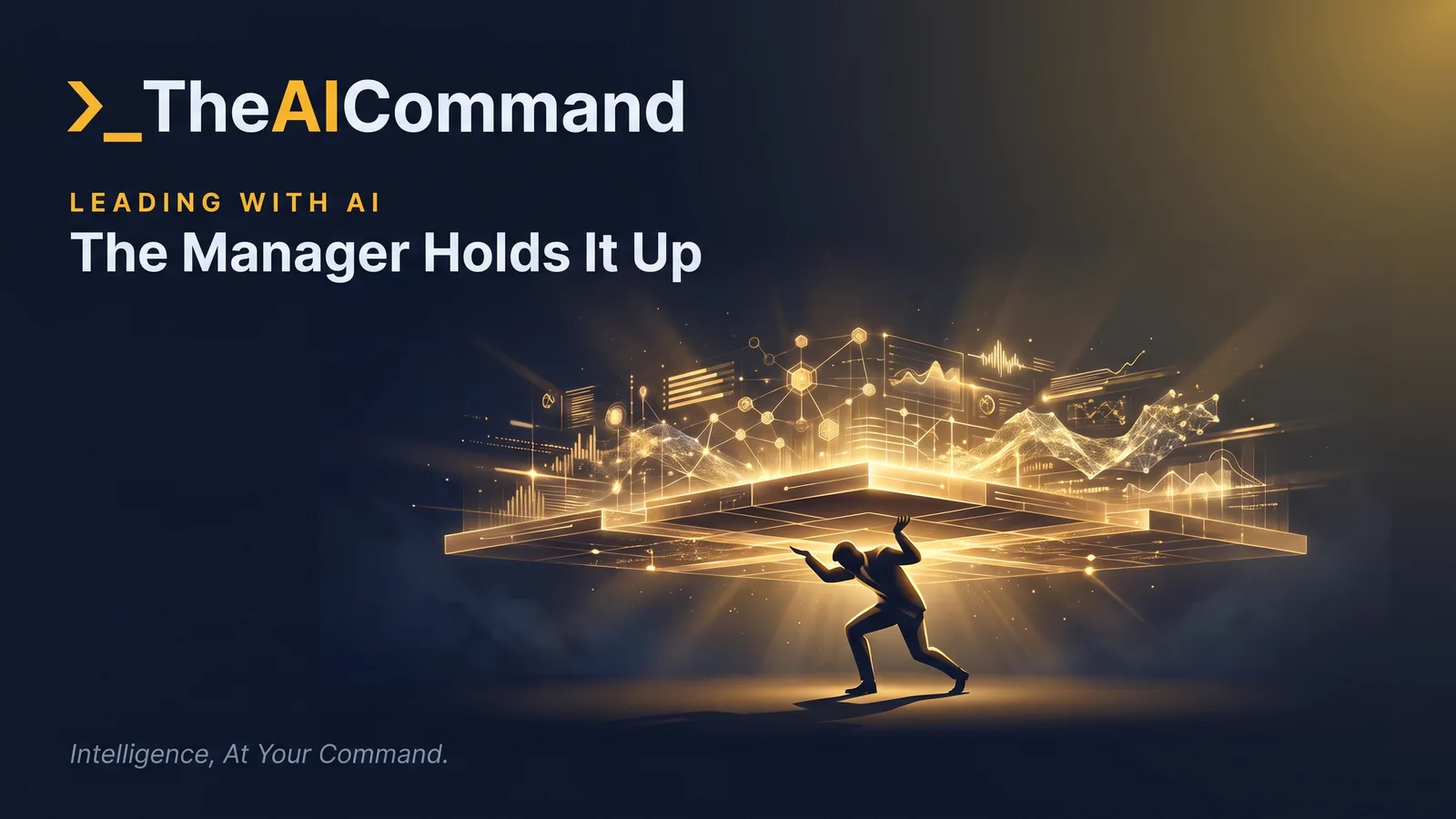
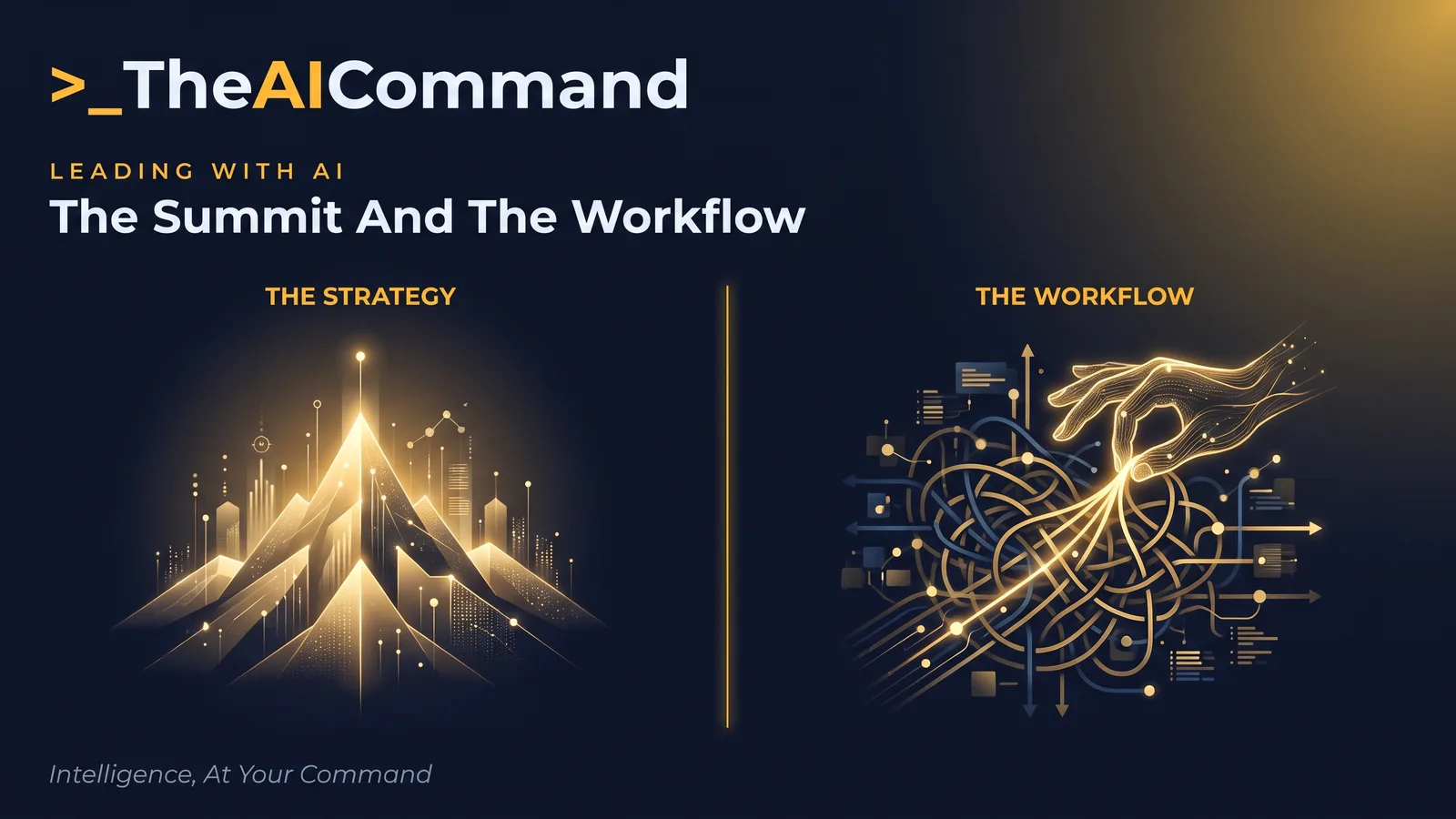
The reason this stays invisible from the top is that executives and managers experience AI from opposite ends. Leaders tend to meet AI as a strategic advantage, seen from altitude, in the deck and the demo. Managers meet it as a set of flaws inside a real workflow, under a real deadline, with a real team asking real questions, and without the time or support to answer them well. The C-suite sees the promise. The manager lives the mess. That gap is exactly why the burden goes unfunded: the people approving the rollout are not the people carrying it, and the carrying does not show up in any number they look at.
What new work does an AI rollout create for managers?
It helps to look at each of the three new jobs, because their weight is easy to underestimate from the top.
Validating outputs is not a glance. To responsibly stand behind AI-assisted work, a manager has to know enough about the task to catch a plausible-sounding error, and generative tools produce plenty of those. That is real cognitive load, applied to a stream of work that used to arrive already trustworthy from an experienced person. The manager has become the last line of defence against confident mistakes, and that line has to hold on every piece that ships.
Coaching is a second job layered on the first. A manager is now expected to bring a whole team up a learning curve on tools that shift under them, model good use, answer the questions, and rebuild the team's workflow around the technology, usually while having barely climbed the curve themselves. Teaching something you are still learning, to people looking to you for certainty, is genuinely hard, and it is happening in the gaps of an unchanged day.
Change management is the third and least visible. Every real shift in how work gets done generates anxiety, resistance and the fear of being replaced, and it is the manager who absorbs it, holds the team steady, and carries the emotional weight of a transition they did not design. That labour never appears on a dashboard, but it is often the difference between an adoption that sticks and one that quietly fails.
Stack the three on top of a delivery load that did not shrink, and the overload is not a matter of a manager being slow. It is arithmetic.
Is AI a fast track to cutting management headcount?
The most dangerous version of this is the fast-track-to-savings framing. If AI is sold internally as a way to run with fewer people, the pressure to cut lands soonest on the layer that looks like overhead, which is management. But in the near term, AI does not shrink the manager's job. It expands it. The manager is the one absorbing the transition, holding the team together through it, and doing the validation that keeps the AI's output safe to use. Thin that layer while it is doing that work, and you do not capture a saving. You remove the shock absorber that was making the whole adoption survivable, and the productivity gain you were counting on goes with it.
There is a real efficiency in AI. It is just further out than the launch date, and it does not come from cutting the people managing the transition before the transition is done.
What should leaders do about manager overload from AI?
The fix is not a pep talk about resilience. It is treating AI adoption as what it is, an operating-model change, and doing the unglamorous work of resourcing the layer that carries it. Here is a sequence you can run this quarter.
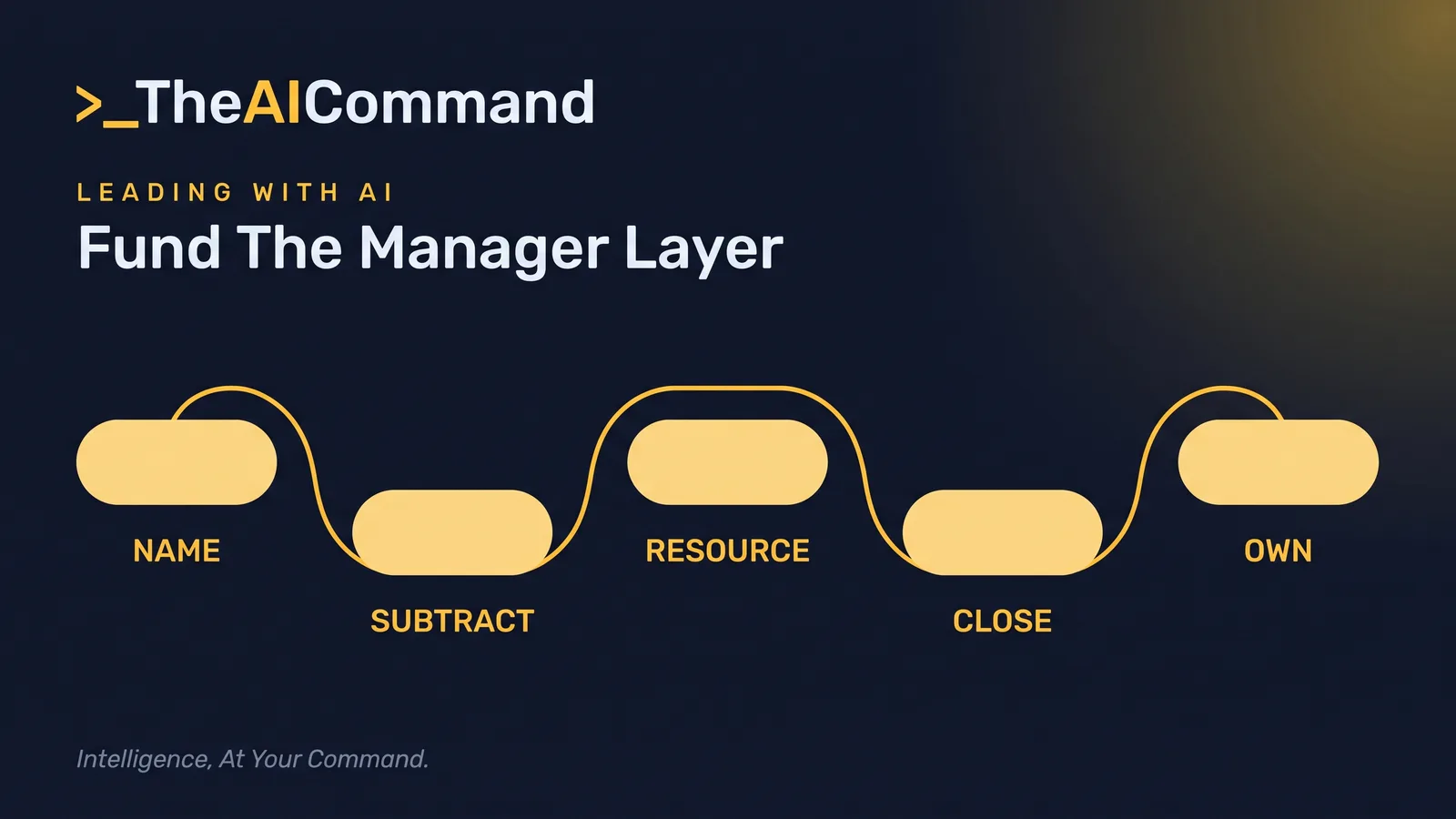
- Name the new work out loud. Sit with your managers and list the AI-created work that has quietly attached to their role: the validating, the coaching, the change management, and whatever else the rollout added. You cannot fund or defend work you have not named. Naming it also tells the manager you can see it, which is worth more than most executives think.
- Subtract before you add. New work needs room, and the room does not appear on its own. Find something you can genuinely stop asking managers to do, a report no one reads, a meeting that could be a message, an approval step that adds nothing, and remove it. If you add three jobs and subtract none, you have not resourced the change. You have just moved the overload out of view.
- Resource the coaching and validation. The coaching load in particular is a real capability that needs real support: time in the manager's week for it, training so they are not improvising, and clarity on what good AI use looks like in your context. Do not assume a manager can teach a tool they were handed on the same day their team was. Fund the thing you are relying on.
- Close the gap by getting into the workflow. The perception gap between the summit and the workflow closes only one way, by leaders spending time where the work happens. Sit in on the messy reality once. Watch a manager field the questions and check the outputs. You will resource the burden differently after you have seen it than you will from the deck.
- Own the operating model. The sustainability of your manager layer is not the managers' problem to solve alone, and it is not something the tool solves for you. It is a design decision, and it is yours. Decide, deliberately, what the manager's job now is with AI in it, and build the capacity to make that job doable.
The judgement boundary
This is where the accountability sits, and it does not move. A senior leader can delegate the AI tool, the training vendor, even the rollout plan. What cannot be delegated is the decision about what the manager's job becomes and whether it is survivable. The tool will not right-size the workload. The managers cannot subtract from their own remit or reallocate the resources; only the people above them can. If the manager layer quietly burns out under an unfunded transition, that is not a failure of individual resilience. It is a failure of operating-model design, and the design is a leadership responsibility. The buck for whether AI adoption is sustainable stops with the leaders who approved it, not the managers absorbing it.
A worked example
[EXECUTIVE] leads a division at [ORGANISATION] and signs off an AI rollout across every team, briefed as a productivity uplift with a modest headcount saving to follow. Three months in, delivery is fine on the surface, but two of the strongest team leads are visibly fraying, and one has started talking about leaving.
Instead of reading that as a personal capacity issue, [EXECUTIVE] runs the sequence. A session with the managers names the new work, and the picture is stark: each is spending most of a day a week checking AI outputs and coaching people through the tools, on top of an unchanged workload. [EXECUTIVE] finds two recurring reports the division produced out of habit and kills them, freeing real time. A slice of budget goes to proper training so the managers are not teaching from scratch. And [EXECUTIVE] spends a morning sitting beside a team lead, watching the validation and the coaching happen, which reframes the whole thing. The headcount saving is quietly shelved, because it is now obvious that cutting this layer mid-transition would sink the adoption it was meant to deliver.
The rollout did not change. What changed was that a leader stopped treating the manager tax as free, and started paying it.
The habit to build
The lasting shift is a reflex: whenever you approve a change that runs through your managers, ask where the new work lands and who is funding it, before you celebrate the upside. AI is the sharpest current example, but it will not be the last thing you push down through the organisation. The leaders who keep their manager layer intact through this transition are not the ones with the best tools. They are the ones who understood that adoption is never free, that it just moves, and who made sure that when it moved onto their managers, it moved with the time, the training and the support to carry it. See the invoice, and pay it, before it is paid for you in the people you lose.
Bottom line
AI adoption is not free, it just moves, and it moves onto the managers who validate the outputs, coach the teams and absorb the change. Cutting that layer to chase a headcount saving removes the shock absorber that was making the adoption survivable. Treating the rollout as an operating-model change, and resourcing the manager layer that carries it, is a leadership decision that cannot be delegated to the tool.
Do this Monday:
- Sit with your managers and name the AI-created work now attached to their role.
- Subtract something real from their load before you add anything new.
- Fund the coaching and validation with time, training and a clear picture of good AI use.
- Spend a morning in the workflow watching a manager validate outputs and coach the team.
- Decide, deliberately, what the manager's job now is with AI in it.
TheAICommand. Intelligence, At Your Command.