
AI can map a flexible work request, the deadline, the missing facts, the consultation agenda and the workable alternatives, but it cannot decide eligibility under section 65 or whether business grounds are reasonable under section 65A. Reasonableness is a judgement, not a dropdown.
Flexible work requests are difficult because the answer rarely sits in one document. HR needs the employee's written request, the connection to an eligible circumstance, role requirements, team coverage, cost and customer evidence, prior arrangements, possible alternatives and the consequences of refusal. Then someone must make a contextual decision under a statutory process.
AI can organise that material. The risk begins when organisation becomes evaluation and the model's fluent summary starts to look like a conclusion.
What does the Fair Work Act actually require?
Under the National Employment Standards, eligible employees can request changes to their hours, patterns or location of work. Section 65(1A) of the Fair Work Act 2009 sets the circumstances that ground a request: the employee is pregnant, is the parent or carer of a child of school age or younger, is a carer within the meaning of the Carer Recognition Act 2010, has a disability, is 55 or older, is experiencing family and domestic violence, or provides care or support to a member of their immediate family or household who is experiencing family and domestic violence. Pregnancy and the expanded family and domestic violence circumstances were added by the Secure Jobs, Better Pay amendments in 2023. Permanent employees need 12 months of continuous service; regular casuals have their own 12 month pathway.
The Fair Work Ombudsman confirms the mechanics. A request must be in writing, explain the change sought and give the reasons. The employer must respond in writing within 21 days.
Sections 65 and 65A contain the core rules. Where an employer refuses a valid request, section 65A(3) requires that it has first discussed the request with the employee, genuinely tried to reach agreement on changes that would accommodate the employee's circumstances, and had regard to the consequences of refusal. A refusal can only be on reasonable business grounds. The written response must then include the reasons for refusal, set out the particular business grounds and explain how they apply to the request, state the other changes the employer is willing to make or that there are none, and set out the effect of the dispute provisions in sections 65B and 65C.
Section 65A(5) gives a non-exhaustive list of reasonable business grounds: the requested arrangements would be too costly, there is no capacity to change other employees' working arrangements, it would be impractical to change other employees' arrangements or recruit new employees, or the request would be likely to cause a significant loss of efficiency or productivity or a significant negative impact on customer service. The list is not a scoring rubric. The Fair Work Ombudsman fact sheet stresses that the assessment depends on the individual circumstances, including the employer's size and nature, the employee's role and the proposed arrangement.
Since 6 June 2023, the Fair Work Commission can deal with unresolved disputes under section 65B, usually by conciliation or mediation first, and can arbitrate and make orders under section 65C, including an order that the employer grant the request or make other specified changes.
Recent decisions show why facts matter. In [Ridings v Fedex Express Australia Pty Ltd [2024] FWC 1845](https://www.fwc.gov.au/documents/decisionssigned/pdf/2024fwc1845.pdf), the Commission found the employer had made out the benefits of office attendance but had not demonstrated the detriment of the requested arrangement, and had not properly considered the employee's circumstances. It ordered a three month arrangement of three home days a week, with conditions attached covering attendance and performance. In [Hutchinson v Cleanco Queensland Ltd [2025] FWC 2887](https://www.fwc.gov.au/documents/decisionssigned/pdf/2025fwc2887.pdf), the Commission found the employee had not established that the change was requested because of his parental responsibilities, as section 65(1A) requires, and for completeness also accepted that the employer had reasonable business grounds.
Those decisions do not create an AI decision tree. They show that wording, evidence, consultation, alternatives and context determine the outcome.
How should HR use AI on a flexible work request?
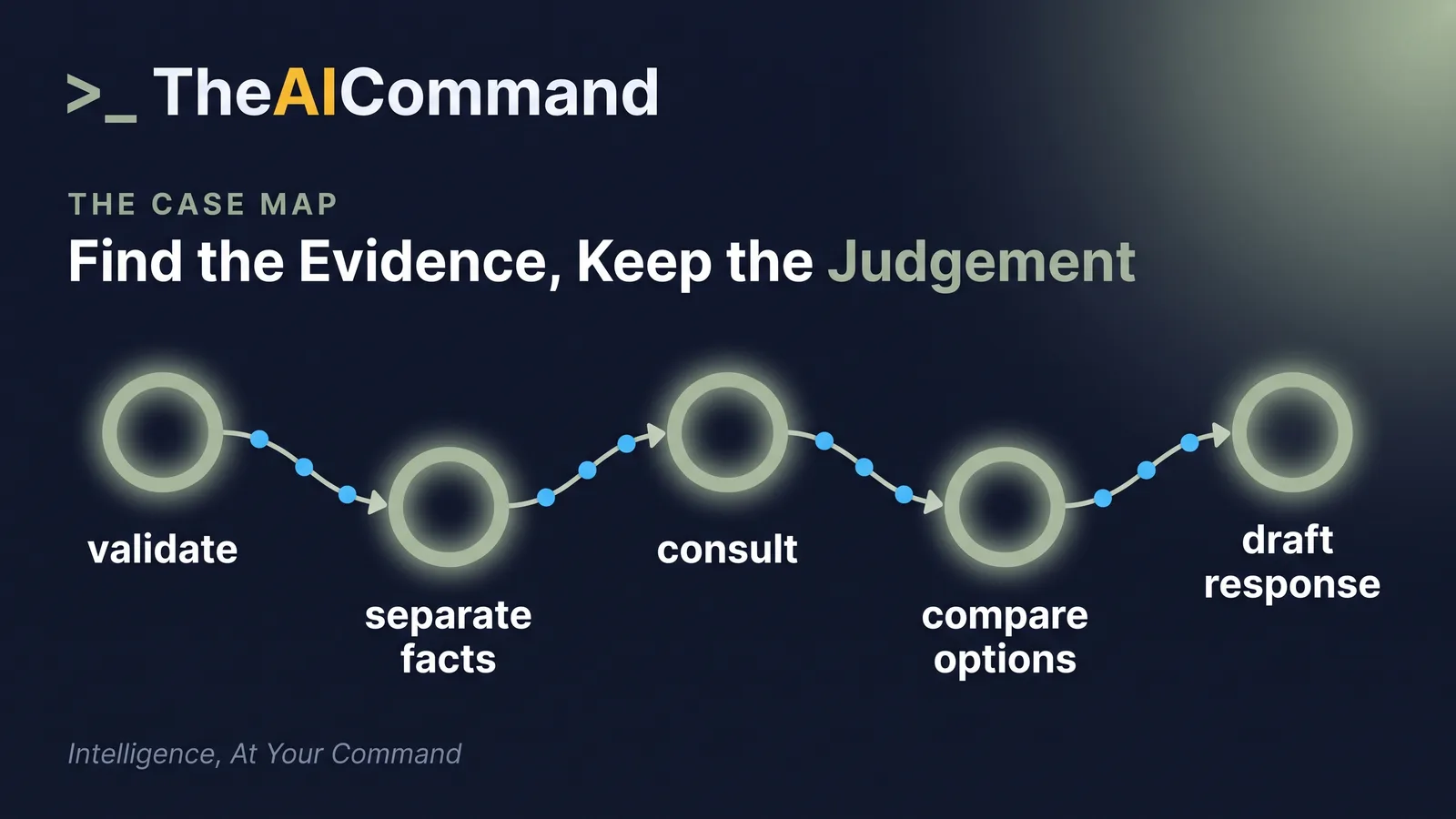
Build a controlled case map with five sections. Use an approved enterprise tool. Replace names and sensitive details with [EMPLOYEE_NAME], [ROLE], [TEAM], [MANAGER], [REQUEST_DATE], [PROPOSED_ARRANGEMENT] and [ELIGIBLE_CIRCUMSTANCE] before anything touches the model.
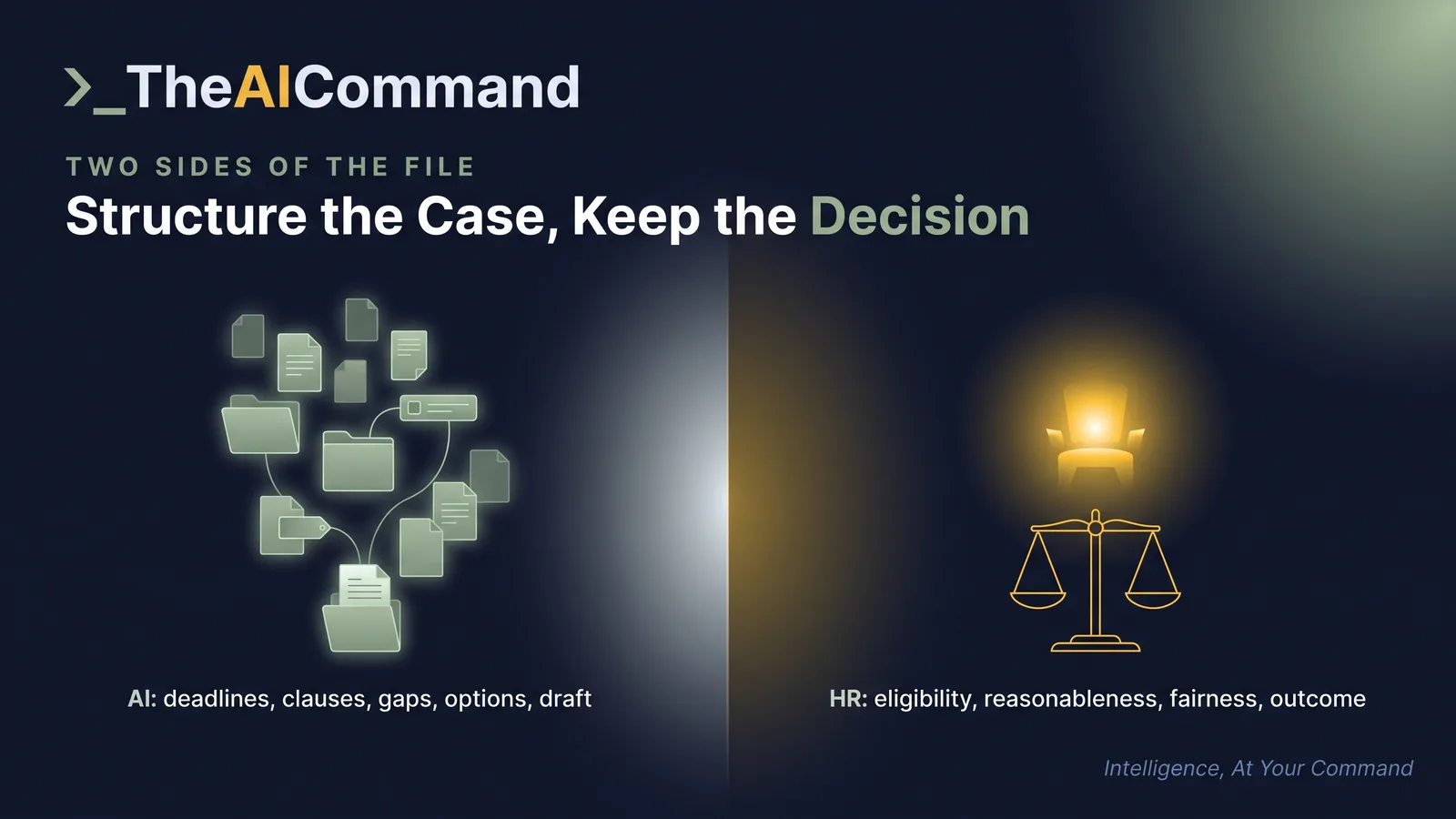
At a glance, the split between what AI structures and what a human owns runs through every step of the case map.
1. Validate the process inputs
Before using AI, a human checks that the request is in writing, identifies the change and explains the reasons. Record the received date and the 21 day response deadline. Check service and eligibility against the current Act, award, enterprise agreement and policy.
Do not ask the model to determine eligibility. Ask it to list the facts a reviewer must verify and the source for each requirement. If the relevant employment instrument is supplied, require clause citations and confirm them manually.
2. Separate facts from assertions
Create two columns. The first contains verified facts: role hours, required onsite tasks, service levels, roster coverage, available technology and prior trial results. The second contains claims needing evidence: "productivity will fall", "customers expect attendance", "the team cannot cover Fridays".
This separation matters. A repeated managerial concern does not become evidence because AI summarised it three times. Equally, an employee's request should not be reduced to an inconvenience score.
3. Build the consultation agenda
Ask AI to draft neutral questions that help both parties understand the request. Questions may cover duration, essential onsite activities, start and finish times, communication, handovers, review points, access needs and alternative arrangements.
The meeting itself stays human. AI should not attend through an unapproved note-taker or create a hidden behavioural assessment. If an approved note-taking tool is used, apply the consent and data controls in AI note-takers in HR meetings.
4. Compare workable options
The Act does not force a binary choice between full acceptance and refusal. AI can create an options table covering the requested arrangement, modified hours, different days, a time limited trial, job sharing, changed handovers or another location. For each option, record verified impacts, unknowns, mitigations and a review method.
Do not let the model rank the employee's needs against business interests. The authorised decision-maker weighs them after consultation.
5. Draft the response from the decision record
Once the human decision is made, AI may draft the letter. Give it the outcome, verified reasons, agreed alternative or refusal grounds, how those grounds apply, and the required dispute information. Then HR checks every sentence against section 65A, current Fair Work guidance and the underlying evidence.
A controlled prompt sequence
Three prompts run the safe part of this workflow. Paste real identifiers into none of them: de-identify first and re-identify offline.
The first structures the file.
The second challenges the evidence.
The third drafts the response, after the human decision is made.
A worked example
[EMPLOYEE_NAME], a [ROLE] in [TEAM], requests to work from home on two set days for [ELIGIBLE_CIRCUMSTANCE]. The manager's first response is that onsite collaboration is essential.
The case map separates that statement from evidence. The role has three weekly activities. One requires physical access to equipment. Two can be completed securely from another location. Customer service data are available by day, but the team has not compared remote and onsite periods. Another employee covers part of the equipment task, but only on alternate weeks.
The consultation agenda asks which days carry the physical task, whether the request has a proposed duration, what handover is needed and whether a trial could produce evidence. The parties discuss a twelve week arrangement with one fixed onsite day, one flexible onsite day when the equipment task occurs, service measures and a review date.
AI drafts the agreed arrangement from the approved notes. HR checks the deadline, the employee checks the factual summary and the authorised manager signs the response. The model never decides whether the original request was reasonable. It helps the parties find and record a workable answer.
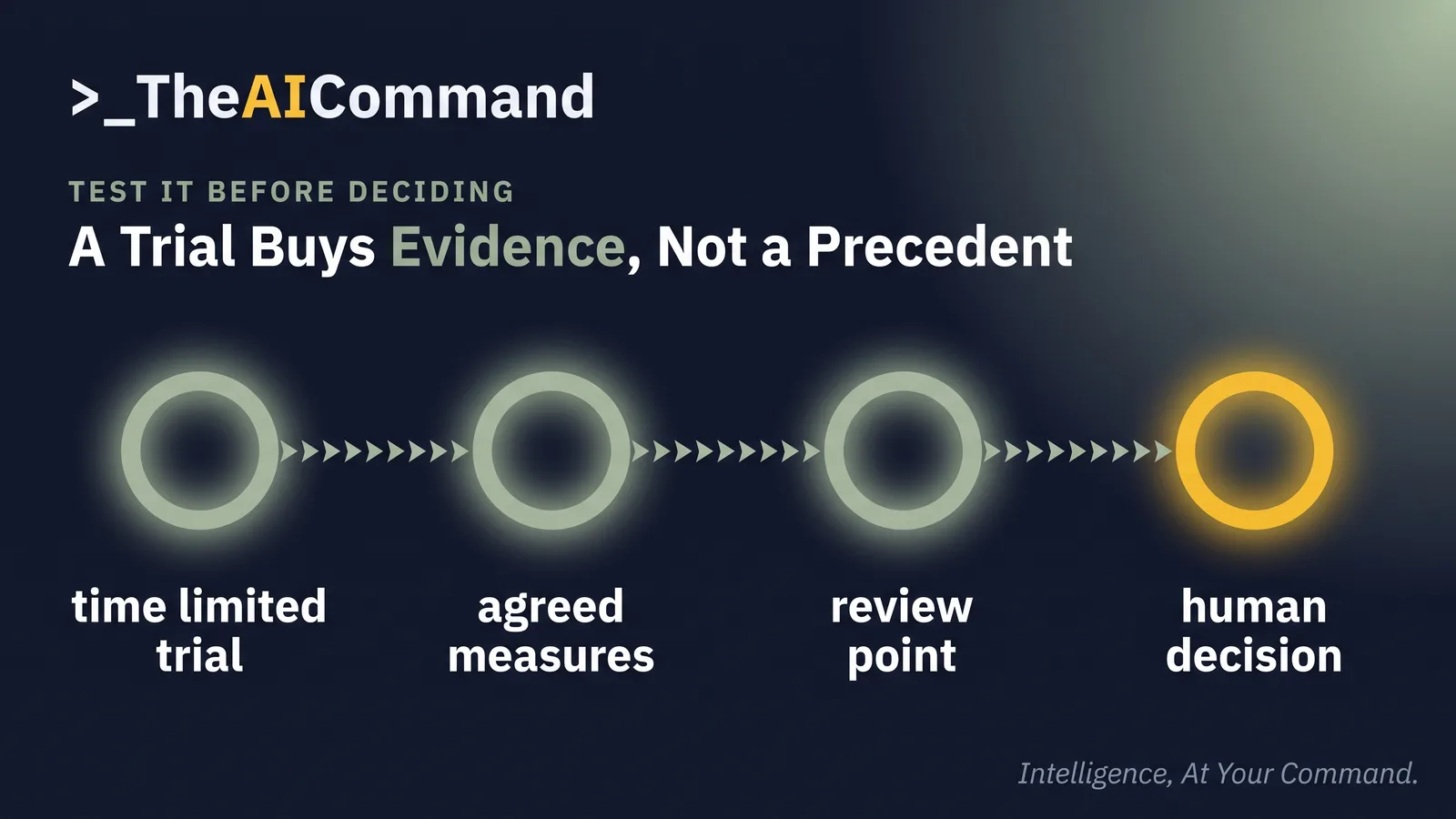
Use a trial as evidence, not delay
A time limited trial can help where the predicted operational impact is uncertain and the arrangement can be tested safely. It should not become a way to postpone a decision or place an employee under unusual scrutiny.
Set the trial terms with the employee. Record the duration, working pattern, essential onsite tasks, communication arrangements, service measures, review date and how either party will raise problems. Use measures that already apply to the role where possible. Do not invent a higher performance bar for flexible workers.
At review, compare the agreed evidence with the baseline and discuss factors outside the arrangement. A customer backlog caused by a system outage does not prove remote work failed. A clean service metric does not answer every concern about team development. HR should record what the trial can and cannot establish.
AI can prepare a neutral trial summary by separating measures, participant feedback, exceptions and unresolved questions. It must not score the employee, infer commitment from online activity or recommend an outcome. The manager and HR decide what the evidence means after consultation.
Check decision quality across the portfolio
Individual requests need individual decisions. HR can still review process quality across de-identified cases. Useful checks include response timeliness, consultation completed, alternatives considered, evidence categories used, trials offered and disputes raised.
Look for unexplained variation between teams. One function may approve similar arrangements while another refuses them using generic collaboration language. That pattern is a prompt for human review, not proof that either decision is wrong. Examine role differences, evidence and manager practice.
Do not train a model to predict which requests will be approved from historic outcomes. Past decisions may encode inconsistent management practice and sensitive personal circumstances. Use portfolio analysis to improve process, templates and manager capability, while keeping the statutory judgement anchored to the current request.
Review the quality of refusal reasons as well as the outcome. A response can name a recognised business ground yet fail to explain how it applies to the role and arrangement. Sample de-identified letters for factual support, alternatives considered, consequences addressed and dispute information. Use AI only to flag missing elements for HR review, never to rewrite weak evidence into a stronger justification.
The governance line
Flexible work files can contain family, disability, pregnancy, age, family and domestic violence or caring information. Collect only what is needed, restrict access, use the approved system and set a retention rule. Do not upload the file to a public model.
Check for fairness at the process level. Are similar requests being asked for similar categories of evidence? Are some managers treating presence as performance without data? Are trial arrangements offered consistently? Pattern analysis may help HR spot variation, but it should use de-identified, aggregated data and trigger review rather than automatic correction.
Human accountability is non-negotiable. The authorised manager owns the decision. HR owns process quality and challenge. Legal advice may be required. AI owns neither the employment relationship nor the consequences of refusal.
What should HR never automate?
Do not automate:
- eligibility or legal determinations
- the reasonableness decision
- credibility judgements about the employee
- inferences about disability, care or family circumstances
- rejection letters generated from a generic attendance policy
- performance predictions based on location alone
- dispute strategy or legal advice
The same boundary applies in AI-assisted workplace investigations and in an AI-supported redundancy consultation: structure the file, not the finding. For the statutory foundation, use the Fair Work Act learning module and verify the current primary text.
Bottom line
AI can organise a flexible work request into a controlled case map, separate verified facts from assertions, draft consultation questions and produce the written response from an approved decision record. It cannot decide eligibility under section 65, whether business grounds are reasonable under section 65A, or whether a refusal is lawful. The authorised manager owns the decision, HR owns process quality and challenge, and legal advice may be required.
Do this Monday:
- De-identify the file with placeholders such as [EMPLOYEE_NAME] and [PROPOSED_ARRANGEMENT] before anything touches an approved enterprise tool.
- Record the received date and the 21 day response deadline, and check service and eligibility against the current Act, award, enterprise agreement and policy.
- Split the file into verified facts and claims needing evidence, so a repeated managerial concern is not mistaken for proof.
- Use AI to draft a neutral consultation agenda and a workable options table, then let the authorised decision-maker weigh them after consultation.
- Draft the written response only from the approved decision record, then check every sentence against section 65A and current Fair Work guidance.
TheAICommand. Intelligence, At Your Command.