
AI can draft WHS training material from verified sources, but it cannot verify competence: only a competent person can observe the work and certify that a worker can perform the task safely. A completed module is not a competent worker. Generative AI has made WHS training material cheap and fast to produce, and much of what it drafts is genuinely good: clear objectives, plausible scenarios, tidy quizzes, facilitator notes that read like a professional wrote them. The trap is treating that fluency as assurance. The law is not asking whether your workers finished a module. It is asking whether they can do the work safely, and no language model can answer that from a completion record.
What do WHS training duties actually require?
The primary duty under section 19 of the Work Health and Safety Act 2011 (Cth) is broader than sending staff a course link. A person conducting a business or undertaking must ensure, so far as is reasonably practicable, the health and safety of workers and others. Paragraph 19(3)(f) specifically includes the provision of any information, training, instruction or supervision that is necessary to protect all persons from risks to their health and safety arising from the work.
Regulation 39 of the Work Health and Safety Regulations 2011 (Cth) makes the training duty more specific for the Commonwealth jurisdiction. Information, training and instruction provided to a worker must be suitable and adequate having regard to the nature of the work, the nature of the risks associated with the work at the time, and the control measures implemented. So far as is reasonably practicable, it must also be provided in a way that is readily understandable by the person receiving it.
The model WHS laws must be separately implemented in each jurisdiction to become legally binding, and they have been implemented everywhere except Victoria, which operates under its own occupational health and safety framework. The Commonwealth Act and Regulations apply in the Comcare scheme, covering Commonwealth entities and self-insured licensees, with Comcare as the regulator. States and territories have their own enacted laws and local requirements. Confirm the law, regulator guidance, codes and licensing rules that apply to [SITE] and [TASK].
Neither section 19 nor regulation 39 says that a polished slide deck proves competence. The law is concerned with what is necessary to protect people and whether the training is suitable for the actual work, risk and controls.
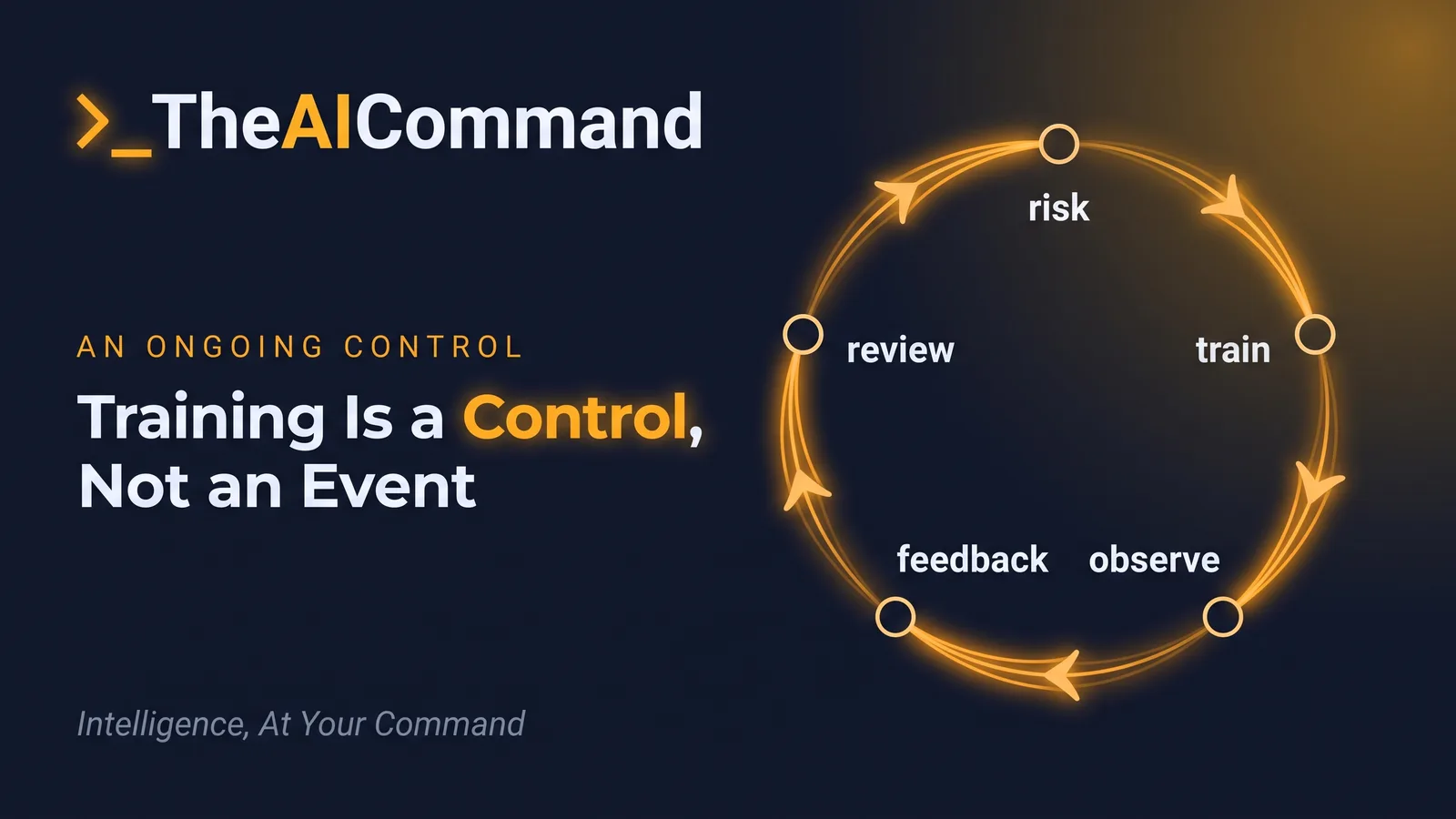
Safe Work Australia's training guidance reinforces the point. Some workers need formal training and assessment, including people who operate high-risk equipment such as a forklift or tower crane, work in high-risk places such as a construction site, or hold a particular workplace role. Other workers may need informal on-the-job training built from real-time demonstration, practice opportunities and feedback on performance. Training is an ongoing process that should be monitored, evaluated and adjusted to address gaps and emerging needs.
The Commonwealth's Work Health and Safety (Managing Psychosocial Hazards at Work) Code of Practice 2024 states the boundary unusually clearly in its guidance on training for control measures: "Training should require workers to demonstrate they are competent in performing the task. It is not sufficient to simply tell a worker about the procedure and ask them to acknowledge they understand and can perform it."
That sentence applies directly to AI-generated training. An AI can draft the explanation and even score a knowledge quiz. It cannot watch [EMPLOYEE_NAME] use the control in the real workplace and decide whether the person can perform the task safely.
Where must a human stay in the loop?
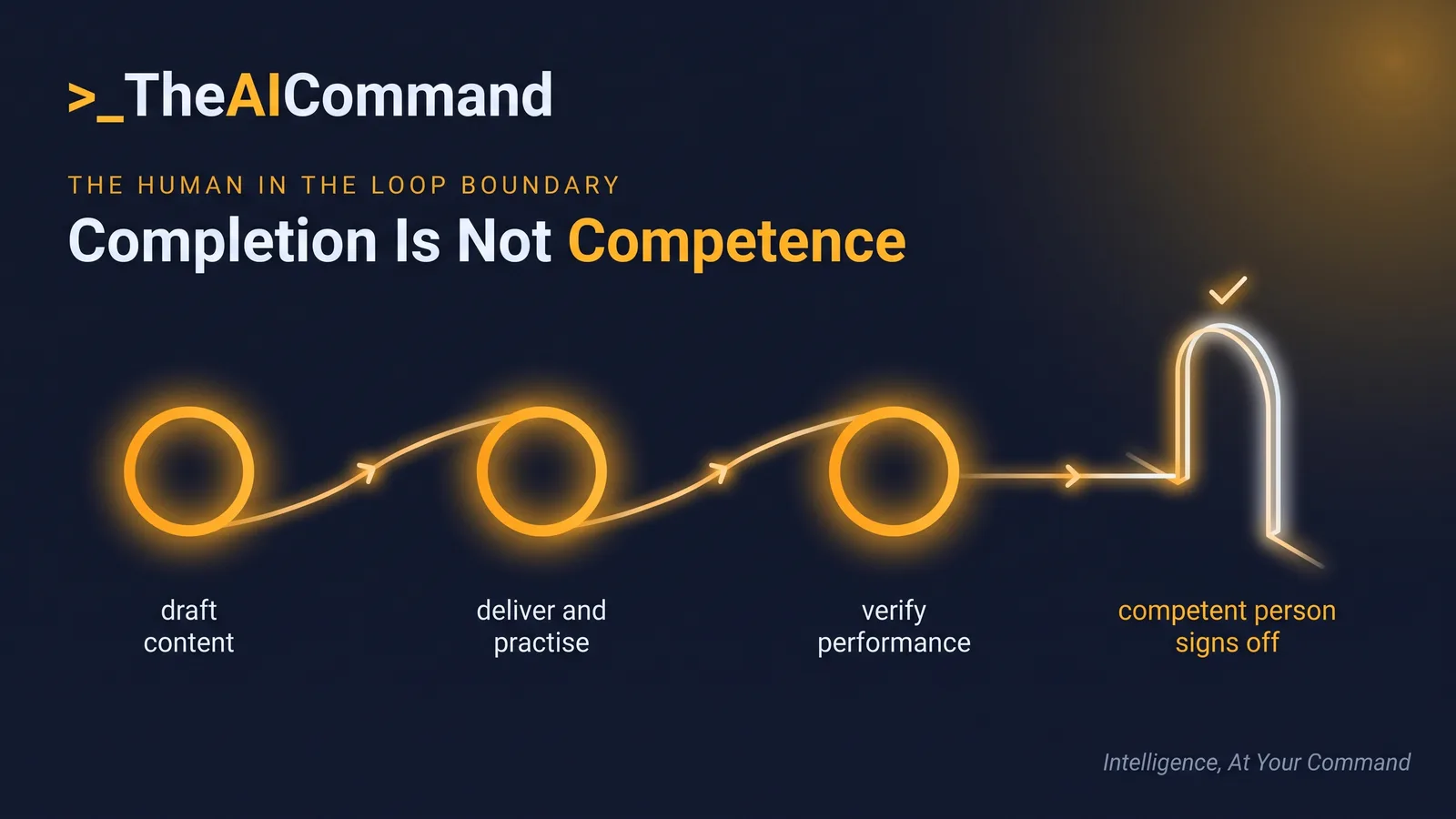
Keep three different activities separate.
Content generation turns verified procedures, risk information and controls into learning material. AI can assist here.
Learning delivery gives the worker an opportunity to understand, question, practise and receive feedback. AI may support parts of delivery, but a supervisor, trainer or other competent person must address the live task and workplace.
Competence verification checks whether the worker can perform the task and apply the controls in practice. That may require observation, demonstration, formal assessment, licence evidence, supervised practice or another method suitable for the work. AI cannot perform that accountability step from a quiz score or completion event.
A human reviewer is required twice. Before delivery, a competent subject-matter reviewer confirms that the content matches the current risk assessment, procedure, equipment, jurisdiction and workforce. After delivery, a competent person verifies performance and decides whether the worker needs more training, instruction or supervision.
Do not collapse those gates into a single approved-by-AI checkbox. The first gate validates the material. The second validates the worker's application of it.
A standing note on de-identification
Training design rarely needs real incident or employee records. Use placeholders such as [EMPLOYEE_NAME], [TEAM], [SITE], [TASK], [HAZARD], [CONTROL], [EQUIPMENT] and [INCIDENT_ID]. If a real incident informs a scenario, remove names, dates, client details, locations and unusual fact combinations before the material enters an approved AI tool.
De-identification happens before upload. Asking the model to anonymise an incident report after it has received the report has already exposed the information to the system.
Keep sensitive root-cause findings, medical information and witness material in the controlled source system. The training module should use the minimum factual detail needed to teach the hazard and control.
Setting up the WHS training workflow
1. Start with the risk and control, not the topic
A manual handling refresher is too broad. Define the work: who performs [TASK], under what conditions, with which [EQUIPMENT], which hazards are present and which controls have been selected. Regulation 39 ties suitable training to those facts.
An AI system should never invent the control set. Feed it only verified extracts from the current risk assessment, procedure, manufacturer's instructions, safety data sheet, code of practice or regulator guidance approved for the workplace.
2. Build a controlled source pack
Create a short source register with document title, owner, version, effective date, jurisdiction, review date and the part of training it supports. Mark superseded material clearly. Tell the model to cite the source identifier beside every learning point and to write "source gap" when the pack does not answer a question.
Do not mix guidance from different jurisdictions without labelling it. A generic national summary can be a useful starting point, but the final module must match the obligations and regulator position that apply to the work.
3. Ask for a training blueprint first
Before drafting slides, ask AI to produce:
- three observable learning objectives
- the hazard and control linked to each objective
- the delivery method, such as explanation, demonstration, supervised practice or discussion
- the evidence needed to verify understanding and performance
- accessibility and language needs to check with the workforce
- source gaps and questions for the WHS reviewer.
The human reviewer approves the blueprint before the model produces detailed content. This prevents a fluent module being built around the wrong outcome.
4. Draft for understanding, not decoration
AI can turn technical material into short sentences, scenarios, facilitator questions, checklists and translations for review. Keep each instruction attached to a real control. Remove filler, generic safety slogans and images that imply a method not used at [SITE].
Regulation 39 requires material to be readily understandable so far as is reasonably practicable, so test the language with the workers who will use it. Automated readability scores and translations are indicators only. A worker's question or demonstration is stronger evidence of understanding.
5. Separate the knowledge check from the competence check
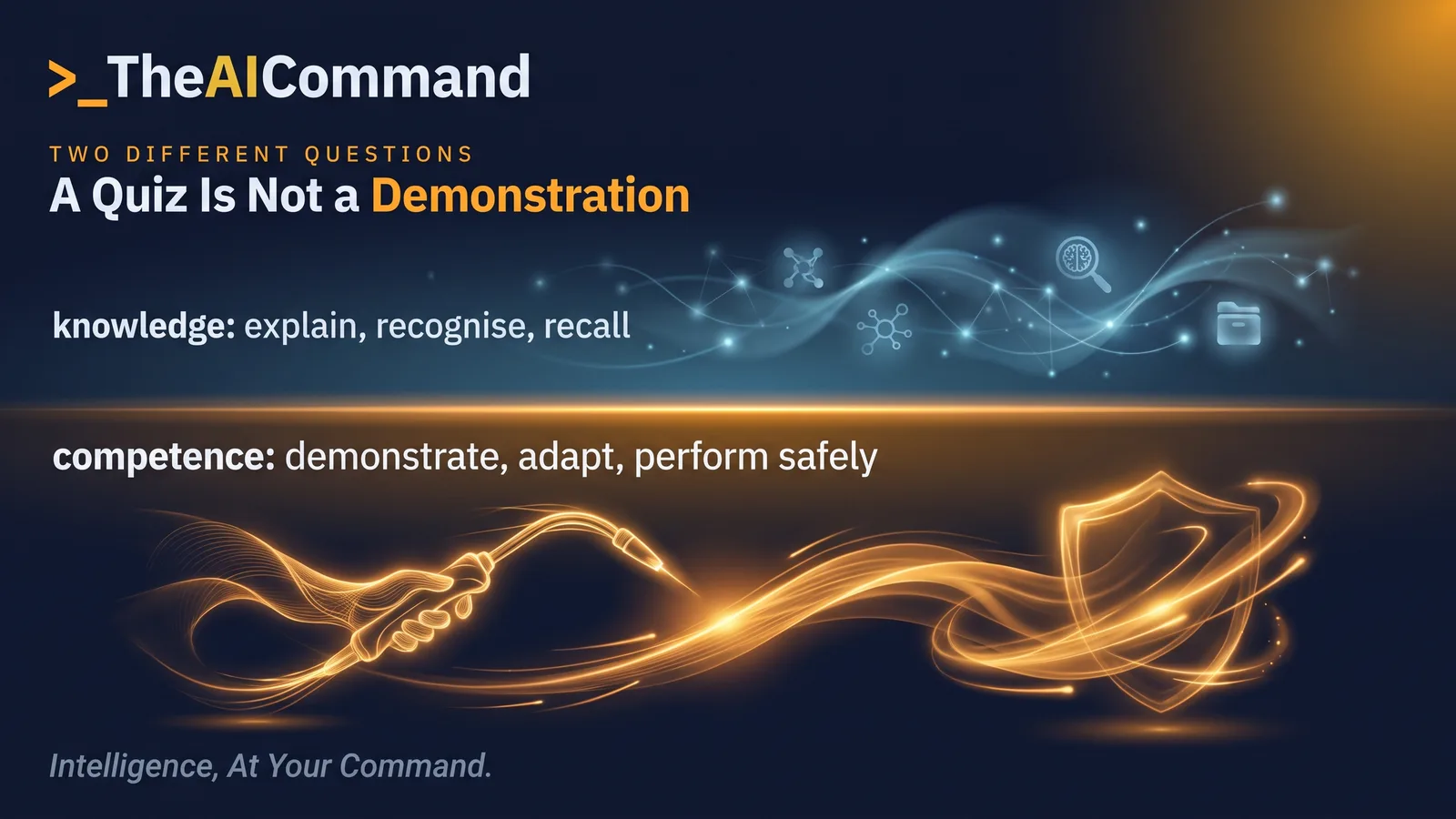
A quiz can test recall and recognition. It can ask which isolation step comes first or which control applies in a scenario. It cannot show that the worker can identify the real isolation point, fit the device, test for stored energy and respond when the procedure does not match the equipment.
For each quiz objective, name the practical evidence that follows. That might be a supervised demonstration, direct observation against a checklist, a practice simulation, a licence check or successful practice under defined conditions. A competent person chooses the method and signs the record. Where the work itself requires authorisation, or must be done by or under the supervision of someone with prescribed qualifications or experience, sections 43 and 44 of the WHS Act put that beyond debate: no module substitutes for the authorisation or qualification.
6. Consult workers and supervisors
Ask workers whether the module reflects the task, language, time pressure, workarounds and points where the procedure becomes difficult. Ask supervisors what errors they observe and what good performance looks like. Consultation with workers on matters affecting their health and safety is itself a duty under sections 47 to 49 of the WHS Act. AI can draft the consultation questions and organise de-identified themes. It cannot substitute for the consultation, the same limit that applies when AI drafts a safe work method statement without the site walk.
This step also helps identify when the problem is not training. If the control is impractical, the procedure is wrong or staffing makes compliance impossible, another module will not fix the system of work. Review the control rather than train people to work around it.
7. Verify, record and refresh
Record the source version, content reviewer, trainer, delivery date, worker participation, competence method, assessor, result, follow-up supervision and retraining trigger. Completion status and competence status should be separate fields.
Review the training when the work, hazard, control, equipment, procedure, workforce or incident pattern changes. Safe Work Australia says training processes should be continuously assessed and adjusted for gaps and emerging needs. AI can compare document versions and draft the amendment. A competent person decides what changes and whether workers must be reassessed.
The prompt library
Prompt 1 builds the blueprint from your controlled source pack.
Prompt 2 pressure-tests the draft before the human reviewer sees it.
A worked example, end to end
[TEAM] performs [TASK: clear a conveyor jam] at [SITE] using [EQUIPMENT]. The verified source pack includes the current risk assessment, isolation procedure, equipment manual and supervisor checklist. All names and incident details use placeholders.
AI creates a blueprint with three objectives: identify hazardous energy sources, follow the local isolation sequence and respond when isolation cannot be verified. It drafts a short scenario, facilitator questions and a five-item knowledge check. Each claim carries a source ID.
The WHS reviewer finds one error. The model used a generic phrase about turning off the machine, while the local procedure requires isolation, lockout and verification at named points. The reviewer corrects the module before delivery.
During training, [EMPLOYEE_NAME] answers every quiz question correctly. That establishes recall, not competence. Under supervision, the worker then demonstrates the sequence on the actual equipment. The assessor observes that one stored-energy check is missed, stops the exercise, provides instruction and repeats the demonstration. Competence is recorded only after the worker performs the full sequence correctly under the approved assessment method.
The AI draft saved writing time. The observation prevented a quiz score from becoming false assurance.
What does the AI workflow buy you, and what does it not?
The workflow can make training faster to update, easier to read and more consistent with approved source material. It can produce useful scenario variations and expose where the source pack is incomplete. It can also separate knowledge evidence from practical evidence before delivery begins.
It does not prove that the control works, that the worker can apply it, that the trainer is qualified, that the correct jurisdiction has been used or that the underlying system of work is safe. The duty holder still monitors the workplace, consults workers, reviews controls and provides the level of supervision the risk requires.
Bottom line
AI can draft WHS learning objectives, scenarios, quizzes and facilitator notes from verified source material, and it can keep training consistent with approved sources. It cannot observe a worker, judge whether controls are applied correctly or certify competence. Section 19 and regulation 39 ask whether workers can do the work safely, and only a competent person answers that.
Do this Monday:
- Put a practical evidence required field beside every learning objective, and stop treating a quiz score, attendance record or acknowledgement as proof of competence.
- Build a controlled source pack with title, owner, version, effective date and jurisdiction, and tell the model to cite the source beside every learning point.
- Ask AI for a training blueprint first, and have a competent WHS reviewer approve it before any detailed content is drafted.
- Record completion status and competence status as separate fields, with the competence method, assessor and retraining trigger.
- Review the training whenever the work, hazard, control, equipment, procedure, workforce or incident pattern changes.
References
- Federal Register of Legislation, Work Health and Safety Act 2011 (Cth), current compilation C2024C00243, section 19, accessed 10 July 2026. https://www.legislation.gov.au/C2011A00137/latest/text
- Federal Register of Legislation, Work Health and Safety Regulations 2011 (Cth), current compilation F2025C00381, regulation 39, accessed 10 July 2026. https://www.legislation.gov.au/F2011L02664/latest/text
- Safe Work Australia, Training and supporting your workers to stay safe at work, accessed 10 July 2026. https://www.safeworkaustralia.gov.au/safety-topic/managing-health-and-safety/training-and-supporting-your-workers-stay-safe-work
- Federal Register of Legislation, Work Health and Safety (Managing Psychosocial Hazards at Work) Code of Practice 2024 (Cth), F2024L01380, accessed 10 July 2026. https://www.legislation.gov.au/F2024L01380/latest/text
- Safe Work Australia, Model WHS laws, accessed 10 July 2026. https://www.safeworkaustralia.gov.au/law-and-regulation/model-whs-laws
- Comcare, Comcare's role under the WHS Act, accessed 10 July 2026. https://www.comcare.gov.au/scheme-legislation/whs-act/comcare-role-whs-act
---
This article is for general educational purposes only and does not constitute legal advice, WHS advice, or a substitute for professional judgement. Work health and safety duties, including training and competence requirements, vary by jurisdiction under the model WHS laws (with Victoria, Western Australia, and the Comcare scheme differing). Training suitability, competence methods and assessment decisions must be made by a competent person. All AI outputs described in this article require human review before use.
TheAICommand. Intelligence, At Your Command.