
You govern the interview. You do not govern who sees the job.
Every AI safeguard HR has built in the last two years sits at the same place in the process. Screening tools, ranking models, reference checks, interview scoring. They all engage after a person has applied. That is the right place for a lot of controls, but it leaves the earliest and least visible decision ungoverned: who is even shown the advertisement in the first place.
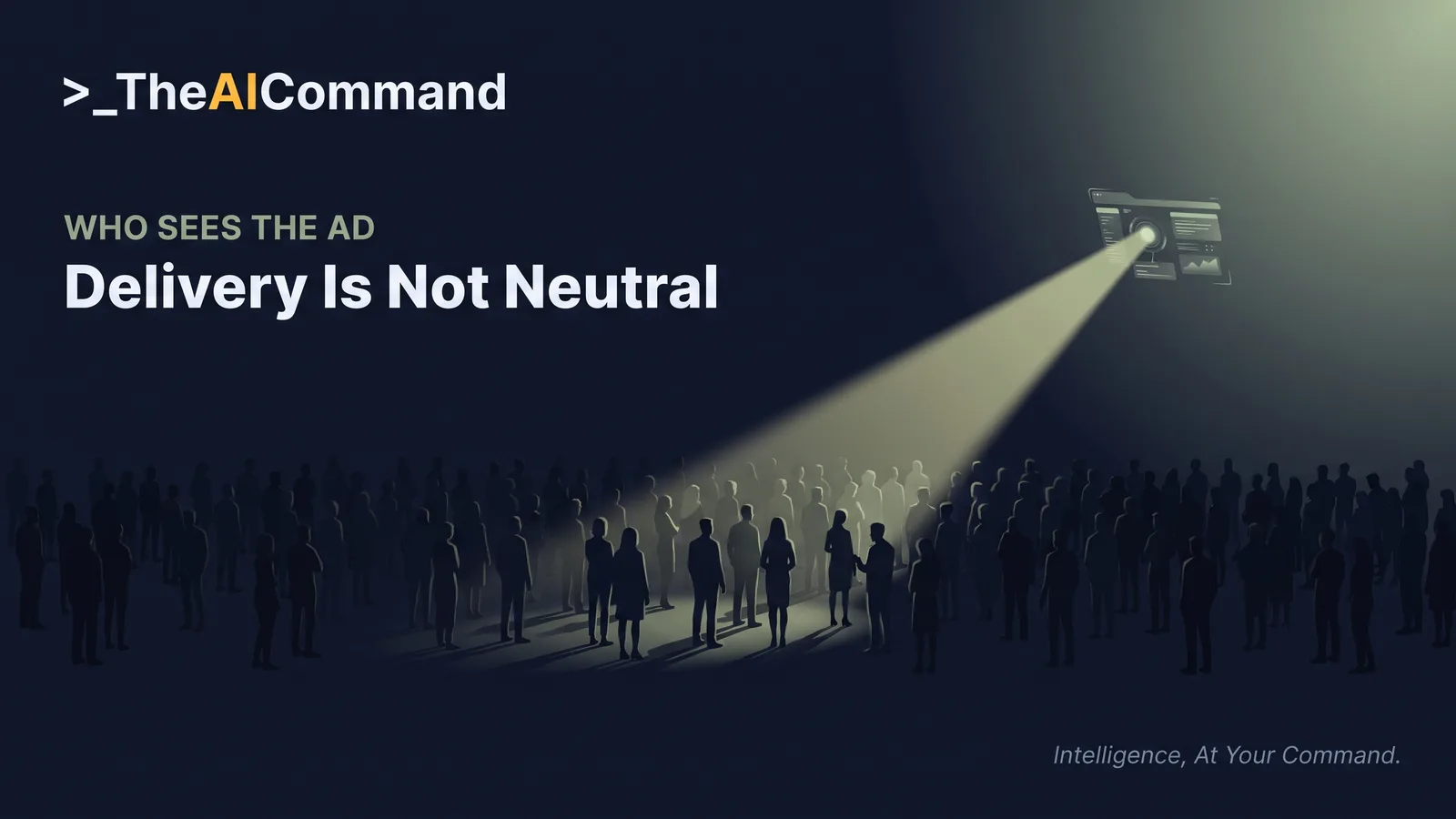
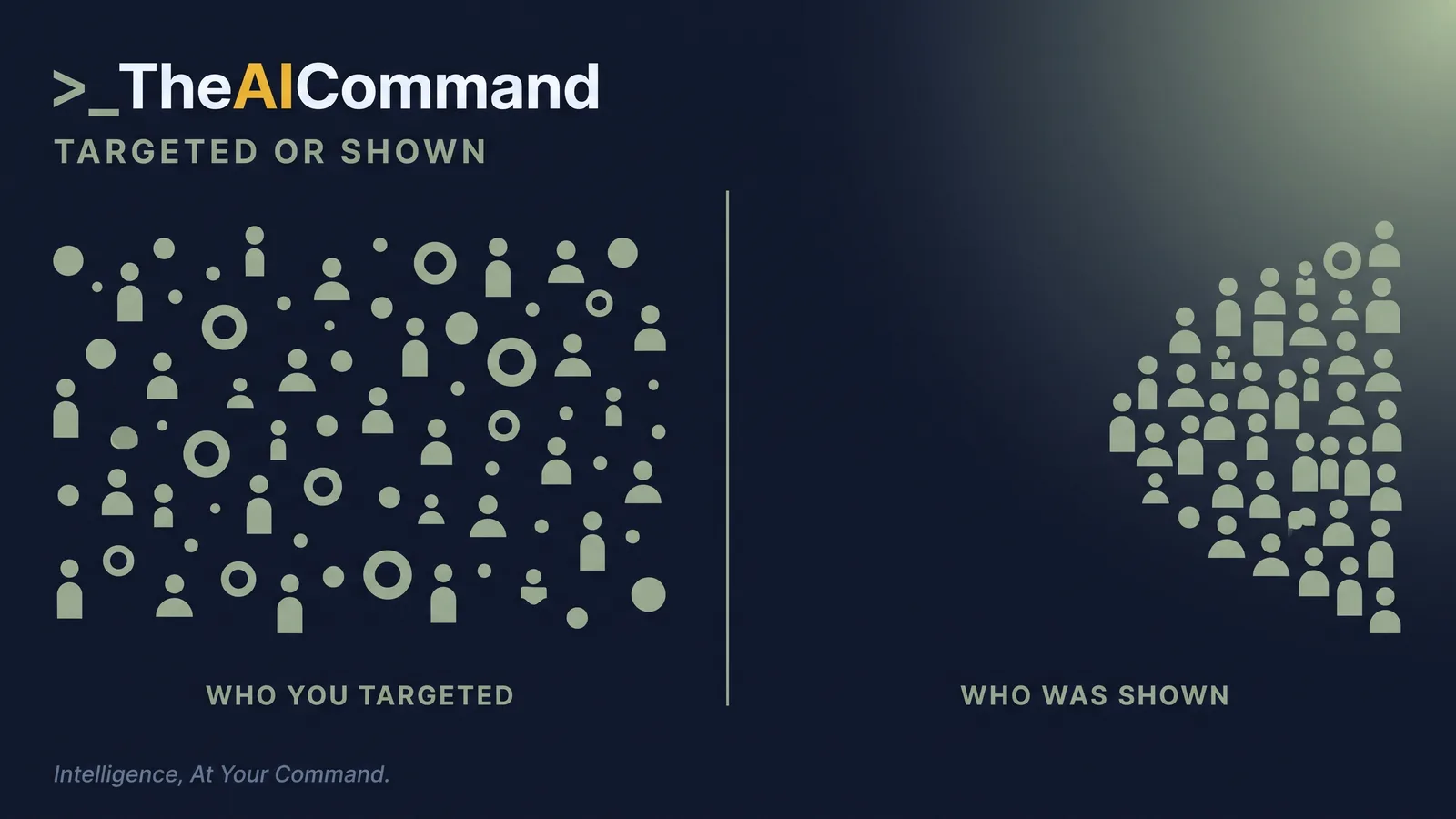
That decision is increasingly made by an algorithm, and it is not neutral. When you run a role on a large social or search platform, you choose a target audience, but the platform then decides which users inside and around that audience actually see the ad. It makes that choice to maximise predicted engagement, and predicted engagement is entangled with exactly the attributes hiring law tells you to ignore. The result is a job ad that can reach a skewed audience even when you did nothing wrong in writing or targeting it.
This is the part of hiring AI that most HR functions are not looking at, and it is upstream of everything they are.
What is actually happening
The mechanism is delivery optimisation. You set a campaign, the platform predicts which users are most likely to click, apply or engage, and it delivers the ad to them first because that is what its objective rewards. Nothing in that loop is trying to discriminate. The problem is that the signals a model uses to predict engagement, past behaviour, interests, network, are correlated with gender, age and race, so optimising for engagement quietly optimises for a demographic pattern.
This is not speculation. In a widely cited 2019 study, Discrimination through Optimization, researchers ran real advertisements for employment and housing and measured who the platform delivered them to. They found significant skew in delivery along gender and racial lines even when the advertiser set the targeting parameters to be highly inclusive. Ads for roles that stereotypically skew male were delivered predominantly to men, and the skew came from the delivery system itself, not the advertiser's choices. The finding that matters for HR is blunt: you can target inclusively and still reach a skewed audience.
The finding was significant enough to force change on the platforms themselves. Following legal action in the United States over housing ad delivery, major platforms introduced restricted advertising categories for employment, housing and credit, limiting the audience signals advertisers and the delivery system can use, and built systems intended to reduce delivery disparities. The existence of those special categories is itself the admission that ordinary ad delivery skews employment ads, and that the fix has to happen in the delivery machinery, not just the targeting settings. Australian employers advertising on the same global platforms inherit both the risk and, where they are available, those controls.
Two forces make this more pressing now than it was in 2019. Generative AI has made it trivial to spin up dozens of ad variants and creatives, which multiplies the number of delivery decisions being made on your behalf. And regulators have started to name the harm. The OAIC, in its work on the new automated decision-making transparency obligation, observed that using computer programs to target individuals with content and advertisements may have a significant effect on a person if, for example, it limits access to employment opportunities. In one worked example, an algorithm promoting an engineering role prioritised male graduates because most current engineers at the firm were male, and a female graduate simply never saw the ad. The regulator's point is that a targeting decision can be a decision about a person's access to work.
The law was written for this, mostly
Australian discrimination law does not treat job advertising as a free zone. Section 86 of the Sex Discrimination Act 1984 makes it unlawful to publish or display an advertisement that indicates, or could reasonably be understood as indicating, an intention to do an act that is unlawful under Part II of the Act, and unlawful acts include discrimination in the terms and conditions of employment. The Age Discrimination Act 2004 and the Disability Discrimination Act 1992 carry equivalent prohibitions. The Australian Human Rights Commission has published guidance on writing and publishing recruitment advertisements for the same reason: an ad is a place discrimination can happen in plain sight.
The law comfortably catches the obvious case, the ad that says or implies it wants a certain kind of person. What it was not written for is the modern case, where the ad is scrupulously neutral and the discrimination happens in delivery, invisibly, after publication. That gap is where HR has to lead with practice, because the risk is real and the letter of the advertising provisions may not reach the delivery algorithm cleanly. Waiting for the law to catch up is not a control.
The practitioner play: govern the top of the funnel
Treat who sees the job as a hiring decision with an owner, the same way you treat the shortlist. Here is a workflow you can run on your next campaign.
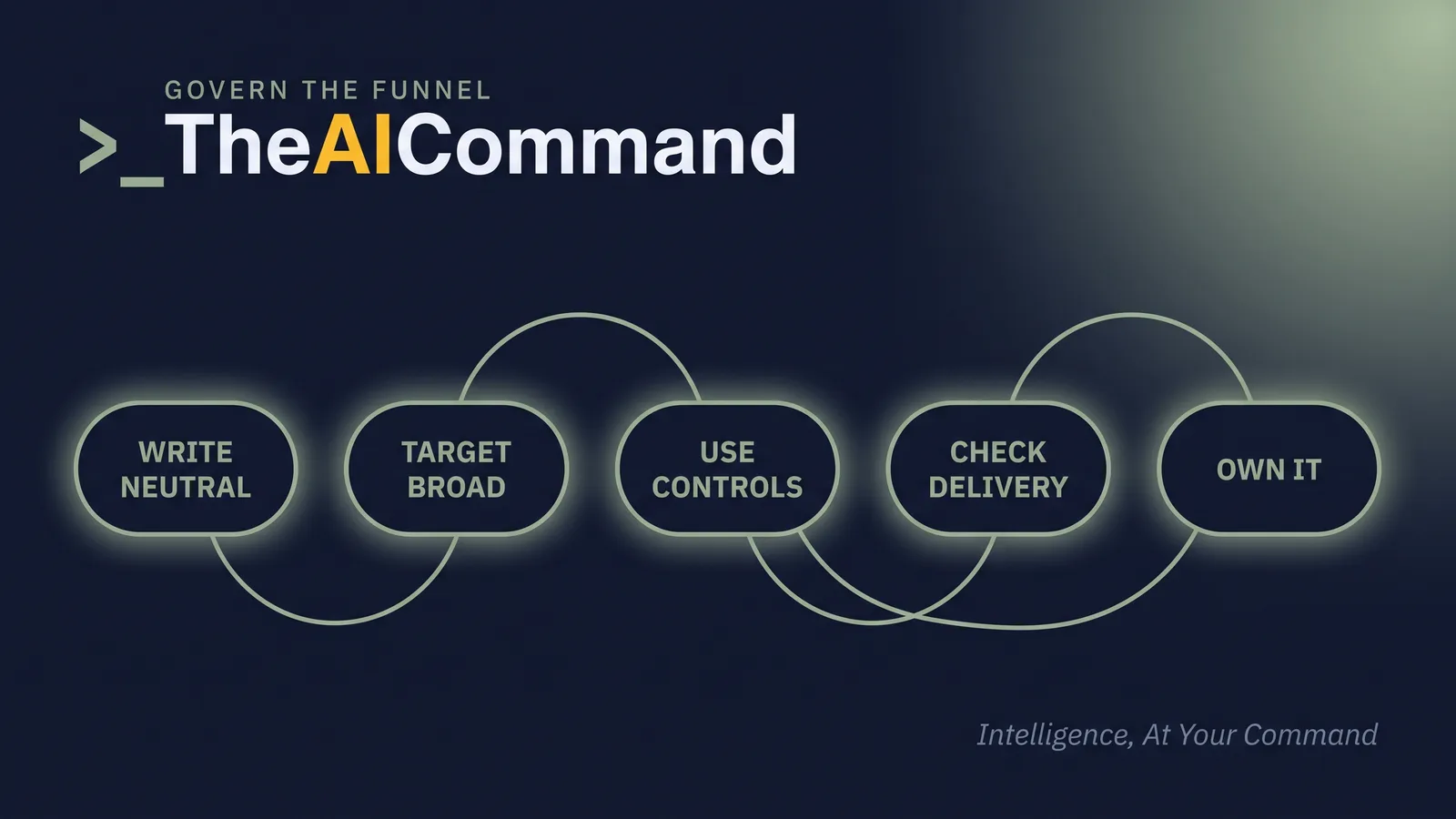
- Write and target for the widest fair reach. Keep the ad wording neutral, then set targeting as broad as the role allows. Do not use audience filters that are proxies for protected attributes, and do not narrow to lookalike audiences built from your current, possibly skewed, workforce. The narrower and more workforce-shaped your targeting, the more you hand the delivery algorithm a head start on skew.
- Ask the platform what it optimises on, and use the fair-housing style tools where they exist. Some platforms now offer restricted audience options for employment, housing and credit ads that limit the signals the delivery system can use. Where those exist, turn them on. Where they do not, at least record what objective your campaign is optimising for, because engagement optimisation and reach are not the same thing.
- Look at who the campaign actually reached. After the campaign runs, pull the delivered-audience breakdown the platform provides and compare it to your applicant pool and to the relevant labour market. You are not looking for perfect representation. You are looking for obvious skew that the delivery, not the role, produced.
- Name an owner and record the decision. A person in talent acquisition owns the decision about who sees each role, signs off the targeting, and keeps a short record of the settings used and the delivered audience. That record is what turns an invisible platform setting into a governed hiring step.
- Feed skew back into the next campaign. If a role reached a lopsided audience, adjust targeting, creative or channel next time, and note it. The control is a loop, not a one-off audit.
A worked example
Take a de-identified employer, call it [ORGANISATION], hiring for a role on [TEAM].
[ORGANISATION] runs a clean, neutrally written ad for a technical role and, wanting strong candidates, targets people with interests and job titles similar to its current team. The campaign performs well on clicks. When talent acquisition pulls the delivered-audience report, though, it shows the ad reached a heavily male, younger audience, because the lookalike targeting mirrored an already skewed team and the delivery algorithm then optimised into that pattern. Nobody wrote a discriminatory ad. The funnel was still narrowed before a single application arrived.
Under a governed process, three things change. The lookalike targeting is dropped in favour of broad, role-based targeting. The platform's employment-ad audience controls, where available, are switched on. And the delivered-audience report becomes a standard artefact the recruiter reviews, so the skew is seen and corrected rather than sitting invisible behind a good click-through rate. The role still finds strong candidates. It just finds them from the whole field.
The governance line
The boundary here is the same one that runs through all AI in hiring. AI can carry the mechanics, drafting the ad, generating variants, delivering at scale. It cannot own the fairness of who gets a chance to apply, because that is a decision with legal and ethical weight that belongs to a person. Two Australian threads bear on it directly. The Privacy Act sits behind any targeting that uses personal information, and from 10 December 2026 automated decision-making that could significantly affect a person, which the regulator has said can include limiting access to employment, has to be described in an entity's privacy policy. And the discrimination framework, through section 86 of the Sex Discrimination Act and its companions, holds the employer responsible for discriminatory advertising. Neither of those obligations transfers to the platform. They stay with the employer who ran the ad. The Australian Human Rights Commission's guidance on recruitment advertising makes the same point from the discrimination side: the employer that publishes or displays a discriminatory ad is responsible for it. Beyond the guidance, a defensible position is one where you can show you took reasonable steps to reach a fair audience, not just that your wording was clean. That reasonable-steps framing is exactly what a delivered-audience record supports.
What never to hand to the algorithm
- The choice of who your fair audience is. Do not let engagement optimisation define the audience for a role. Set broad, neutral targeting deliberately, and treat lookalike-from-current-staff targeting as a red flag, not a convenience.
- The decision to stop looking at delivery. Never run recruitment advertising as a fire-and-forget setting. The delivered-audience report is not optional analytics, it is the evidence that your top of funnel was fair.
- Accountability for reach. The model is not accountable and cannot be. A named person owns the decision about who sees each role and can explain the settings behind it.
Do this Monday
- Pull the delivered-audience report on your last campaign. Find one live or recent job ad and look at who the platform actually reached, broken down by whatever demographics it reports. If you have never looked, that is the first gap.
- Kill the lookalike targeting. Check whether any current recruitment campaign targets an audience built from your existing staff. If it does, switch it to broad, role-based targeting today, because a lookalike of a skewed team is a skew machine.
- Turn on the employment-ad controls. On each platform you advertise roles on, find the restricted or special category for employment ads and use it, so the delivery system has fewer protected-attribute proxies to optimise on.
- Give the funnel an owner. Name the person in talent acquisition who signs off targeting and reviews delivered audience, and add a two-line record to your hiring checklist. The top of the funnel is now a governed step, not a setting.
Most of HR's AI attention has gone to the candidates who make it into the system. The harder equity question is about the people who never see the ad, and it is decided by an algorithm optimising for something other than fairness. Take that decision back, make it a governed step with an owner, and the rest of your careful hiring process finally starts from a fair field.
Bottom line
Every AI control HR has built engages after someone applies, which leaves the earliest decision, who is shown the advertisement, ungoverned. Delivery optimisation can skew that audience by gender, age and race even when the wording is neutral and the targeting is broad, because predicted engagement is entangled with the attributes hiring law tells you to ignore. Australian discrimination law reaches the content of an ad and keeps the employer responsible for it, but its advertising provisions may not cleanly reach the delivery algorithm, so practice has to lead rather than wait. Treat who sees the job as a hiring decision: broad, role-based targeting, the employment-ad controls switched on where they exist, a named owner in talent acquisition, and a delivered-audience record that someone actually reads.
TheAICommand. Intelligence, At Your Command.