LM-H05 · HR · Practitioner tier
Closing Loopholes Acts (No. 1 of 2023 and No. 2 of 2024)
Wage theft offence, casual definition, contractor test, intractable bargaining
What you'll be able to do
- 1.Explain the elements of the s327A intentional underpayment offence, its 1 January 2025 commencement and the evidence that separates error from intent.
- 2.Apply the s15A casual definition and the s66AAB Employee Choice Pathway, including the 21 day s66AAC response and its prescribed refusal grounds.
- 3.Evaluate contractor engagements against the s15AA totality test and identify the tax, superannuation and licensing consequences of misclassification.
- 4.Assess labour hire arrangements against the Part 2-7A same job same pay regime, including the s306E(1A) service provision carve out.
- 5.Design a governed, de-identified AI workflow that produces audit ready wage theft registers, conversion responses and contractor reviews.
- 6.Construct a Board ready people risk paper that links Closing Loopholes exposures to the entity risk appetite and CPS 230 reporting.
6 lessons · read straight through, or use lesson view once the page loads.
TheAICommand Learning Library
Workplace Law Track
LM-H05: Closing Loopholes Acts (No. 1 of 2023 and No. 2 of 2024)
Wage theft, casual employment, contractor reform, intractable bargaining and same job same pay
Learning outcomes
On completion of this module, learners will be able to:
- Identify the elements of the s327A intentional wage underpayment offence and explain prosecution thresholds.
- Apply the new s15A casual employment definition and the s66AAB casual conversion pathway to a realistic financial services scenario.
- Evaluate worker engagements against the s15AA multifactorial test and articulate the regulatory consequences of misclassification.
- Assess when an intractable bargaining declaration under s235 should be sought and how the resulting workplace determination is constructed.
- Design and govern an AI assisted workforce risk workflow that produces audit ready wage theft, casual conversion and contractor review artefacts.
- Construct a Board ready people risk paper that integrates Closing Loopholes exposures with the entity risk appetite statement.
1. Executive Summary
One artefact in this module is built to be used the same day: the workspace system instruction in section 6.2 (lesson 5), presented as the copy and paste version of the system instruction that section describes. Dropping it into the ChatGPT Project instructions or the Claude Project description gives every later prompt its de-identification and citation rules. The lessons in between set out the wage theft, casual, contractor and labour hire obligations that the scaffold enforces.

The Closing Loopholes Acts of 2023 and 2024 are the most significant rewrite of the Fair Work Act 2009 (Cth) since its enactment. They re-define casual employment, re-set the test for distinguishing employees from independent contractors, criminalise intentional underpayment of wages, allow the Fair Work Commission to break protracted enterprise bargaining deadlocks through workplace determinations, and require labour hire workers to receive no less than the rate that applies to employees of the host engaging them. For Australian financial services entities the practical consequence is a sustained uplift in workforce risk that crosses Human Resources, Operational Risk, Legal, Internal Audit and the Board level Risk Committee.
This matters now because the criminal wage theft offence at s327A commenced on 1 January 2025 and applies in any case where conduct occurred on or after that date. APRA regulated entities also operate under CPS 230 Operational Risk Management, which classifies the people, processes and systems that pay employees as inputs into critical operations. A material wage underpayment is therefore not merely a Fair Work matter; it is an operational risk event that may need to be reported, attested to and remediated in line with the entity risk appetite statement.
After completing this module you will be able to map your organisation against each of the new obligations, identify the artefacts your control environment must produce, and operate an AI assisted workflow that drafts wage theft risk registers, casual conversion notices, contractor reviews and Board people risk papers without exposing the entity to model risk, privacy risk or regulatory sanction. You will also be able to recognise when a matter needs to be escalated to Employment Counsel rather than resolved internally, and how to document AI use in a way that satisfies an Internal Audit or external regulator review.
2. Regulatory and Strategic Context
2.1 Issuer and statutory authority
Both Closing Loopholes Acts amend the Fair Work Act 2009 (Cth). The Commonwealth Parliament is the issuer. The Fair Work Ombudsman is the regulator and prosecutor for civil contraventions. The Commonwealth Director of Public Prosecutions (CDPP) is the prosecutor for criminal wage theft offences referred by the Fair Work Ombudsman. The Fair Work Commission administers the bargaining, casual conversion dispute and same job same pay order processes.
Relevant instruments are: the Fair Work Legislation Amendment (Closing Loopholes) Act 2023 (No. 120, 2023), assented to on 14 December 2023; and the Fair Work Legislation Amendment (Closing Loopholes No. 2) Act 2024 (No. 8, 2024), assented to on 26 February 2024. Together these instruments amend Parts 2-2 (NES), 2-4 (enterprise agreements), 2-7A (regulated labour hire arrangements), 3-1 (general protections) and 4-1 (compliance and enforcement) of the Fair Work Act, and insert new Subdivision A of Division 4 of Part 1-2 (the unified meanings of casual employee, employee and employer).
2.2 Scope of application
The Fair Work Act applies to national system employers and employees. Every Australian incorporated authorised deposit-taking institution, registered insurer, RSE licensee and AFSL holder is captured. Foreign incorporated branches operating in Australia are also captured if they employ staff in Australia. The criminal offence at s327A applies to a body corporate as well as to individual officers who were knowingly concerned in the conduct.
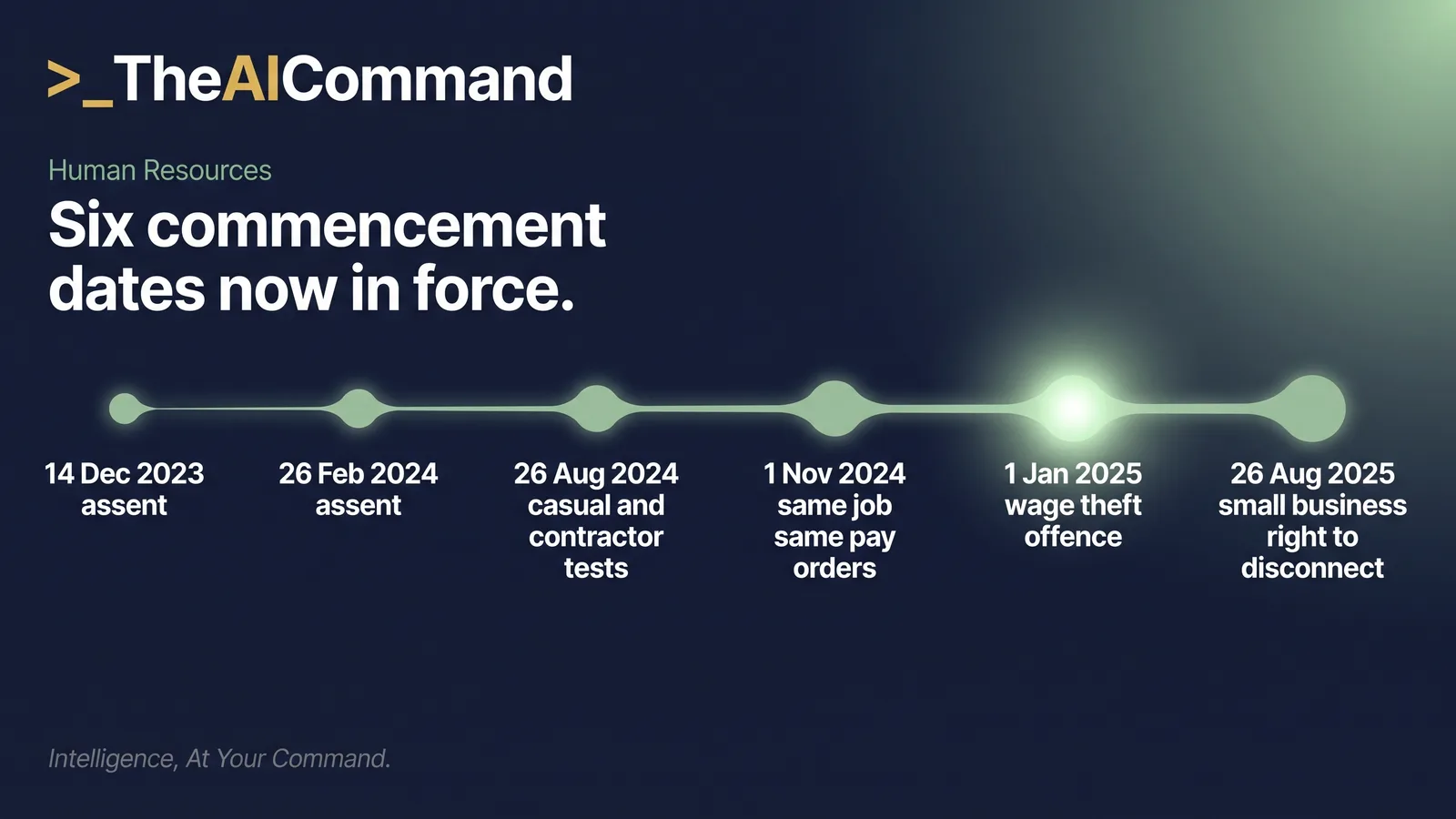
Importantly, Closing Loopholes No. 2 introduced a new approach to the meaning of casual employment that took effect from 26 August 2024 for new engagements. Employees who were already classified as casual on that day continue under the previous law unless they elect to convert. The employee versus contractor reform at s15AA also commenced on 26 August 2024. Same job same pay applications under Part 2-7A could be made to the FWC from 15 December 2023, although orders could not come into force before 1 November 2024. The wage theft offence has the latest commencement at 1 January 2025.
2.3 Key dates and transitional periods
2.4 Interplay with adjacent frameworks
The Closing Loopholes regime sits alongside, and frequently engages, three other learning library modules. First, LM-H01 Fair Work Act 2009 fundamentals provides the architectural map of the FW Act and identifies which Parts the Closing Loopholes amendments touch. Second, LM-H02 National Employment Standards is the source of casual loading entitlements and request to convert mechanics that the new s15A and s66AAB scaffolding plug into. Third, LM-H03 Modern Awards governs the minimum entitlements that a wage theft prosecution will allege were underpaid; the modern award rate is almost always the underlying benchmark for prosecution. Beyond the workplace law track, LM-G02 Privacy Act 1988 governs how an organisation may handle employee personal information when running an AI assisted wage theft review, and LM-G03 AML/CTF Act 2006 governs the customer onboarding controls that often share infrastructure with HR onboarding controls.
For APRA regulated entities the most important external linkage is CPS 230 Operational Risk Management. Payroll is an internal critical operation for almost every ADI, insurer and RSE licensee because it directly enables the entity to retain its workforce. A material payroll failure is therefore an operational risk event that must be reported in accordance with the entity Operational Risk Management Framework and, if it crosses the materiality threshold, escalated to APRA. The Closing Loopholes regime tightens this linkage because intentional or reckless conduct now carries criminal exposure for accountable persons under the Financial Accountability Regime (FAR), where the relevant accountability statement covers HR or payroll.
Strategic note. The regulator network now includes Fair Work Ombudsman, FWC, CDPP, APRA (via FAR and CPS 230), ASIC (where misleading disclosures arise) and ATO (where contractor misclassification has flow on PAYG and superannuation guarantee consequences). A coordinated cross-functional response is required.
3. Core Concepts and Defined Terms
3.1 Defined terms table
3.2 Wage theft offence (s327A)
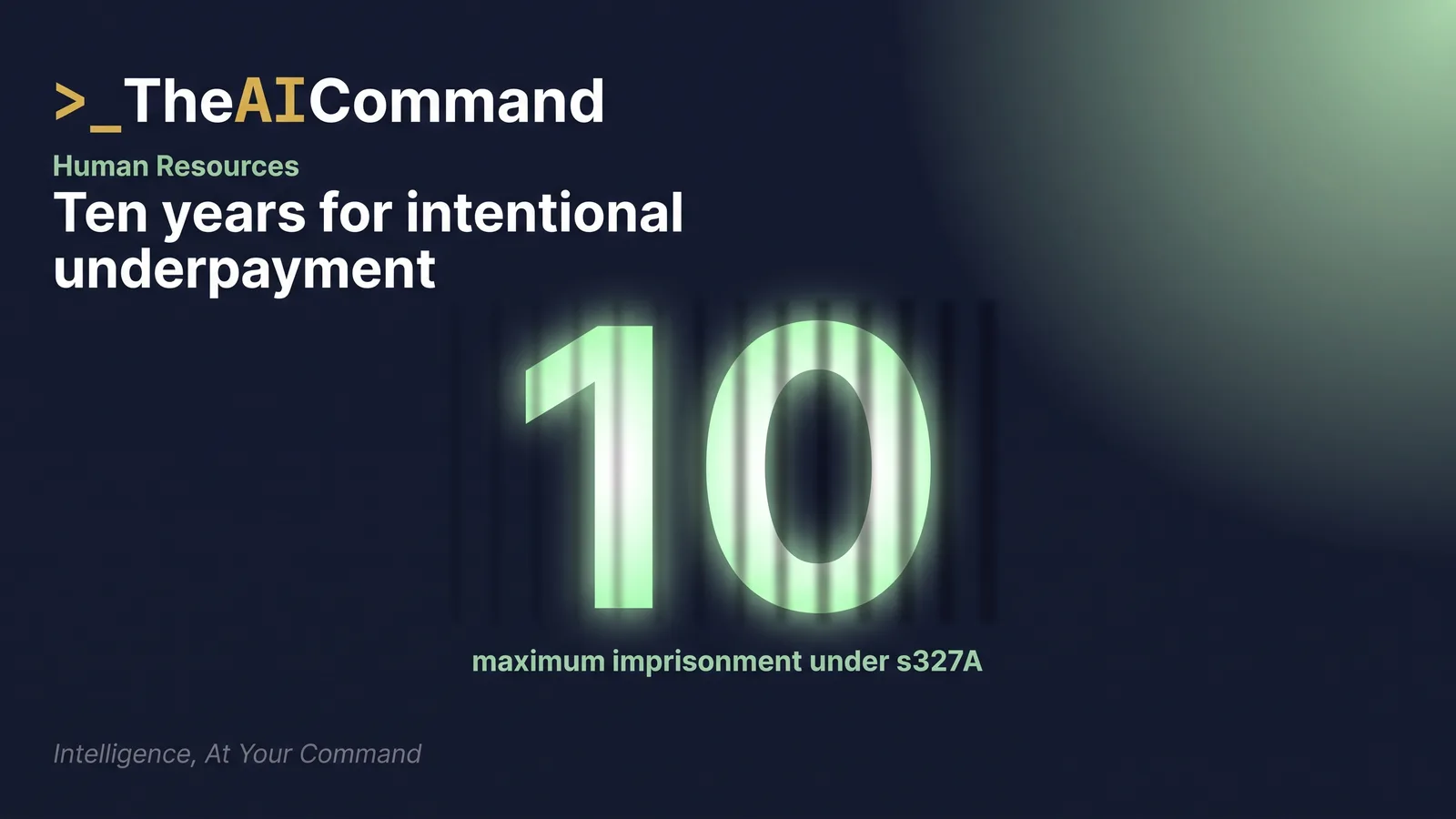
Section 327A makes it an offence for an employer to engage in conduct that the employer knew would result in the underpayment of an employee or class of employees. The offence requires intent. Mere negligence, error or system failure does not satisfy the elements. However, recklessness in the form of deliberate ignorance of obvious risks may, depending on the evidence, still attract liability. Penalties for an individual are imprisonment for up to 10 years, a fine of up to three times the underpayment if it can be calculated, or 5,000 penalty units if it cannot. For a body corporate the financial penalty is up to three times the underpayment, or 25,000 penalty units. For accountable persons under FAR the criminal exposure is in addition to civil consequences including dismissal, deferred remuneration clawback and disqualification.
3.3 Casual employment definition (s15A) and conversion (s66AAB)
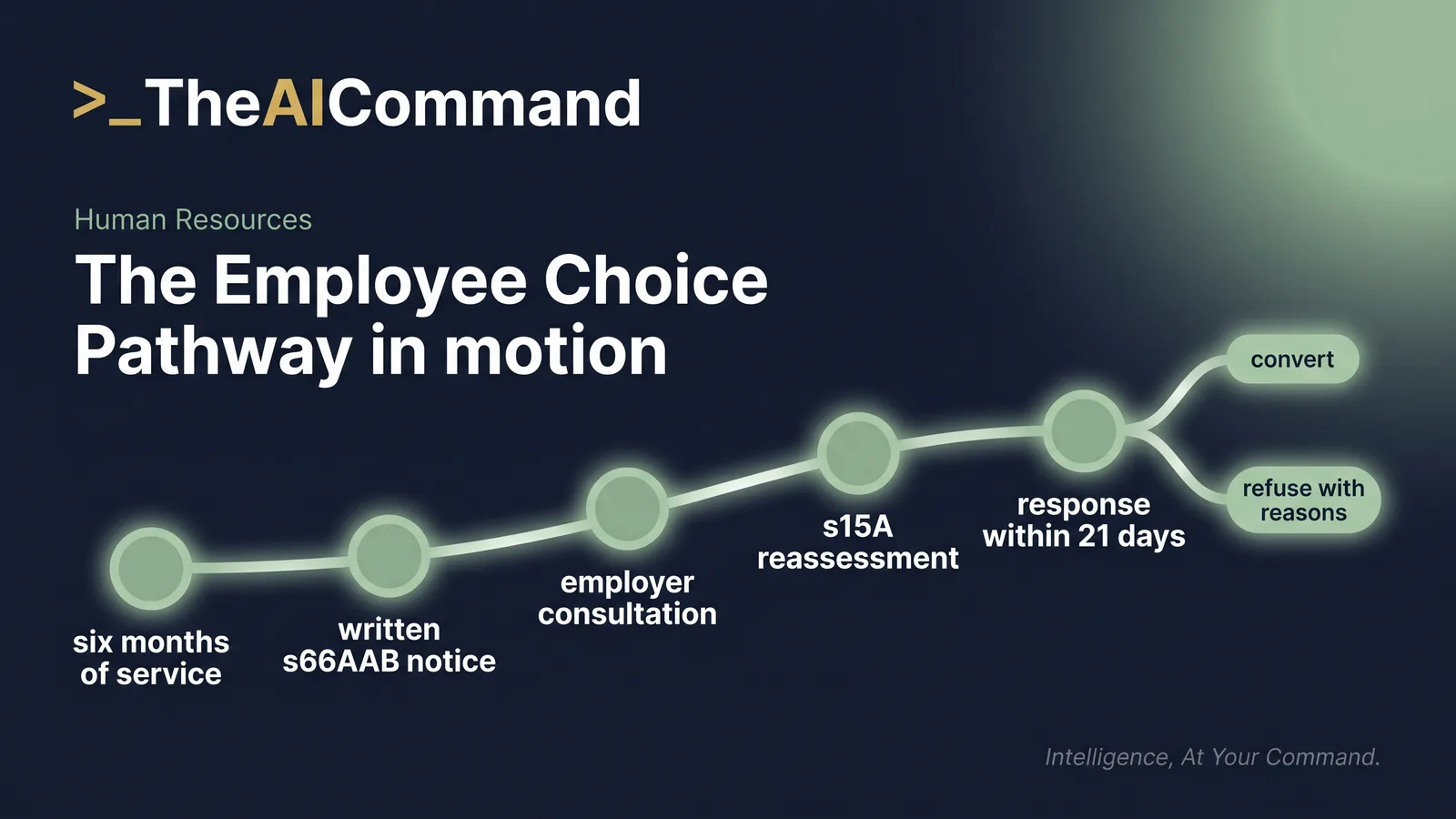
The new s15A returns Australian law to a totality of the relationship test. Whether an employee is casual is determined by examining the real substance, practical reality and true nature of the relationship, including whether there is a firm advance commitment to continuing and indefinite work, the use or non-use of a roster, the nature of any reasonable expectations the employer has created, and whether the employee is paid a casual loading. The contract is one factor only. The Employee Choice Pathway at s66AAB then permits an employee who has been employed for at least six months (or 12 months for a small business employer) to give notice that they consider they are no longer a casual. The employer must respond within 21 days, accepting, refusing on prescribed grounds, or proposing alternative arrangements.
3.4 Employee versus contractor (s15AA)
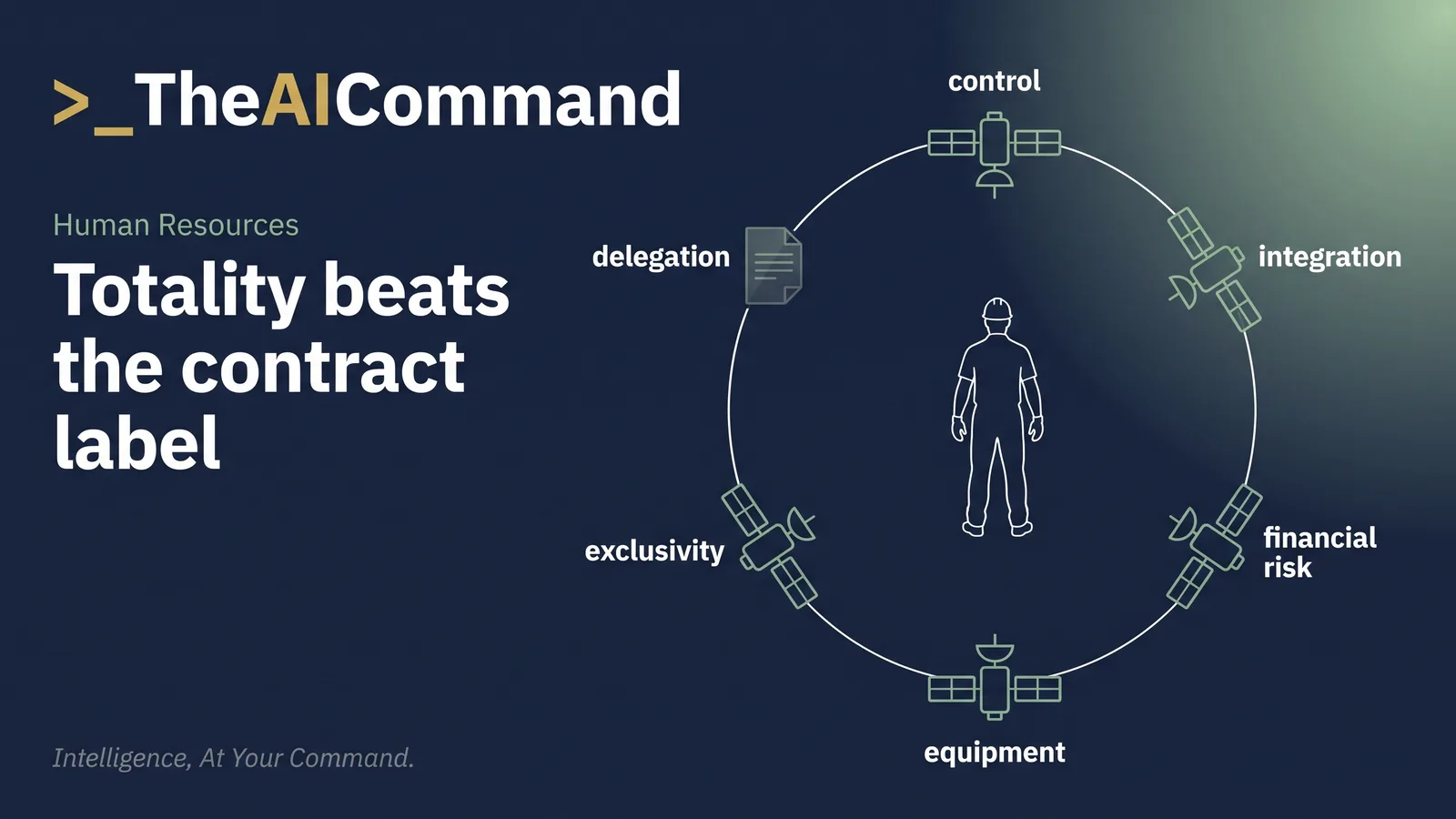
The new s15AA undoes the High Court approach taken in CFMMEU v Personnel Contracting Pty Ltd [2022] HCA 1 and ZG Operations Australia Pty Ltd v Jamsek [2022] HCA 2, which had elevated the written contract above all other considerations. Under s15AA the question reverts to whether, viewing the totality of the relationship, the worker is in business for themselves. The legislation directs decision makers to consider control, integration, financial risk, provision of equipment, taxation, hours, exclusivity, mode of remuneration and the right to delegate. It also creates an opt out mechanism under s15AB for higher earning workers above the contractor high income threshold.
3.5 Intractable bargaining and same job same pay
Under s235 the FWC may make an intractable bargaining declaration if it is satisfied that there is no reasonable prospect of agreement and a sufficient time has passed (the minimum bargaining period). Once declared, s269 empowers the FWC to make a workplace determination resolving the matters in dispute. Same job same pay orders, in Part 2-7A, are designed to ensure that a labour hire worker performing the same work as a directly engaged employee receives no less than the protected rate of pay. Applications can be made by an employee, an employee organisation or the host.
Practical note. Same job same pay orders do not capture genuine specialist service contracts. The carve outs at s306E(1A) for service contracts where the supplier is providing a service rather than just labour are critical and frequently misunderstood.
4. Practical Application in Australian Financial Services
The four worked examples below show how the same statutory regime plays out across the four most common APRA regulated business models. In each case, identify the trigger event, the obligation activated, the artefact produced and the audit trail expected. Use these worked examples as templates when scoping your own internal control upgrades.
4.1 Worked example A: ADI [LARGE_BANK_NAME]
Trigger event. A senior payroll analyst notices that for the period [PAYROLL_PERIOD_START] to [PAYROLL_PERIOD_END], approximately [HEADCOUNT] employees performing weekend trade settlement work have been paid base rate only and not the modern award weekend penalty rate that applies under the Banking, Finance and Insurance Award 2020. The error has persisted for eight pay cycles.
Obligation activated. Section 327A engages because the question is whether the underpayment was intentional. The Fair Work Ombudsman will look at whether the employer knew, or was wilfully blind to, the requirement to apply the penalty rate. CPS 230 also engages because payroll is an internal critical operation and an event of this size is potentially material.
Artefact produced. A timely self report to the Fair Work Ombudsman, an internal incident notification to the Chief Risk Officer, an operational risk event log entry, an APRA notification under Reporting Standard ARS 230 if the materiality threshold is met, and a remediation plan covering back pay, superannuation guarantee top up, interest and tax adjustments. Communications to affected employees must use [COMMS_TEMPLATE_REMEDIATION] and reference the [INTERNAL_CASE_REF].
Audit trail expected. Source data extract, payroll system change log, control failure root cause analysis, review of any prior internal audit findings on payroll controls, attestation from the FAR accountable person for HR or payroll, and a Board paper provided to the next Risk Committee meeting after the event was confirmed.
4.2 Worked example B: General insurer [INSURER_NAME]
Trigger event. Following an internal review of claims handling resourcing, [INSURER_NAME] is engaging additional claims handlers through a labour hire panel to manage seasonal weather event volumes. The labour hire workers perform identical functions to directly engaged claims handlers.
Obligation activated. Part 2-7A same job same pay applies. The host insurer is a regulated host for the labour hire workers. If a same job same pay order is made, the labour hire provider must pay the regulated rate to the labour hire workers performing the same work.
Artefact produced. A pre-engagement assessment using [TEMPLATE_SAME_JOB_SAME_PAY_REVIEW] that compares the work, the rate, the carve outs at s306E(1A) and the contractual obligations of the labour hire provider. Where applicable, an updated services agreement with the labour hire provider that requires pass through of host rates.
Audit trail expected. The pre-engagement assessment, board approved labour hire panel policy, FWO interactions log if any, and a periodic reconciliation between host rates and labour hire invoiced rates that is signed off by the relevant Head of Operations.
4.3 Worked example C: Superannuation trustee [RSE_LICENSEE]
Trigger event. A long serving casual member services consultant who has worked the same Tuesday to Thursday roster for 14 months gives notice under s66AAB that they consider they are no longer a casual.
Obligation activated. The trustee must respond within 21 days under s66AAC. Refusal is permitted only on prescribed grounds, including that the work is in fact still casual under s15A, that there are fair and reasonable operational grounds, or that conversion would not comply with another enactment such as a recruitment process.
Artefact produced. A written response using [TEMPLATE_CASUAL_RESPONSE], with a clear reasons section that addresses each of the s15A indicia. Where the response is to convert, an updated employment contract, an updated payroll system entry, communication to the employee about loss of casual loading and an updated leave accrual treatment for the employee.
Audit trail expected. The original employment contract, roster history extracted from the workforce system, evidence that a request to convert was logged on receipt, the s66AAC response with reasons, and any FWC application if the matter is contested.
4.4 Worked example D: AFSL holder [AFSL_HOLDER]
Trigger event. [AFSL_HOLDER] engages [CONTRACTOR_NAME], a financial planner, on a contractor basis. [CONTRACTOR_NAME] uses [AFSL_HOLDER] templates, branding, software and supervision arrangements, works the equivalent of full time hours, and has done so exclusively for two years.
Obligation activated. The s15AA totality test applies. On these facts the relationship is likely to be employment notwithstanding any written contractor agreement. The consequences extend beyond Fair Work to ATO obligations (PAYG withholding, superannuation guarantee), workers compensation premiums, payroll tax and AFSL representative authorisation arrangements.
Artefact produced. A contractor review report using [TEMPLATE_CONTRACTOR_REVIEW], a reclassification decision paper, an updated employment contract if reclassified, ATO voluntary disclosure if there is a back payment of PAYG or super, and updated representative authorisation register entries.
Audit trail expected. The contractor review report, the reclassification decision paper, ATO and super fund correspondence, and a control change in the contractor onboarding workflow that prevents recurrence.
Pattern across all four. Each worked example produces (1) a structured assessment artefact, (2) an updated control or contract, (3) communication to affected workers and (4) an evidence pack ready for regulator inquiry. Replicate this pattern in your own playbooks.
5. Visual Pack
Six visuals are embedded across this module. Each is rendered here as a designer ready specification suitable for Lucidchart, Whimsical or your in-house design tool, and can also be reproduced inside an AI assisted draft using the prompts in section 7.
5.1 Visual 1: Wage theft offence elements diagram
Layout: a horizontal flow with four boxes left to right, an OR fork in the middle and a single penalty bar across the bottom.
5.2 Visual 2: Casual conversion lifecycle
Layout: a circular lifecycle with seven stages connected clockwise: Engagement, Six month service trigger, Employee notice (s66AAB), Employer assessment, Response within 21 days, Conversion or refusal with reasons, FWC dispute pathway. Each stage has an artefact and an owner labelled.
5.3 Visual 3: Employee versus contractor decision tree
Layout: a vertical decision tree starting at the top with the question Is there a written contract that purports to engage the worker as a contractor? Then branching through control, integration, financial risk and exclusivity tests, with a terminal box at the bottom flagging Likely employee, Likely contractor or Engage Employment Counsel.
Decision sequence: 1) Identify nature of work and degree of control by principal; 2) Test integration into the principal business; 3) Test financial risk and goodwill borne by worker; 4) Test exclusivity and ability to delegate; 5) Apply taxation indicators (ABN use, GST registration, invoicing); 6) Consider opt out under s15AB if income is above the contractor high income threshold; 7) Determine outcome and document with [TEMPLATE_CONTRACTOR_REVIEW].
5.4 Visual 4: Comparative table against pre-amendment regime and APRA prudential overlay
5.5 Visual 5: Risk heat map and RACI
Risk heat map. Plot likelihood (Rare to Almost Certain) on the x axis against impact (Insignificant to Catastrophic) on the y axis. Position the following risks: (a) wage theft prosecution = Possible / Major; (b) casual conversion dispute = Likely / Moderate; (c) contractor reclassification = Likely / Major; (d) intractable bargaining declaration = Unlikely / Major; (e) same job same pay order = Possible / Moderate. Overlay with the entity risk appetite shading to determine residual risk position.
5.6 Visual 6: Quantitative chart (illustrative)
Chart type: stacked column chart, x axis = quarter (Q3 2024 through Q2 2026), y axis = number of FWO compliance actions. Stack categories: civil litigations, enforceable undertakings, infringement notices, criminal referrals to CDPP. Use realistic illustrative figures only. Recommended source caption: Illustrative composite drawn from Fair Work Ombudsman Annual Report and quarterly compliance updates. Not actual data. Do not represent as current.
5.7 Visual 7: Five things to remember (callout infographic)
1. The s327A criminal offence requires intent. Build evidence of good faith, including timely correction and disclosure.
2. The s15A casual test is totality not contract. Capture roster history and reasonable expectations in your evidence pack.
3. The s15AA contractor test reverses Personnel Contracting. Audit your existing contractor pool against the new indicia.
4. Same job same pay applies to labour hire arrangements that look like staffing not service. Read the s306E(1A) carve outs carefully.
5. Every AI assisted draft must be reviewed by a human with delegated authority. AI does not relieve the FAR accountable person.
6. AI Workflow: Operating This Framework With AI
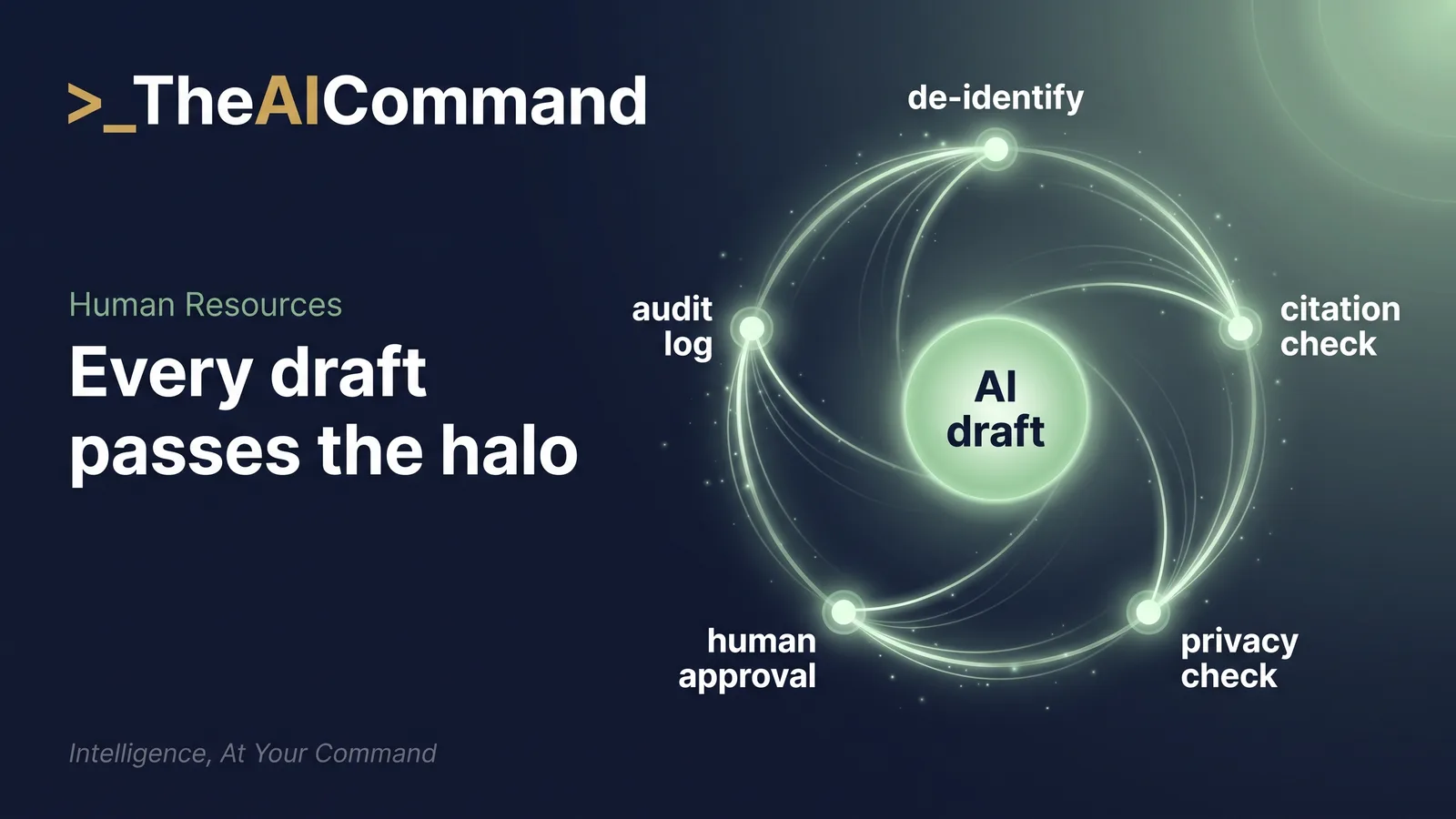
This section turns the Closing Loopholes regime into a repeatable, controlled workflow that an Employment Law and Workforce Strategy team can run with AI assistance. It assumes the team uses Claude (Anthropic) or ChatGPT (OpenAI Enterprise) under an enterprise data agreement that disables training on inputs.
6.1 Use cases at scale
- Wage theft risk register drafting. Convert payroll variance reports into a structured risk register entry with cause, impact, control and remediation fields populated.
- Obligation mapping. Map current policies, awards, enterprise agreements and contracts to s327A, s15A, s15AA, s235, Part 2-7A and the right to disconnect.
- Casual conversion notice drafting. Generate compliant 21 day responses using merge fields and pre-approved reasons.
- Contractor arrangement reviews. Apply the s15AA indicia consistently across a contractor population to flag misclassification risk.
- Same job same pay pre-engagement assessments. Triage every new labour hire engagement against pay parity rules and s306E(1A) carve outs.
- Board people risk papers. Distil quarterly workforce risk into a one page Board ready summary aligned to the entity risk appetite.
- Regulator response triage. Analyse Fair Work Ombudsman correspondence and propose an evidence list and response plan.
- Internal audit support. Draft testing scripts and evidence requests for HR audits referencing the new obligations.
6.2 Project space setup
The scaffold below is the copy and paste version of the system instruction this section describes. Drop it into the ChatGPT Project instructions or the Claude Project description before you run any prompt from this module.
ChatGPT (Projects or Custom GPT). Step 1: Create a Project named [PROJECT_NAME] Closing Loopholes Workspace. Step 2: Upload to the Project knowledge area: the FW Act consolidated text, the relevant modern award (e.g., Banking, Finance and Insurance Award 2020), the entity Code of Conduct, the AI use policy, the Privacy Policy, and the entity HR delegations matrix. Step 3: Configure the system instruction using the scaffold below. Step 4: Restrict file uploads to non-PII sources via a clear instruction. Step 5: Enable conversation logging via the enterprise audit log.
Claude (Projects or Skills). Step 1: Create a Claude Project named [PROJECT_NAME] Closing Loopholes Workspace. Step 2: Add Project knowledge files following the same list as ChatGPT. Step 3: Set the Project description to act as your shared system prompt. Step 4: For repeated use cases (e.g., wage theft register), build a Claude Skill with a clear name and trigger description, plus reference files for templates and obligation mapping. Step 5: Set retention to delete chats after [RETENTION_DAYS].
System prompt scaffold (use in both platforms with minor tweaks). Role: You are an Australian Employment Law and Workforce Strategy assistant. Context: The user works in [BUSINESS_UNIT] of [ENTITY_NAME], an APRA regulated entity. Task: Assist with Closing Loopholes Acts compliance under the Fair Work Act 2009 (Cth). Constraints: Use Australian English. Do not invent legislation, citations or case law. Refuse if asked to process real personal information. Always include a Quality Bar review at the end. Output format: Headings, prose paragraphs, tables where useful, no em dashes.
File structure. Use a shared drive folder named [PROJECT_NAME]/Closing-Loopholes/ with subfolders 01-Templates, 02-Source-Materials, 03-Drafts, 04-Approvals, 05-Audit-Trail, 06-Models. Naming convention: TAIC-CL-{topic}-{yyyymmdd}-{initials}-{version}. All AI generated drafts must be tagged with the model name, version and date.
6.3 Prompt library (six prompts)
Prompt 1: Wage theft risk register draft
Role: Senior Employment Law analyst. Context: I have a payroll variance report for [PAYROLL_PERIOD] that flags potential under-payment of [DESCRIPTION]. The report is de-identified. Task: Generate a draft entry for the wage theft risk register in our register template. Constraints: Use the s327A elements framework. Identify control gaps. Do not speculate beyond the data. Flag any item requiring Employment Counsel sign off. Output format: Markdown table with Risk ID, Description, Likelihood, Impact, Control gap, Remediation, Owner, Due date, Counsel review required (Y/N). Quality Bar: Every row must cite a control reference and a statutory hook.
Prompt 2: Obligation mapping
Role: Compliance mapping specialist. Context: I will paste a section of our Code of Conduct, an EA clause and a modern award clause. Task: Map each text fragment to the Closing Loopholes obligations it engages, listing s327A, s15A, s15AA, s235, Part 2-7A and right to disconnect where relevant. Constraints: No invented citations. Mark uncertain mappings clearly. Output format: A 3-column table with Source text, Mapped obligation, Confidence (High/Medium/Low). Quality Bar: Every mapping with Confidence Medium or Low routes to the [REVIEW_QUEUE].
Prompt 3: Casual conversion notice draft
Role: People Partner. Context: I have received a s66AAB notice from a casual employee with role [ROLE], service period [SERVICE_PERIOD], roster pattern [ROSTER_PATTERN]. Task: Draft a 21 day response. Provide three variants: convert, refuse on s15A grounds, refuse on operational grounds. Constraints: Use Australian English, cite s66AAC, include reasons, no em dashes, use merge fields for personal details. Output format: Three labelled draft letters with subject line, salutation, body, sign off and a reviewer checklist. Quality Bar: Each refusal must cite at least three s15A indicia or one prescribed operational ground with evidence.
Prompt 4: Contractor arrangement review
Role: Workforce Strategy lead. Context: I will paste a de-identified contractor profile including engagement length, duties, control, equipment, exclusivity and remuneration. Task: Apply the s15AA totality test and produce a reclassification recommendation. Constraints: Do not output a final decision; output a recommendation with confidence level and recommended next step. Output format: Risk score (Low/Medium/High), key indicia analysis table, recommended action, and a list of evidence to gather. Quality Bar: Recommendations must align to entity risk appetite and reference the relevant s15AA indicia.
Prompt 5: Board people risk paper
Role: Chief of Staff to Head of HR. Context: I have a quarterly workforce risk dashboard with metrics on wage theft incidents, casual conversion volumes, contractor reviews, intractable bargaining matters and same job same pay orders. Task: Produce a 1.5 page Board paper for the next Risk Committee. Constraints: One page narrative, half page risk and metrics summary, no em dashes, plain English, link each metric to the entity risk appetite statement. Output format: Title, Purpose, Background, Key risks, Metrics summary table, Recommendations, Decisions required. Quality Bar: Every recommendation has an owner and a due date.
Prompt 6: Regulator response triage
Role: Senior Employment Law analyst. Context: I have received a letter from the Fair Work Ombudsman dated [LETTER_DATE] referencing [SUBJECT]. The letter is de-identified and uploaded as [FILE_REF]. Task: Triage the letter and produce a response plan. Constraints: Identify the deadline, the documents requested, the legal exposure, the proposed response and the escalation path. Output format: Triage table with Field, Value, Action, Owner, Deadline. Quality Bar: Every action has an owner and a clear deliverable.
6.4 Governance, audit, privacy and risk appetite controls
Mandatory de-identification. Replace all employee names, employee IDs, payroll numbers, claim numbers and identifying narrative before any input is sent to a model. Use merge field placeholders (e.g., [EMPLOYEE_NAME], [EMPLOYEE_ID]) and a registry that maps placeholders back to the source. Human in the loop. Every AI output is a draft. Approval is recorded in [APPROVAL_LOG] by an authorised approver under the HR delegations matrix before any external action is taken. Prohibited inputs. Do not upload PII, market sensitive financial information, sanctions list data, claimant medical records, draft regulator submissions covered by legal professional privilege without explicit Employment Counsel sign off.
Retention and logging. Conversations and outputs are stored for [RETENTION_DAYS] days in [LOGGING_SYSTEM]. The log captures user, model, prompt, output and approver. Model selection. Prefer enterprise tier models with no training on inputs. For high sensitivity matters consider on premise or virtual private cloud deployments. CPS 230 considerations. Where AI assists in payroll, workforce risk, regulator interaction or HR delegations, treat the AI vendor as a material service provider candidate and apply the entity material service provider standard. APP alignment. Notify employees in the privacy collection notice that AI may assist in HR processes; ensure access, correction and complaint pathways are described.
6.5 Quality assurance loop
Run this red team pass on every significant draft before it reaches the approver. It hardens the five step loop below by attacking the draft the way a tribunal, a regulator or opposing counsel would.
- Step 1: Citation check. Read every legislative reference. Reject the draft if any citation is invented or misquoted.
- Step 2: Privacy check. Confirm no real personal information appears in the input or output. Reject if a real name slips in.
- Step 3: Accuracy check. Compare conclusions against the obligation map. Flag any divergence to Employment Counsel.
- Step 4: Tone and clarity check. Ensure Australian English, plain English, no em dashes, professional and respectful tone for any external facing draft.
- Step 5: Sign off. Approver records decision in [APPROVAL_LOG] with name, date, model, version and any conditions.
Red team prompt. Role: Adversarial Employment Law reviewer. Task: Identify the three most serious flaws in the draft I am about to paste. Specifically, find: (a) any unsupported assumption about employee state of mind; (b) any citation that does not exactly match the FW Act as amended; and (c) any procedural step that would be unfair, coercive or in breach of the general protections at Part 3-1. Output format: Numbered list of flaws with severity rating and corrective action.
6.6 Scaling pattern
Templates. Maintain a single source of truth folder for every artefact (wage theft register entry, casual response, contractor review, Board paper, regulator response). Version control. Use a Git or equivalent system to track template revisions; require a peer review on every change. Change log. Maintain a change log file alongside each template that records date, change description, author and approver. Model evaluation cadence. Run a quarterly evaluation that asks each model the same five canonical questions; record any drift in answer quality and escalate if outside tolerance. KRI suggestions. Track: percentage of AI drafts approved without amendment, count of AI drafts rejected at QA Step 1 (citation), count of privacy near-misses caught at QA Step 2, mean time from event to draft, mean time from draft to approval. Report KRIs in the quarterly Board people risk paper.
7. Common Pitfalls and Watch-outs
The following pitfalls are drawn from observed industry experience, regulator commentary, and adjacent compliance practice. Each is followed by a one line corrective action. Use these as a screening list before signing off any artefact produced under this module.
- Treating the s327A offence as a strict liability rule. Corrective: build documented evidence of intent or absence of intent into every payroll incident review.
- Relying on the contract alone to determine casual status. Corrective: capture roster history, reasonable expectations and casual loading evidence in the s15A indicia note.
- Continuing to apply Personnel Contracting reasoning to contractor reviews. Corrective: rebuild the contractor review template around the s15AA indicia.
- Confusing same job same pay carve outs with broad service contract exemptions. Corrective: read s306E(1A) carefully and document the carve out test in the pre-engagement assessment.
- Using AI to draft regulator submissions without Employment Counsel sign off. Corrective: route every regulator facing draft through the QA loop and escalation path.
- Uploading real employee data into a consumer tier AI tool. Corrective: enforce de-identification and enterprise model use; treat any breach as a privacy incident.
- Letting the FAR accountable person assume HR is solely responsible. Corrective: require quarterly attestations from the FAR accountable person, supported by the wage theft and conversion KRIs.
- Failing to update the privacy collection notice when AI is introduced into HR processes. Corrective: refresh the notice, log the change, and republish to all employees with a clear effective date.
8. Decision Frameworks and Tools
8.1 Decision tree: should this matter be escalated to Employment Counsel?
This prompt operationalises the decision tree. Use it to triage a de-identified matter summary before deciding whether Employment Counsel needs to see it, and keep the output with the matter file as evidence the gates were applied.
Decision sequence. Step 1: Does the matter potentially involve s327A intentional underpayment? If yes, escalate immediately. Step 2: Does the matter involve contested casual status under s15A or s66AAB with FWC exposure? If yes, escalate. Step 3: Does the matter involve potential reclassification of more than [HEADCOUNT_THRESHOLD] workers under s15AA? If yes, escalate. Step 4: Does the matter involve a same job same pay order application or response? If yes, escalate. Step 5: For all other matters, apply the standard HR triage process.
8.2 Maturity ladder
8.3 Self check questionnaire
Turn the questionnaire below into a working gap assessment. Answer the seven questions honestly, paste your answers into this prompt, and review the plan it drafts with the owners named in the RACI at section 5.5.
- Have we mapped every modern award rate, EA clause and contract clause to the s327A elements?
- Have we re-assessed every casual employee engaged after 26 August 2024 against the s15A factors?
- Have we re-assessed our contractor population against the s15AA totality test in the past 12 months?
- Do we have a same job same pay pre-engagement assessment for every labour hire engagement?
- Is the FAR accountable person attestation supported by current data?
- Is our AI workflow logged, governed and aligned to the entity risk appetite?
- Do we know the next three regulator interactions on our calendar and who owns them?
9. Further Reading and Authoritative Sources
Primary regulator publications. Fair Work Ombudsman, Closing Loopholes hub at fairwork.gov.au; Fair Work Commission, Same job same pay information for parties; Fair Work Commission, Intractable bargaining declaration practice note; Commonwealth Director of Public Prosecutions, Wage theft prosecution information; Australian Prudential Regulation Authority, CPS 230 Operational Risk Management.
Statutory instruments. Fair Work Legislation Amendment (Closing Loopholes) Act 2023 (No. 120, 2023); Fair Work Legislation Amendment (Closing Loopholes No. 2) Act 2024 (No. 8, 2024); Fair Work Act 2009 (Cth) consolidated; Crimes Act 1914 (Cth) Part IA; Privacy Act 1988 (Cth).
Professional body resources. Australian Industry Group, Closing Loopholes employer guidance; Australian Council of Trade Unions, Closing Loopholes member resources; Law Council of Australia, Workplace Relations and Employment Law Committee briefings; Governance Institute of Australia, FAR accountable person guidance; Risk Management Institution of Australasia, Operational risk briefings.
Industry references. Professor Andrew Stewart, Stewart on Employment Law, current edition; Andrew Brown KC, Brown on Workplace Relations, current edition; Workplace Express daily; Australian Workplace Relations Study (AWRS) data releases; APRA Quarterly Statistics for ADIs and insurers.
10. Closing Sign-off
This module forms part of the TheAICommand Learning Library Workplace Law Track. It is general information only. It is not legal advice. Apply it through your entity policies and with appropriate Employment Counsel input.
Practical takeaways
Do this Monday
- Check your compliance calendar against the section 2.3 table. Every date has now passed, so any obligation still marked as pending, including the small business right to disconnect that commenced on 26 August 2025, is a live gap rather than a future task.
- Ask payroll for the current exception report and list any variance that has stayed open across more than one pay cycle. A known, uncorrected variance is the exact fact pattern that moves an error toward s327A territory.
- Extract every casual who has passed six months of service (12 months for a small business employer) and confirm each file holds a current s15A indicia note, so a s66AAB notice never starts the 21 day clock from a standing start.
- Identify your five longest running contractor engagements and book a s15AA totality review for each, starting with any that are exclusive, supervised and working full time equivalent hours.
- Confirm every live labour hire engagement has a same job same pay pre-engagement assessment on file that documents the s306E(1A) service provision question.
The HR practice checklist
- Wage theft risk register live, with every entry mapped to the s327A elements and carrying a named owner and due date.
- Payroll exception reporting running between audit cycles, with escalation the moment a variance survives a second pay run.
- Casual conversion workflow logging every s66AAB notice on receipt and tracking the 21 day s66AAC response clock.
- Refusal letters citing a s66AAC(4) ground with evidence, never the casual loading or the contract label alone.
- Contractor onboarding gate applying the s15AA indicia before engagement rather than after it.
- s15AB opt out notices documented, with earnings tracked against the contractor high income threshold for the life of the engagement.
- Same job same pay pre-engagement assessment filed for every labour hire engagement, including the s306E(1A) carve out analysis.
- De-identification enforced before any workforce data reaches an AI tool, with merge fields such as [EMPLOYEE_NAME] and a mapping registry held outside the model.
- AI use logged with user, model, prompt, output and approver, and KRIs reported in the quarterly Board people risk paper.
- FAR accountable person attestation supported by current wage theft, conversion and contractor review data.
Your prompt library
The four prompt boxes in this module cover the workspace system instruction (section 6.2), the red team review (section 6.5), escalation triage (section 8.1) and the self check gap assessment (section 8.3), while the six structured prompts in section 6.3 cover the core drafting artefacts. Version them like any other controlled template, record each use in the approval log, and retire anything the quarterly model evaluation shows drifting. Here is one more for the spare minutes between matters.
Test your knowledge
LM-H05 assessment. 30 questions
25-30 minutes. One question per screen. Your progress is saved locally for 30 days, so you can pick up where you left off. Submit anytime to see your score, tier, and per-question rationale.
Read next

Corporations Act 2001 (Cth)
The Corporations Act 2001 (Cth) is the consolidated statute governing companies, financial product issuers and distributors, and the directors who oversee them. The Act sits at the apex of the Australian financial services regulatory hierarchy. The Australian Securities and Investments Commission (ASIC) is the lead reg
Read article
Privacy Act 1988 (Cth) and the Australian Privacy Principles
The Privacy Act 1988 (Cth) is the principal Commonwealth statute governing personal information handling in Australia. It binds APP entities, including all Australian financial services providers because of the financial services carve-out from the small business exemption. The 13 Australian Privacy Principles (APPs) s
Read article
Anti-Money Laundering and Counter-Terrorism Financing Act 2006 (Cth)
The Anti-Money Laundering and Counter-Terrorism Financing Act 2006 (Cth) (the AML/CTF Act) is the Commonwealth statute that obliges Australian reporting entities to detect, deter, and disrupt the movement of illicit funds and the financing of terrorism. The Act is administered by the Australian Transaction Reports and
Read articleGeneral information and education only. Not legal, compliance, financial, or professional advice. Verify any time-sensitive obligation against the primary source.
TheAICommand. Intelligence, At Your Command.