LM-H04 · HR · Practitioner tier
Fair Work Regulations 2009 (Cth)
High-income threshold, regulated workers, record-keeping, payslips
What you'll be able to do
- 1.Explain how the Fair Work Regulations 2009 (Cth) give operational effect to the Fair Work Act 2009 (Cth) across record-keeping, payslips, prescribed notices and the high-income threshold.
- 2.Apply the high-income threshold of $190,100 (from 1 July 2026, indexed each 1 July under Reg 2.13) to award coverage, guarantees of annual earnings and unfair dismissal eligibility decisions.
- 3.Differentiate the obligations owed to employees, employee-like workers and regulated road transport contractors under FW Act Chapter 3A and the Closing Loopholes reforms.
- 4.Audit employee records and payslips against Regs 3.32 to 3.46 and rate non-compliance on a defensible likelihood-by-impact scale.
- 5.Design and govern a Claude or ChatGPT project space that automates record-keeping audits and FWO response drafting with de-identified inputs and human sign-off.
- 6.Recommend governance controls that align AI-assisted HR operations with the Australian Privacy Principles, CPS 230 and CPS 234.
6 lessons · read straight through, or use lesson view once the page loads.
TheAICommand Learning Module
LM-H04
Fair Work Regulations 2009 (Cth)
High-income threshold, regulated workers, record-keeping, payslips, and prescribed forms
Learning outcomes
On completion of this module, the learner will be able to:
- Identify the operational provisions of the Fair Work Regulations 2009 and explain how they give effect to the Fair Work Act 2009 (Remember).
- Apply the high-income threshold of $190,100 (from 1 July 2026) to award coverage and unfair dismissal eligibility decisions (Apply).
- Differentiate the obligations owed to employees, employee-like workers, and regulated road transport contractors (Analyse).
- Audit a sample of employee records and payslips against Regs 3.32 to 3.46 and identify non-compliance (Evaluate).
- Design and operate a Claude or ChatGPT project space that automates record-keeping audits and FWO response drafting under appropriate governance (Create).
- Recommend governance controls that align AI-assisted HR operations with the Australian Privacy Principles, CPS 230, and Fair Work record-keeping rules (Evaluate).
1. Executive summary
One check in this module can be run today: the Do this Monday list in the closing takeaways (lesson 6) says to pull the latest payslip run and test ten payslips against the Reg 3.46 field list, starting with the superannuation fund name. Lesson 3 sets out the prescribed payslip content that test relies on. Everything before that supplies the context that makes the result meaningful.

The Fair Work Regulations 2009 (Cth) (FWR) are the operational engine that sits beneath the Fair Work Act 2009 (Cth) (FW Act). Where the Act sets out rights and obligations at a principle level, the Regulations prescribe the numbers, the forms, and the procedural detail that turn those obligations into day-to-day operating requirements. For HR Operations, Payroll, and People Compliance teams in Australian financial services, the Regulations are where the work actually happens: payslip content, time-and-wages records, the high-income threshold, prescribed forms for sham contracting and unfair dismissal, and from 2024 to 2025 the new operational rules for regulated workers and employee-like workers introduced by the Closing Loopholes legislation.
On completion of this module you will be able to:
- Run a record-keeping and payslip audit that is defensible against an FWO inspector or external auditor.
- Apply the high-income threshold mechanics correctly to award coverage, unfair dismissal jurisdiction, and termination payment decisions.
- Distinguish employee, employee-like worker, and regulated road transport contractor and apply the correct minimum standards order or contractual chain rule.
- Build, operate, and govern a Claude or ChatGPT project space that automates HR Operations work without breaching Privacy Act 1988 (Cth) or CPS 234 obligations.
2. Regulatory and strategic context
The Fair Work Regulations 2009 are subordinate legislation made by the Governor-General under section 796 of the Fair Work Act 2009. The Department of Employment and Workplace Relations (DEWR) is the policy custodian. The Fair Work Ombudsman is the principal compliance and enforcement regulator for the operational provisions covered in this module. The Fair Work Commission (FWC) administers the unfair dismissal and general protections jurisdictions where the high-income threshold and prescribed forms become directly relevant.
Statutory authority and structure
The Regulations are arranged in chapters that mirror the Act. Chapter 1 contains preliminary and definitional provisions. Chapter 2 deals with terms and conditions of employment, including the high-income threshold (Reg 2.13, made for Part 2-9 of the Act). Chapter 3 covers rights and responsibilities, including the record-keeping and payslip rules (Regs 3.31 to 3.46, made for Part 3-6 of the Act). Chapter 6 covers miscellaneous matters and incorporates the prescribed forms set out in Schedule 2. The regulated worker regime itself sits in Chapter 3A of the FW Act, inserted by the Fair Work Legislation Amendment (Closing Loopholes No 2) Act 2024, with supporting provisions added to the Regulations to operationalise minimum standards for regulated workers.
Scope of application
The Regulations apply to all national system employers and employees, which captures the entire Australian financial services sector. Constitutional corporations, including all ADIs, registered general and life insurers, RSE licensees, and AFSL holders organised as Pty Ltd or Ltd entities, are national system employers. The Regulations also reach to outworker entities, employee-like workers performing digital platform work, and regulated road transport contractors where the relevant chapter applies.
Key dates and transitional periods
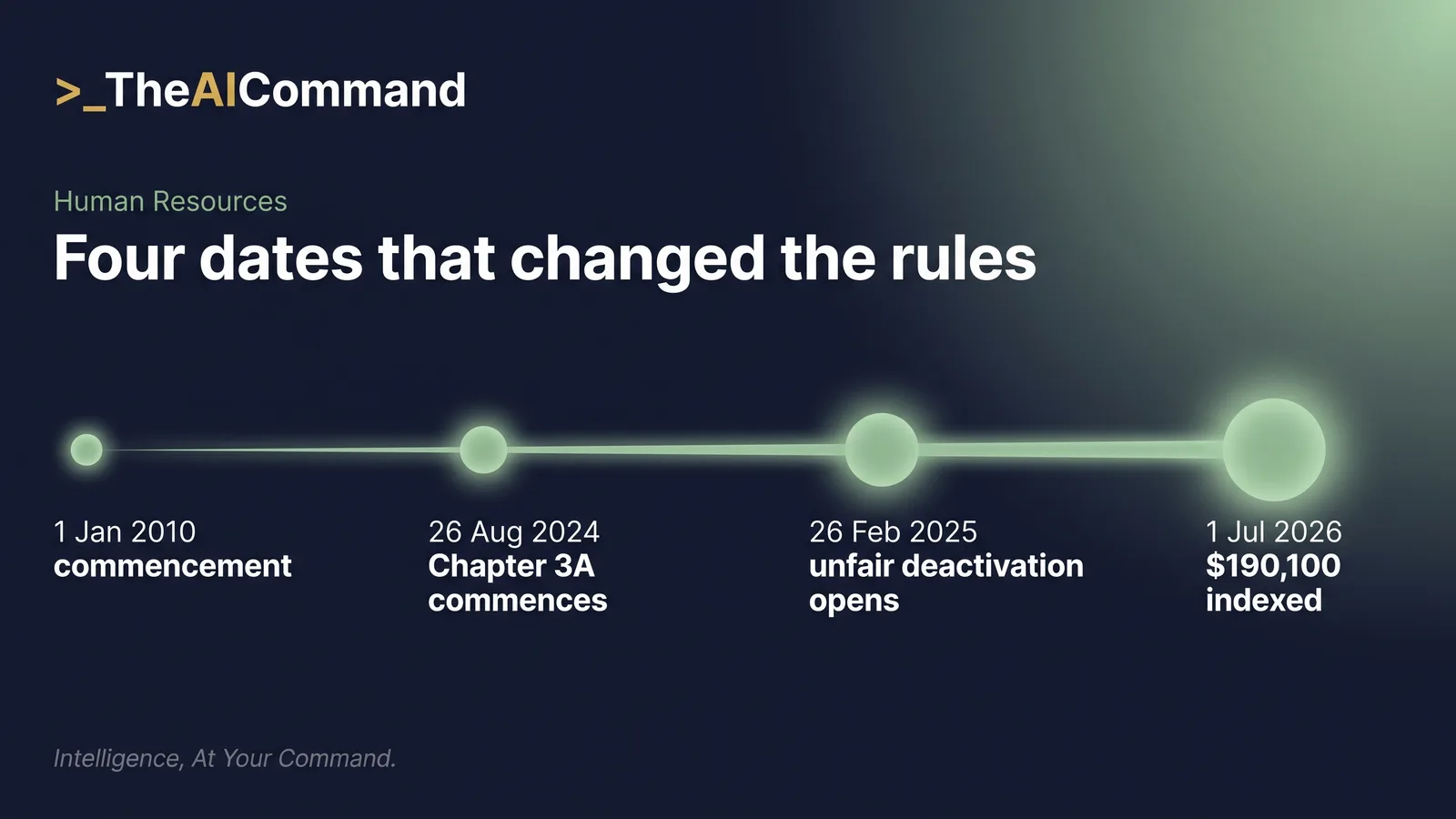
- 1 January 2010 - Commencement of the Fair Work Regulations 2009 alongside the Act.
- 26 August 2024 - Commencement of regulated road transport contractor provisions under the Closing Loopholes No 2 Act.
- 26 February 2025 - Unfair deactivation protections open to eligible employee-like workers on digital labour platforms, six months after the Chapter 3A minimum standards framework commenced on 26 August 2024.
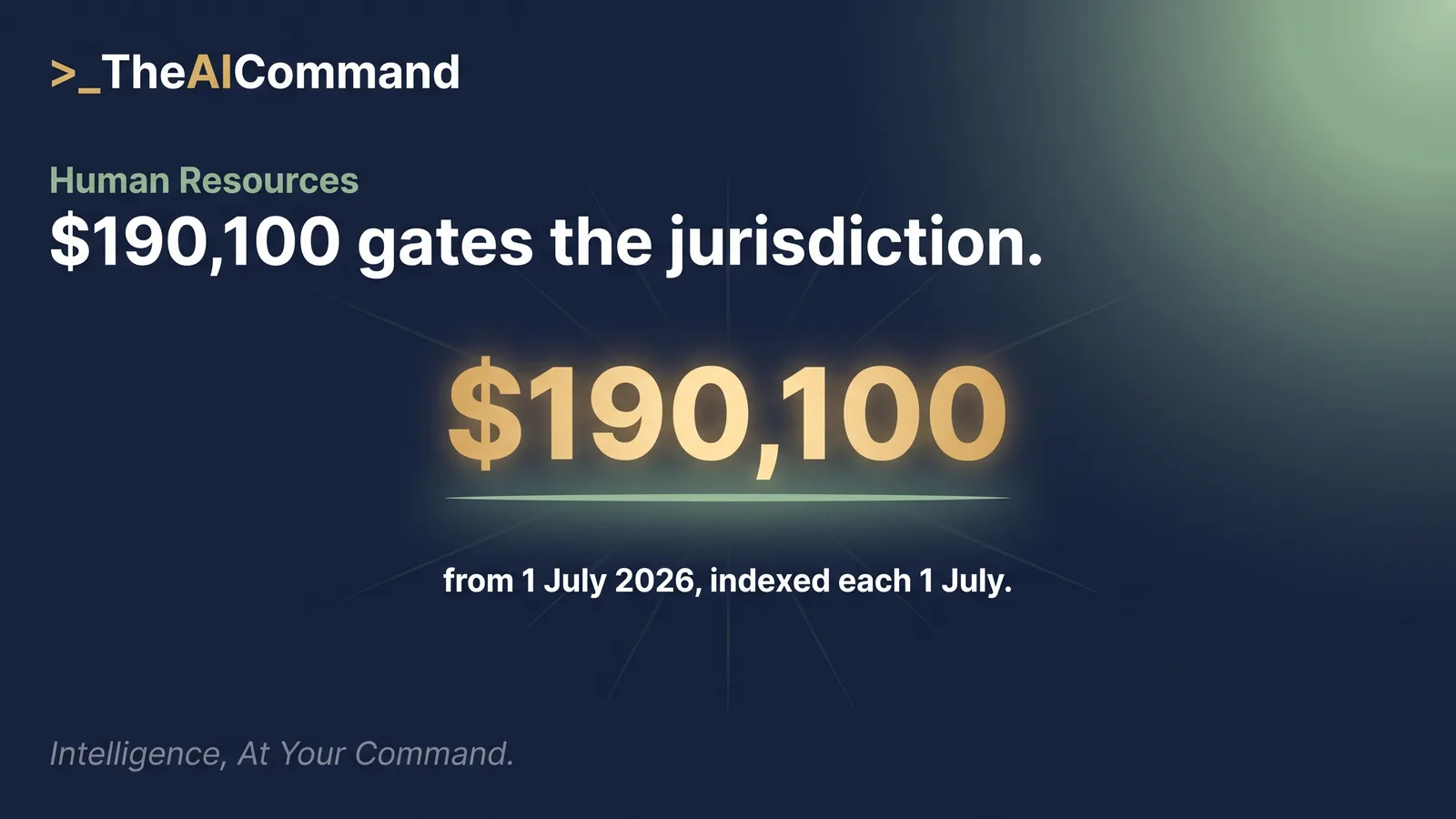
- 1 July 2026 - High-income threshold indexed to $190,100 (Reg 2.13). The superannuation guarantee rate remains at 12.0%, the legislated ceiling it reached on 1 July 2025.
- 1 July 2026 - Filing fee for unfair dismissal applications updated under Reg 3.07 (verify the current FWC fee schedule each financial year).
Interplay with adjacent frameworks
The Regulations do not operate in isolation. Three cross-references that matter for financial services are:
- LM-H01 Fair Work Act 2009 - the parent Act sets out the obligation to keep records and issue payslips at sections 535 and 536. The Regulations prescribe what those records must contain.
- LM-H02 National Employment Standards - the high-income threshold gates whether an employee is award-covered for unfair dismissal purposes and interacts with the redundancy and termination payment rules.
- LM-H03 Modern Awards - the high-income threshold determines whether a guarantee of annual earnings can displace award coverage. Record-keeping rules on hours, allowances, and overtime sit on top of award entitlements.
Outside the HR domain, the Regulations interact with the Privacy Act 1988 (Cth) Australian Privacy Principles (APP 11 security and APP 12 access), the Superannuation Guarantee (Administration) Act 1992, the Income Tax Assessment Act 1997 (PAYG withholding records), and APRA Prudential Standard CPS 230 (operational risk and third party arrangements where payroll is outsourced).
Visual 1: Regulatory authority and instrument map
A jurisdictional flowchart specification rendered as a structured table. Suitable for direct rebuild in Lucidchart, Whimsical, or Visio.
3. Core concepts and defined terms
Defined-terms table
Central obligations and principles
Three operating principles run through the Regulations and should be treated as design constraints when drafting any HR Operations process or AI workflow.
Principle 1: Make, keep, and produce on demand
Regulations 3.31 to 3.44 require the employer to make a record at the time the relevant event occurs, keep the record for 7 years, and produce it to an FWO inspector or to the employee on request. A record that is not made contemporaneously, or that cannot be produced legibly in English, is a record that does not exist for compliance purposes. Civil penalties for record-keeping breaches sit at the higher end of the FW Act civil remedy range and the FWO has indicated it will pursue serious contraventions to court.
Principle 2: Each pay event triggers its own evidence chain
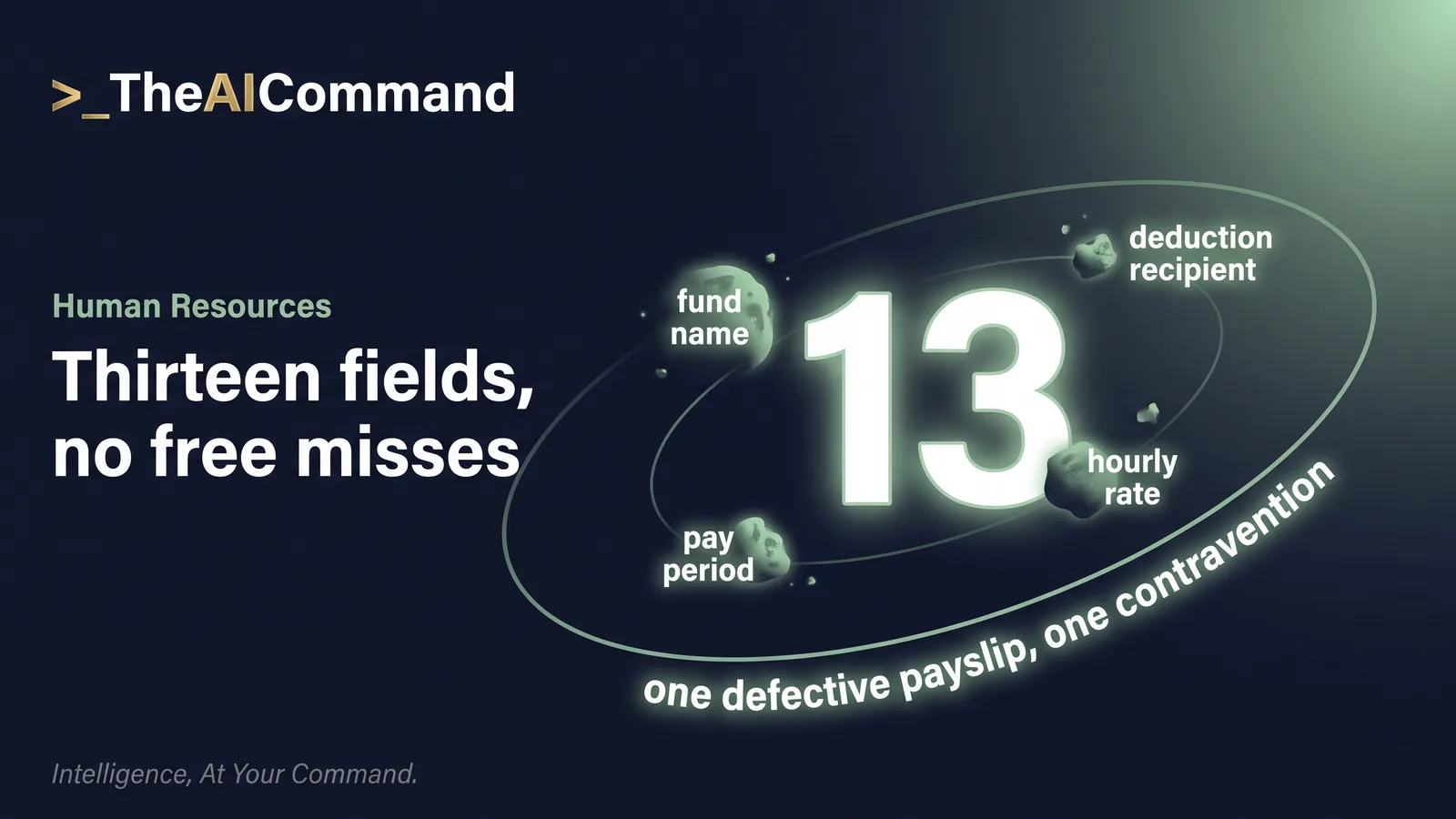
Reg 3.46 requires a payslip within 1 working day of payment. The payslip must contain at least 13 specified items including employer details, ABN, employee name, period dates, gross and net amounts, hours and rate where paid by hour, incentive-based payments, bonuses, loadings, allowances, penalty rates, deductions and the recipient of the deduction, and superannuation contributions including the fund. The chain runs payslip into time-and-wages record into employee record.
Principle 3: The threshold gates the jurisdiction
The paragraph below explains why the threshold is mechanical. When you need the test applied to a live package, run this prompt in your governed project space and have a reviewer verify the output before any position is committed to paper.
The high-income threshold is mechanical, not aspirational. Reg 2.13 indexes the figure each 1 July. The effect is to either include or exclude an employee from the unfair dismissal jurisdiction (where they are not award or agreement covered) and to permit a guarantee of annual earnings that suspends modern award entitlements. Misapplying the threshold is one of the most frequent procedural errors HR teams make in financial services because base, STI cash, and the agreed value of equity grants must each be tested against the inclusion rules in s 332.
4. Practical application in Australian FS
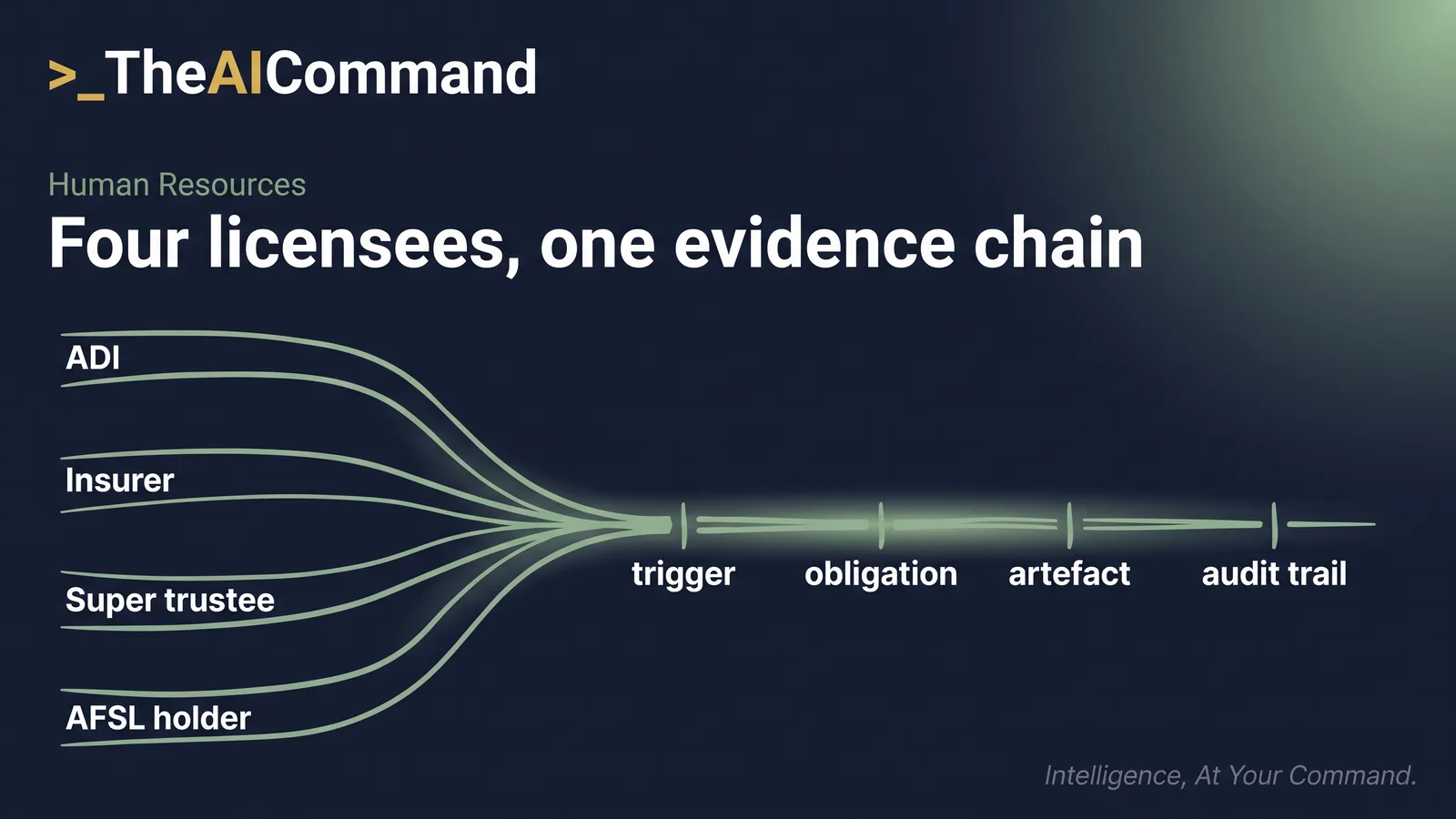
(a) Authorised deposit-taking institution (ADI)
Trigger event: An ADI promotes a Senior Compliance Manager from Band 5 to Band 6. The new fixed remuneration is $198,000 plus 12% superannuation, plus a target STI of 25%. Until the promotion, the role was modern award covered for unfair dismissal eligibility.
Obligation activated: The HR Business Partner must determine whether the employee will sit above the high-income threshold under FW Act s 332 read with FWR Reg 2.13, then decide whether to issue a guarantee of annual earnings under s 330 to displace award coverage. Record-keeping under Reg 3.41 requires the guarantee to be in writing, signed, kept on file for 7 years, and produced to the FWO on request.
Artefact produced: A signed guarantee of annual earnings letter with the agreed money value of any non-monetary benefit clearly stated, plus a covering memorandum showing the threshold calculation. Audit trail expected: Payroll system flag indicating award coverage status, copy of guarantee in personnel file, copy in employee record, link to the FWC threshold figure used, and the responsible officer and date.
(b) General or life insurer
The scenario below is the most common FWR failure in financial services payroll: a system migration that silently drops a prescribed payslip field. Run this prompt before any payroll change so the defect surfaces in testing rather than through an employee complaint.
Trigger event: A claims assessor in a general insurer is paid weekly. The fortnightly payroll cycle is operated by an outsourced provider under a CPS 230 third party arrangement. The insurer migrates to a new payroll system on 1 July of a financial year and the first cycle issues payslips that do not state the superannuation fund destination.
Obligation activated: Reg 3.46(2)(g) requires payslips to specify the name of the fund into which superannuation is paid and the amount. The insurer is in breach for every defective payslip. Section 535 read with FWR Reg 3.31 also requires the underlying superannuation contribution record to be kept for 7 years. APRA expects the insurer, as accountable for the third party arrangement under CPS 230, to detect the issue through testing rather than complaint.
Artefact produced: A reissued payslip pack (within 14 days as a remediation guide), an FWO self-disclosure if the breach is significant, and a CPS 230 incident report. Audit trail expected: Migration test plan, sample of pre-go-live payslips reviewed, exception register entry, root cause analysis, sign-off by the Head of HR Operations, and notification to APRA where the BCM/operational risk threshold is met.
(c) Superannuation trustee (RSE licensee)
Trigger event: An RSE licensee engages a panel of regulated road transport contractors to deliver document destruction services across regional offices. Several drivers are paid per kilometre and per pickup with no minimum hourly rate.
Obligation activated: Following the 26 August 2024 commencement of FW Act Chapter 3A, the FWC may make a road transport minimum standards order. The trustee, as a participant in the contractual chain, may have duties to keep records about the rates and hours under provisions supporting FW Act Chapter 3A. The trustee also has a sole purpose test concern under s 62 of the SIS Act 1993 if it engages contractors in a way that exposes member assets to civil penalty.
Artefact produced: A contractor onboarding pack that captures evidence of compliance with any minimum standards order, a contractual chain register, and a quarterly compliance attestation. Audit trail expected: Engagement letter with the panel, copy of the relevant minimum standards order, sample invoices showing rate calculations, and a board-level governance review under the trustee operational risk framework.
(d) AFSL holder (advice or markets licensee)
Trigger event: A boutique advice licensee dismisses a paraplanner earning $175,000 plus 12% superannuation after a 3-month performance management process. The paraplanner is covered by the Banking, Finance and Insurance Award 2020.
Obligation activated: Because the employee earns below the high-income threshold ($190,100 from 1 July 2026), the unfair dismissal jurisdiction is open. The licensee must lodge a Form F3 employer response, approved under the Fair Work Commission Rules 2024, if the matter proceeds to the FWC, with a complete employee record covering performance management correspondence, time-and-wages records (Reg 3.34), payslips (Reg 3.46), and any individual flexibility arrangement (Reg 3.40).
Artefact produced: A complete employee record bundle, a draft Form F3 employer response, and a litigation hold notice covering the paraplanner email and Slack history. Audit trail expected: A chronology of performance discussions, a compliance check that the dismissal letter satisfies the FW Act ss 387 to 388 valid reason and procedural fairness factors, and confirmation that records meet Reg 3.31 to 3.46 standards.
5. Visual pack
Visual 2: Pay-event lifecycle and record-keeping flow
Process diagram showing the chain from time captured to record retained. Specification ready for Lucidchart or Whimsical.
Visual 3: Comparative table - FWR vs adjacent frameworks
Visual 4: Risk heat map - record-keeping and payslip non-compliance
Likelihood (rows) by Impact (columns). Cells show the residual control rating using the CBA-style 5x5 risk grid.
Indicative residual ratings: missing payslip fund detail (Possible / Major = H), incorrect threshold calc on a single employee (Possible / Moderate = M), full payroll system migration without test pack (Likely / Severe = E).
Visual 5: FWO record-keeping enforcement trend (illustrative)
Bar chart specification (illustrative figures). Five-year trend of record-keeping court-initiated penalty matters.
Figures clearly labelled illustrative. Replace with current FWO Annual Report data when published.
Visual 6: The five things to remember
6. AI workflow: operating this framework with AI
This section is non-negotiable. It defines how an HR Operations function in an Australian FS organisation can use Claude or ChatGPT to industrialise record-keeping audits, payslip compliance reviews, high-income threshold memos, and Fair Work Ombudsman responses, while staying within Privacy Act 1988 (Cth), CPS 234, and the FWO record-keeping rules themselves.
6.1 Use cases at scale
- Drafting a record-keeping audit checklist for a sample of personnel files (Regs 3.32 to 3.46) with consistent scoring rubrics.
- Mapping payslip output fields to Reg 3.46 requirements and producing a gap report for Payroll remediation.
- Calculating and explaining the high-income threshold position for a named role (using de-identified inputs) with a written memo.
- Drafting a Fair Work Ombudsman response to a request for production of records (RFI) under s 712 of the FW Act, with HITL legal review.
- Generating a regulated worker contractual chain register for a financial services procurement function (engaging digital platform or road transport contractors).
- Translating modern award entitlements into plain English manager guidance, with explicit reference back to the underlying instrument.
- Drafting an internal incident report for a payroll non-compliance event aligned to CPS 230 operational risk reporting.
- Producing a board paper distillation that summarises an FWO compliance trend report and quantifies exposure for the audit committee.
6.2 Project space setup
Use the same logical structure across both platforms so the team can move work between Claude and ChatGPT without redesigning the workflow.
Claude project space
- Create a new Project named "HR Ops - Fair Work Regulations 2009".
- Upload knowledge sources: FWR 2009 consolidated text from the Federal Register of Legislation; FWO record-keeping and payslip best practice guides; the in-house HR Operations SOP; the modern awards your business is covered by; the in-house high-income threshold worksheet.
- Create a Skill named "fwo-record-audit" with the system prompt scaffold below. Bind it to a record-keeping rubric reference file and the Reg 3.46 field map.
- Create a second Skill named "fwo-response-drafter" with a stricter governance scaffold (legal sign-off mandatory, no PII).
- Apply the project naming convention "FWR-{YYYY}{MM}-{Use case ID}-{Status}" so audit trail is searchable.
ChatGPT project space
- Create a Project named "HR Ops FWR" inside the Enterprise tenancy with data-retention disabled.
- Build a Custom GPT named "FWR Operations Assistant" using the same system prompt scaffold; add Files > Knowledge for the FWO guides, the SOP, and the awards.
- Restrict to internal users via the workspace ACL; turn off web browsing where the use case involves any client or employee data.
- Add a Custom GPT action that calls the internal HRIS read-only API only via an approved gateway; never expose write endpoints.
- Mirror the naming convention "FWR-{YYYY}{MM}-{Use case ID}-{Status}".
System prompt scaffold (works on both platforms)
6.3 Prompt library (six prompts)
Each prompt follows the Role / Context / Task / Constraints / Output format / Quality bar pattern.
Prompt 1: Record-keeping audit checklist
Prompt 2: Payslip compliance review
Prompt 3: High-income threshold memo
Prompt 4: Gap or maturity assessment
Prompt 5: Board paper or executive summary
Prompt 6: Regulator response or notification draft
6.4 Governance, audit, privacy, and risk appetite controls
Before adopting the controls below, baseline where you stand today. This prompt turns the module's governance bar into a gap assessment you can table at the next people compliance forum.
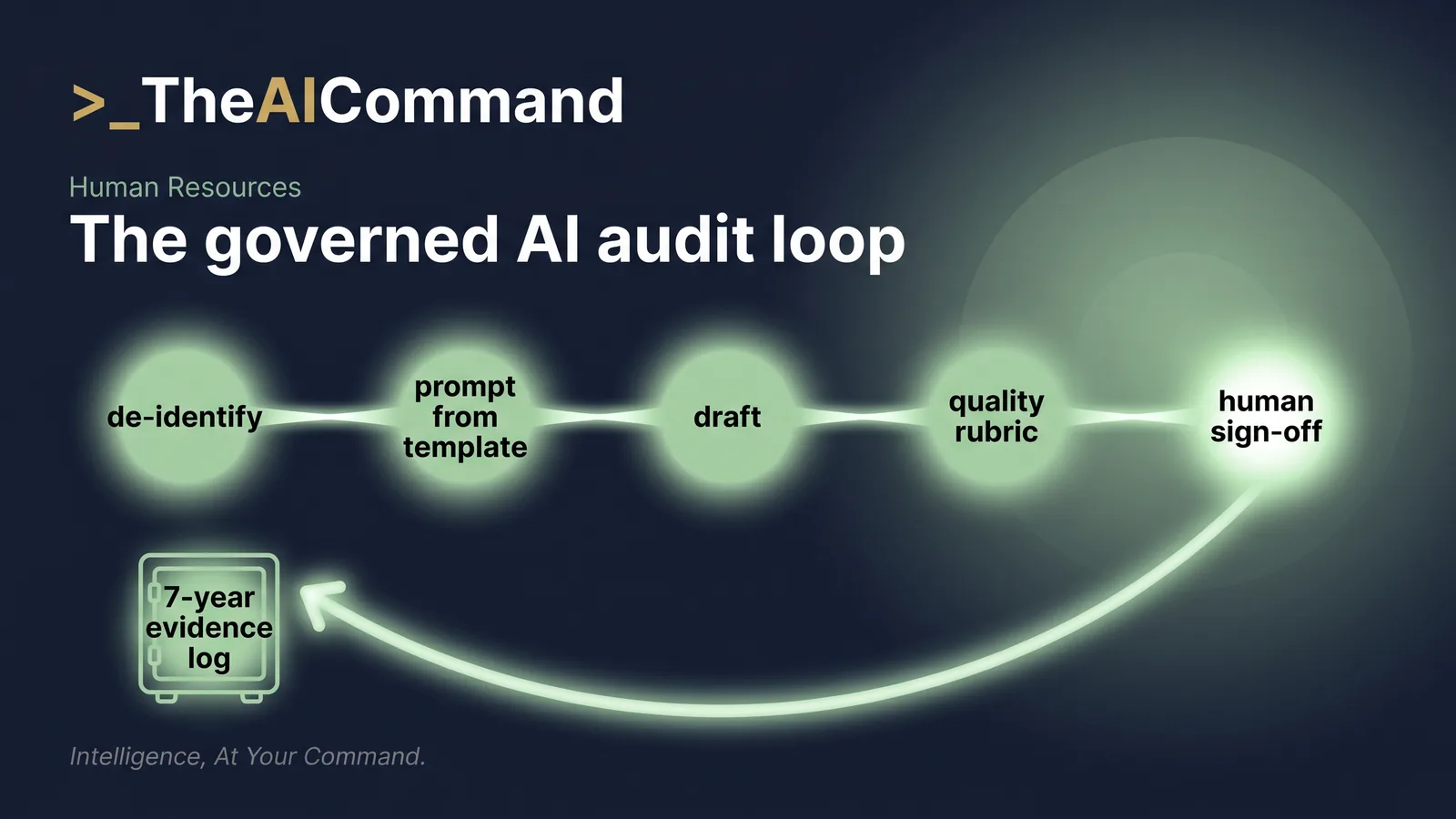
- De-identification rule: All inputs to the AI tool must use merge-field placeholders. No employee name, employee number, salary, or contact detail may be passed in raw form.
- Human-in-the-loop checkpoint: Every AI output is reviewed and counter-signed by an HR Operations lead. Outputs that touch external regulators require Legal sign-off before issue.
- Prohibited inputs: PII, market sensitive data, sanctions data, claimant data, and any data subject to a litigation hold.
- Retention and logging: Save all AI prompts and outputs to the HR Operations evidence repository. Retain for 7 years to align with Reg 3.31.
- Model selection: Default to enterprise tenancy with data-retention disabled. Cloud public-tier models are not permitted for any task involving employee data, including placeholders linked to real cases.
- CPS 230 critical operations: Where payroll is outsourced, the AI tool sits inside the third party operational risk register and is subject to the same testing and tolerances.
- Australian Privacy Principles alignment: APP 1 transparency notice updated to disclose AI assistance, APP 6 use limitation enforced, APP 11 security applied to logs and prompts.
- Risk appetite: Zero tolerance for AI outputs going external without HITL sign-off. Low tolerance for pilot use cases that bypass the change advisory board.
6.5 Quality assurance loop
Every AI output goes through this 5-step rubric before it leaves the desk.
- Source: Did the AI cite the correct Regulation, section, or guidance? Mark every cite as Verified or Unverified.
- Scope: Is the output within the question asked? Strip any drift into adjacent topics.
- Specificity: Are placeholders used everywhere? Run a regex sweep for names, salaries, and email addresses before saving.
- Soundness: Does the legal logic hold? Walk the test step by step. Reject if the AI skips a step.
- Sign-off: Have HR Operations and (if external) Legal counter-signed? Record the sign-off in the evidence repository.
Red team prompt
6.6 Scaling pattern
Operationalise the workflow across the team using version-controlled templates stored in the HR Operations Sanity-style content store or SharePoint with strict access control. Templates carry a version stamp and a change log. Run a model evaluation cadence every quarter using a frozen test set of 20 prompts; report drift rates to the HR Operations Risk and Control Self-Assessment (RCSA). Suggested KRIs include: percentage of payslips passing automated Reg 3.46 field check, percentage of personnel files with complete Reg 3.32 to 3.46 records, mean time to FWO RFI response, and percentage of AI prompts logged with HITL sign-off. Report these KRIs to the People Compliance Forum monthly and to the audit committee quarterly.
7. Common pitfalls and watch-outs
Six pitfalls that recur in HR Operations functions in Australian financial services. Each line ends with the corrective action.
- Treating the high-income threshold as a base salary test only. Action: Recalculate using FW Act s 332 inclusions (wages plus agreed money value of non-monetary benefits) and exclusions (super, reimbursements, indeterminate amounts).
- Issuing payslips that omit the superannuation fund name. Action: Map the Reg 3.46 field list to your payroll output and require the fund name to be a non-nullable field.
- Storing employee records on a system without a 7-year retention rule. Action: Apply a retention class to the HRIS records folder and the payroll archive, and test restoration annually.
- Confusing the FWR with state long-service-leave records. Action: Maintain a single source of truth for LSL records and reference state legislation explicitly in your retention policy.
- Failing to distinguish employees from regulated workers in shared services arrangements. Action: Update the procurement onboarding checklist to apply FW Act Chapter 3A logic from contract day one.
- Sending an FWO response without legal sign-off because the inspector indicated urgency. Action: Use the standard 14-day acknowledgement letter, escalate to Legal immediately, and resist any verbal commitments.
8. Decision frameworks and tools
8.1 Decision tree: should we issue a guarantee of annual earnings?
The table below sets out the decision logic for manual use. This prompt walks the same four steps for a live role and finishes with a draft file memo.
8.2 Maturity ladder: HR Ops FWR readiness (illustrative)
8.3 Self-check questionnaire (7 items)
- Can I produce, within 24 hours, all employee records for a sample of 25 employees over the last 7 years?
- Does every payslip in the last cycle contain all 13 fields under Reg 3.46?
- Has the high-income threshold been recalculated for every executive contract since 1 July 2026?
- Are my prescribed notices current with FWR Schedule 2, and my FWC case forms current with the Fair Work Commission Rules 2024?
- Have I mapped every regulated worker engagement to FW Act Chapter 3A?
- Do my AI-assisted HR Operations workflows run on placeholders only and log HITL sign-off?
- Do I have a current FWO RFI playbook that has been tested in the last 12 months?
9. Further reading and authoritative sources
Primary regulator publications
- Fair Work Ombudsman: Record-keeping and pay slips - Best Practice Guide (current edition).
- Fair Work Ombudsman: Closing Loopholes - Information for Workers and Employers (employee-like and road transport contractor pages).
- Fair Work Commission: High-income threshold and unfair dismissal jurisdiction explanatory note.
- Fair Work Commission: approved forms under the Fair Work Commission Rules 2024 (current versions).
Statutory and subordinate instruments
- Fair Work Act 2009 (Cth), in particular ss 323, 325, 332-335, 535-536, 712, 796, and Chapter 3A (regulated workers).
- Fair Work Regulations 2009 (Cth), in particular Regs 2.13, 3.31-3.46, and Schedule 2.
- Fair Work Legislation Amendment (Closing Loopholes) Act 2023 and (No 2) Act 2024.
- Privacy Act 1988 (Cth), Australian Privacy Principles 1, 6, and 11.
- APRA Prudential Standard CPS 230 Operational Risk Management and CPS 234 Information Security.
Professional bodies and references
- Australian HR Institute (AHRI): Records and reporting practice notes.
- Governance Institute of Australia: Workforce compliance briefings.
- Law Council of Australia: Workplace Relations Committee submissions.
Practical takeaways
Do this Monday
- Pull the latest payslip run for [BU] and test ten payslips against the Reg 3.46 field list. Start with the superannuation fund name and the recipient of every deduction, the two fields that fail most often.
- List every role with total remuneration within 10 per cent of $190,100 and diarise a threshold recheck for each one, using the s 332 decomposition prompt in section 3.
- Confirm every guarantee of annual earnings on file was signed and accepted before its period began, and that it sits in a system with a 7-year retention rule.
- Ask procurement for the current list of digital platform and road transport contractor engagements, and map each one against FW Act Chapter 3A.
- Stand up the governed project space described in section 6.2, load the system prompt scaffold, and log your first de-identified audit prompt and output in the evidence repository.
The HR practice checklist
- Employee records are made at the time of the event, kept for 7 years, and producible legibly in English (Regs 3.31 to 3.44).
- Every payslip issues within 1 working day of payment and carries all prescribed Reg 3.46 fields.
- Every template, worksheet and precedent shows the high-income threshold as $190,100 from 1 July 2026, with a recurring 1 July diary entry to re-index it.
- Threshold positions are tested against the FW Act s 332 inclusions and exclusions, never against base salary alone.
- Guarantees of annual earnings are written, accepted before the period starts, and retained under Reg 3.41.
- Regulated worker engagements are mapped to FW Act Chapter 3A, with contractual chain records kept and new minimum standards orders monitored.
- The FWO RFI playbook is current and tested: acknowledge promptly, escalate to Legal, produce transparently, and never present reconstructions as originals.
- Every AI input uses merge-field placeholders such as [EMPLOYEE_ID], and every AI output carries human sign-off before it leaves the desk.
- AI prompts and outputs are logged in the evidence repository, retained for 7 years, and reported through KRIs to the people compliance forum.
Your prompt library
The four prompt boxes through this module cover the jobs this framework generates most often: the s 332 threshold decomposition in section 3, the payslip migration test pack in section 4, the AI governance gap check in section 6, and the guarantee decision walkthrough in section 8. Store them as version-controlled templates in your governed project space and review them each quarter. This last prompt is a two-minute drill that keeps FWO readiness honest between audit cycles.
Test your knowledge
LM-H04 assessment. 30 questions
25-30 minutes. One question per screen. Your progress is saved locally for 30 days, so you can pick up where you left off. Submit anytime to see your score, tier, and per-question rationale.
Read next

Corporations Act 2001 (Cth)
The Corporations Act 2001 (Cth) is the consolidated statute governing companies, financial product issuers and distributors, and the directors who oversee them. The Act sits at the apex of the Australian financial services regulatory hierarchy. The Australian Securities and Investments Commission (ASIC) is the lead reg
Read article
Privacy Act 1988 (Cth) and the Australian Privacy Principles
The Privacy Act 1988 (Cth) is the principal Commonwealth statute governing personal information handling in Australia. It binds APP entities, including all Australian financial services providers because of the financial services carve-out from the small business exemption. The 13 Australian Privacy Principles (APPs) s
Read article
Anti-Money Laundering and Counter-Terrorism Financing Act 2006 (Cth)
The Anti-Money Laundering and Counter-Terrorism Financing Act 2006 (Cth) (the AML/CTF Act) is the Commonwealth statute that obliges Australian reporting entities to detect, deter, and disrupt the movement of illicit funds and the financing of terrorism. The Act is administered by the Australian Transaction Reports and
Read articleGeneral information and education only. Not legal, compliance, financial, or professional advice. Verify any time-sensitive obligation against the primary source.
TheAICommand. Intelligence, At Your Command.