
Model routing sends each AI task to the model that fits it and cuts AI bills, but for Australian regulated work a cheaper model is usually a different provider in a different place, so every routing rule is also a Privacy Act and APRA data-flow decision. Most companies still send every AI task to their most expensive model. That habit is ending, and how it ends matters more than the savings.
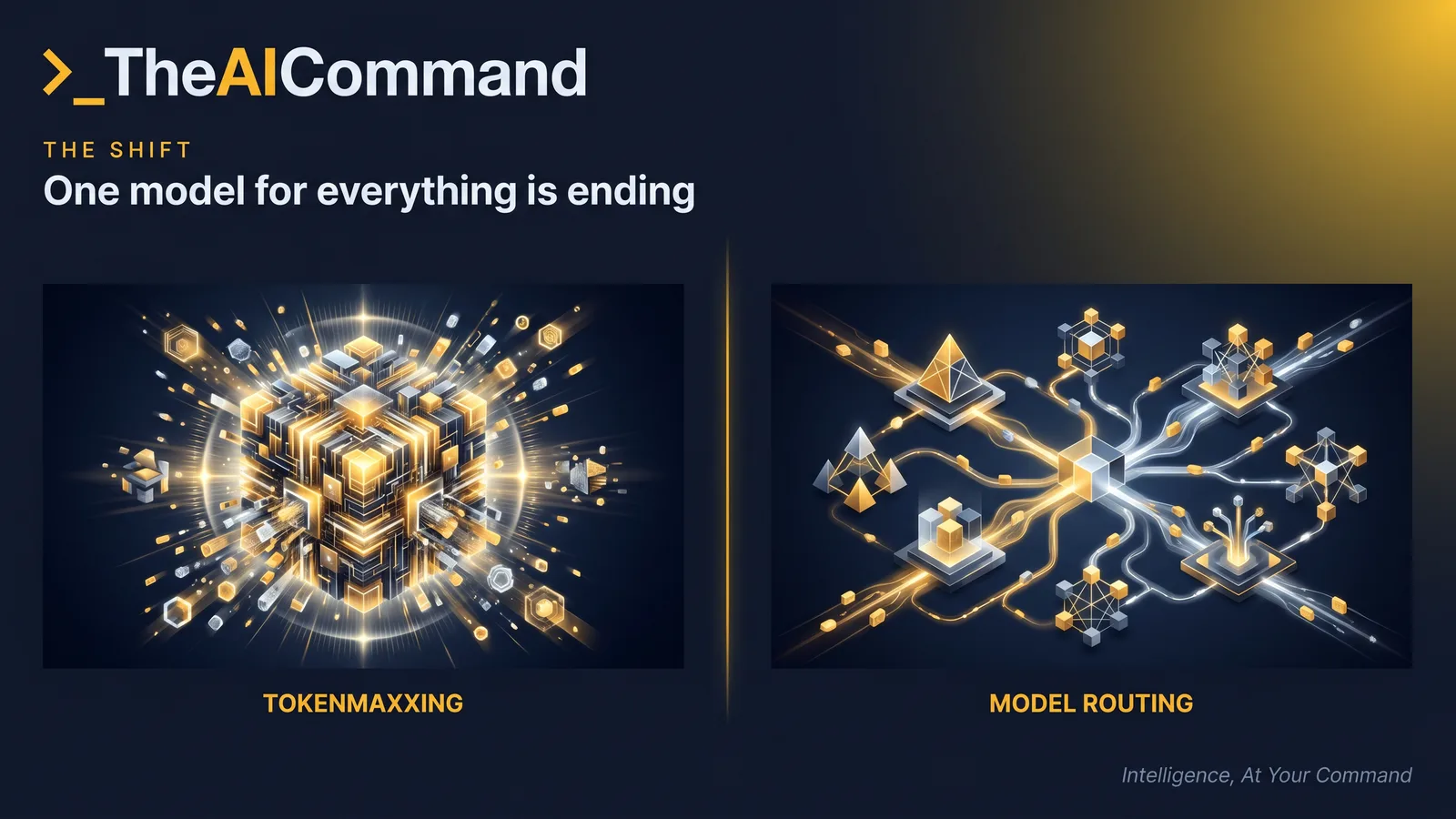
This week the enterprise AI story stopped being which model is best and became which model you can afford to keep using. CNBC reported on 26 June that buyers are moving away from what the market has been calling "tokenmaxxing", using the most powerful model for everything regardless of cost, toward what it now calls "value-maxxing", matching the spend to the job (OpenAI and Anthropic face new AI reality as users shift from 'tokenmaxxing' to efficiency, CNBC, 26 June 2026). The instinct is right. The way most organisations will act on it is not, because the cheaper model is usually a different model in a different place, and almost nobody is treating that as the decision it is.
What is driving the shift to model routing?
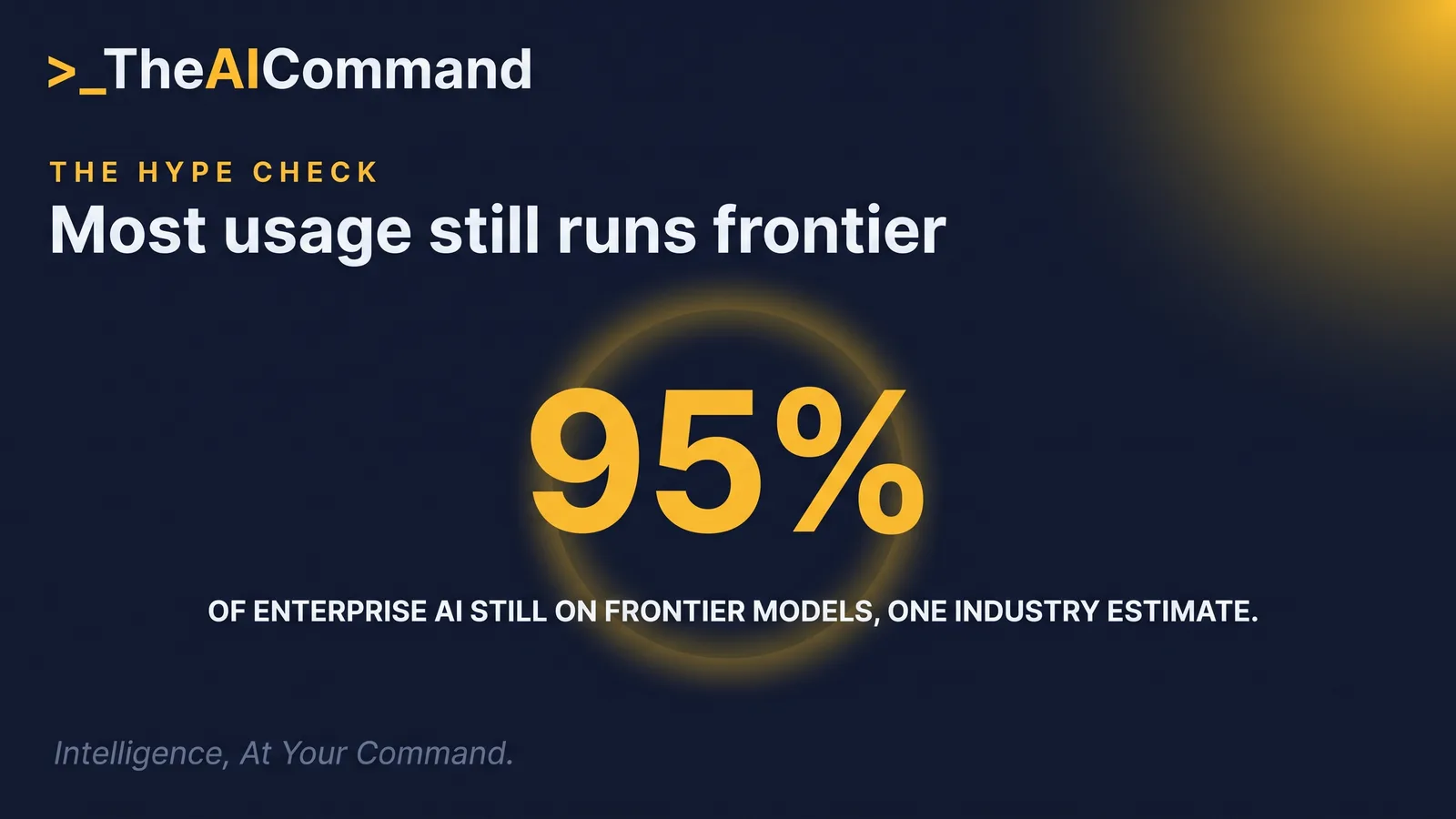
The figure framing the shift comes from inside the industry, not from CNBC's own measurement. Glean chief executive Arvind Jain told CNBC that roughly 95 per cent of enterprise AI usage still runs on frontier models, even for simple tasks a cheaper model would handle just as well. Treat it as directional rather than audited, but nobody in the coverage disputes the direction: most organisations are paying frontier rates for work that does not need frontier capability.
Chief financial officers and boards have noticed. In an earlier piece, CNBC described "a new spending discipline" taking hold "as chief financial officers and boards start cracking down on inefficient artificial intelligence spending", and named the fix: model routing, "a tool that matches the job to the model, sending hard problems to the expensive frontier models and easy ones to cheaper, faster alternatives" (Model routing is a fix for AI overspending, CNBC, 5 June 2026).
The discontent is on the record. Palantir's chief executive told CNBC that businesses are "unhappy" with the frontier labs and feel the labs only care about tokenmaxxing (CNBC, 10 June 2026). The expense-management firm Ramp reached a 44 billion dollar valuation in early June on the back of companies trying to rein in AI spend, and an AI price war is now seen as a real threat to the public listings both OpenAI and Anthropic are preparing (CNBC, 4 and 23 June 2026). On CNBC's read, pricing power is shifting from the companies selling premium AI to the companies buying it.
What it actually means
For two years the default was simple: point everything at the most capable model and move on. That was never an engineering decision. It was a habit, formed when AI was new, budgets were loose, and nobody wanted to be caught using the second-best model. The correction now under way is the market admitting that most work does not need the frontier. Summarising an email and running a multi-step legal analysis are not the same job. They should not cost the same or run on the same model. Working out which model fits which job is the discipline routing formalises.
Picture a claims or compliance team. Classifying an incoming document by type, pulling out a date, drafting a routine acknowledgement: a small, cheap model clears all of it. Weighing conflicting evidence, reasoning through an exclusion, drafting a decision that has to hold up under review: that is frontier work. Routing recognises the difference and stops paying premium rates for the clerical half of the day.
That is healthy. But almost all of the coverage frames it purely as a finance story, and that is exactly where it goes wrong for regulated work.
Why is model routing a data decision for Australian teams?
When you route a task to a cheaper model, you are usually not routing it to a cheaper version of the same model. You are routing it to a different model, from a different provider, in a different place, with a different data-handling posture. CNBC's reporting says it plainly: companies are steering easy, high-volume work to cheaper open-source models out of China or elsewhere.
For an Australian regulated business, that makes every routing rule a data-flow decision. Which model handles a task determines where the data in that task goes, who can see it, whether it is retained, and whether it trains a future model. Under the Privacy Act that is a use and disclosure question under APP 6 and, the moment the cheaper model sits offshore, a cross-border disclosure question under APP 8. For APRA-regulated entities, the model behind a task is a material service consideration under CPS 234 and CPS 230. A routing layer tuned only for cost will happily send a customer's personal information to whatever model is cheapest this week, and it will never ask whether that model is allowed to see it.
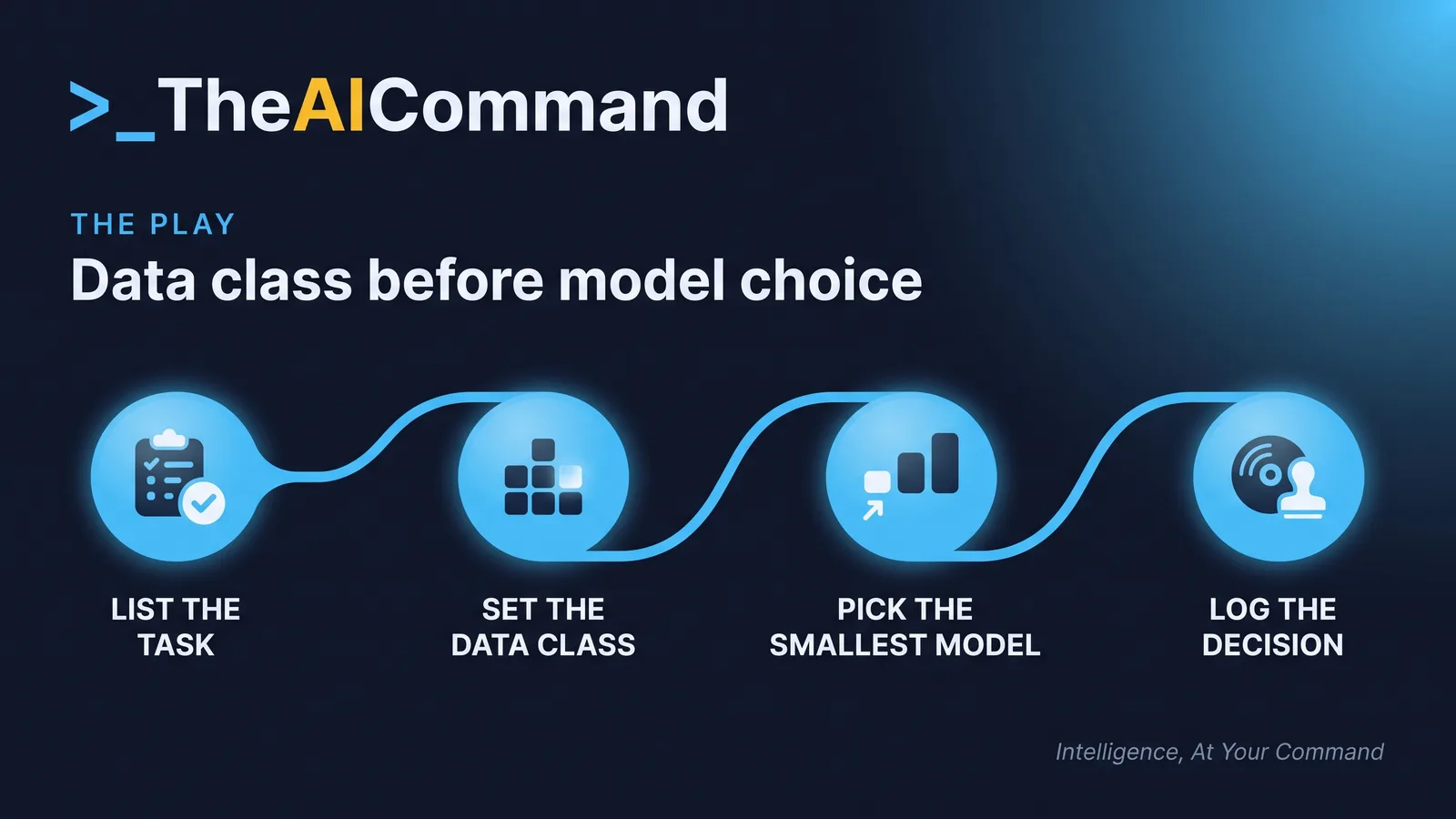
So right-sizing is the right instinct. Doing it blind is the new risk. The fix is a small amount of process applied before the routing decision, not after the incident.
Two prompts that do the triage
You do not need a routing product to start. You need your task list and twenty minutes with ChatGPT, Claude or equivalent. The first prompt turns a raw task list into a draft routing table with the data question built in.
The second prompt is for teams that already have a routing layer or a model allow-list, whether home-grown or built into a platform. It reviews the rules the way an auditor would.
Both prompts draft. Neither decides. The data classifications and the final routing calls stay with a person who can be asked to justify them.
A worked example
Situation: the compliance team lead at [ORGANISATION] pulls last month's AI usage and finds all twelve of the team's recurring AI tasks running on the frontier tier, from classifying incoming correspondence to drafting breach-assessment reasoning. Finance has asked every team to justify its AI spend line by line.
Prompt used: the lead pastes the twelve tasks into the first prompt above, with the team described as [TEAM_AND_SECTOR] and the approved model list taken from the organisation's AI policy.
What came back: a draft table classing eight tasks as clerical and routable to a smaller tier, and four as judgement-heavy frontier work. Two tasks came back marked UNKNOWN on data class because the task descriptions were vague. One line was wrong in a useful way: the model marked summarising incident report extracts as routable to the cheapest available tier, which in this organisation's stack meant an offshore-hosted model.
What the human verified and decided: the lead confirmed the eight clerical calls but overrode the incident-report line, because those extracts contain personal information about identifiable staff, which makes the offshore route a cross-border disclosure question under APP 8 that the team is not set up to clear. That task stayed on the approved onshore tier. The two UNKNOWNs went back to their task owners for answers before any routing change. Ten register lines changed, two did not, and the projected spend on those tasks fell without a single item of personal information moving to a new provider.
The override is the point of the example. The model did the sorting. The human caught the one line where cheap was wrong.
The register line
One line per task in your AI register carries your cost rationale and your governance evidence at once. Each line records:
- Task: what the AI does for you, in one line
- Data class: public, internal, personal or sensitive
- Model and tier: the named model, or the approved tier if a router chooses within it
- Provider and region: where the task actually runs, not where the contract was signed
- Why acceptable: one sentence connecting the data class to the model choice
- Routing: fixed model or automated router, and who approved the allowed routes
- Review date: when this line gets re-checked, because prices and routes move
If you cannot fill a line, that gap is the finding. A task with no known data class or no known region is exactly the task a cost-only router will move somewhere you would not have chosen.
Is tokenmaxxing dead, and should you route everything cheap?
Two things are being oversold. First, "tokenmaxxing is dead" is premature. On the industry estimate CNBC reported, about 95 per cent of enterprise usage still runs on frontier models, so this is a turn in sentiment, not a finished migration. Second, "route everything cheap" is its own trap. A routing layer optimised only for price will quietly degrade quality on the tasks that matter, and quietly move data to wherever is cheapest, which is the governance blind spot that comes with cheaper, smaller models. The discipline is not spend less. It is spend deliberately, task by task, with the data question attached to every routing rule.
What to do on Monday
- Open your AI register, or a blank page if you do not have one, and list every recurring AI task your team ran last month. Pull the list from usage reports or chat histories rather than memory, because the forgotten tasks are usually the ungoverned ones.
- Paste the list into the first prompt above in ChatGPT, Claude or equivalent, with your team description and approved model list filled in.
- Verify every data class yourself. The model drafts, you decide. Anything marked UNKNOWN goes back to the task owner before any routing change.
- Set an allow-list of acceptable models for each data class. Personal and sensitive data does not move to an unvetted or offshore model to save a few cents, no matter what the triage suggests.
- If a platform routes models for you, and Microsoft, OpenAI and others now build routing in, ask your vendor or platform team two questions: which providers and regions can it route to, and where is the log of which model handled which request. Then run the second prompt over whatever rules they show you.
- Write one register line per task using the template above, including the review date.
- Book a re-check for the first Monday of next month. Model prices and routing defaults are moving monthly, and a routing table with no review date is a snapshot, not a control.
The market is right that you are probably overspending. It is just not telling you the other half. The cheapest model is not free if it is the wrong place for your data.
Bottom line
Right-sizing your AI models is the correct instinct, but doing it on price alone is the new risk. For Australian regulated work the model behind a task decides where the data goes, so attach a data class before you attach a model and govern any automated router like a control.
Do this Monday:
- List every recurring AI task from usage reports, not memory, because the forgotten tasks are usually the ungoverned ones.
- Classify the data each task touches before you pick a model tier.
- Set an allow-list of acceptable models per data class, and keep personal or sensitive information off unvetted or offshore models.
- Log one register line per task: task, data class, model, provider and region, and why the pairing is acceptable.
- Book a monthly re-check, because prices and routing defaults move.
TheAICommand. Intelligence, At Your Command.